
 •
Rating:
•
Rating: THE REVIEW
In 1984, the new wave scene was radicalizing both in its main musical streams and in its image and iconography. The magma of the so-called post-punk was being codified through a whole series of bands identifying themselves now as gothic-punk, now dark, and then in a thousand other ways, giving life to branches of genres (and consequently of fans) all actually united by the desire to reinterpret the stylistic elements of traditional rock after the breakup of the punk phenomenon.
The Cure, in this panorama, were moving between the instability of their lineup and the search for an identity that, after the depressions of Pornography and the jazz-tinged electronic pop of Japanese Whisper, needed precise directions. Robert Smith and Lol Tholurst, historic leaders of the group, began to adopt a look between gloomy and grotesque that mirrored their constant individual anxieties and supported a personal reinterpretation of the things produced up to that point.
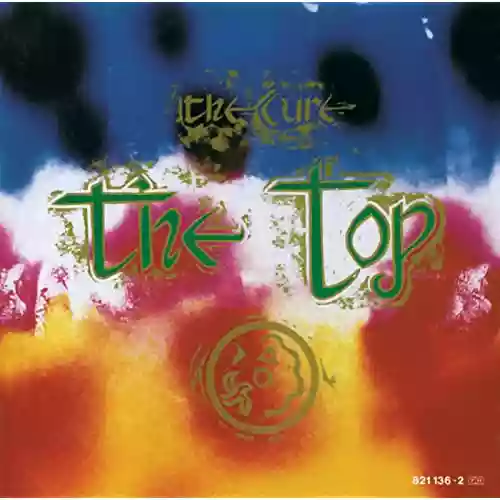
The Top, in fact, although considered an anomalous album in the history of this cult band, sounds somewhat like the synthesis of past and forthcoming projects. Teeming as it is with playful and burlesque winks (Caterpillar), other jazzisms and relaxed and ironic kaleidoscopes (Bananafishbones, Piggy In The Mirror), disturbing and desperate sexual references (Shake Dog Shake, Give Me It), nocturnal melancholies (Dressing Up), and Arabesque lullabies (Wailing Wall), the album seems to echo with new luster the atmospheres of the early records while simultaneously anticipating the later works. All with an artistic maturity that quickly surpassed the synth-pop flirtations of Let's Go To Bed and laid the foundations for a new important creative phase. Without The Top, we would not have had The Head On The Door and Kiss Me Kiss Me Kiss Me.
However, it is not such an immediate work. Despite the iridescent color contaminations that tempered the black look of that period, it is the most heterogeneous and unpredictable work realized up to that moment. Although embellished with rhythms and melodies that would not look out of place in the records of some illustrious international singer-songwriter, there is not a single track that can reach the heart with the more linear simplicity of the subsequent The Head On The Door. There isn’t a single track that does not reveal a complex journey, a poetic metaphor, an almost esoteric symbolism in the intentions of Robert Smith and therefore his peers.
The presence of many animals in the song titles is the most evident example of this transversal choice. There are the dog, the bird, the pig, the caterpillar, the fish... and in the lyrics, the polar bear, the cat... are also cited. A sort of zoological allegory of the human tribe in which characters identify themselves with behaviors and lifestyles. An allegory only seemingly amusing that surrounds the heavy sense of bewilderment and disillusionment that grips the individual, incapable of reaching the top and probably also incapable of descending from it.
Explosions of rhythmic violence alternate with reflective impressionist moments, in this composite album which marked a decisive affirmation of the dark-look in the youth world. Teased hair, rosaries and crucifixes, creeper shoes, lipsticks, and mascara are the other side of the solution of disguising oneself as animals; in life as well as on stage.
The Top, therefore, an apparently transitional work, would seem instead to be the keystone to understand the evolution of The Cure and the definitive codification of a cultural wave that, like it or not, marked an era.
Loading comments slowly
Summary by Bot
The Cure's 1984 album The Top stands as a complex and transitional work bridging the band's gothic-punk roots with future sounds. Despite its unpredictability and intricate poetic symbolism, it reveals artistic maturity and sets the stage for later successes. The album's blend of dark aesthetics, jazz influences, and surreal zoological allegories capture a moment of cultural change within the post-punk scene. It remains a key to understanding the evolution of The Cure and their era-defining impact.Tracklist Lyrics Videos
The Cure
The Cure are an English rock band formed in Crawley and led by singer-songwriter Robert Smith. Since the late 1970s they have moved between post-punk, gothic atmospheres and pop-oriented experiments, producing widely admired albums such as Disintegration and Pornography.89 Reviews
Other reviews
By easycure
Robert Smith is here, more than in previous albums, without a doubt... He transforms into the Syd Barrett of the 80s, elusive and amused, with his subtle irony.
Ladies and gentlemen, THE BEST CURE ALBUM, and may the walls collapse too.
By how the end always is
"The Top remains one of the most absurd yet also artistically great moments in Cure’s history!"
"The Top is the place where nobody goes... YOU JUST IMAGINE IT ALL...! This is ART!!!"
