
 •
Rating:
•
Rating: THE REVIEW
The early nineties of The Cure were marked by an album as debated as it was successful, and in many ways a turning point, like "Wish". Guitars reigned supreme as never before, with a groove of authentic rock spirit, and atmospheres that were not as gloomy but more expansive, with a nod to a certain carefree sound (see "Friday I'm in Love").
The lineup, after yet another tweak (Bamonte replacing O'Donnell), is in a state of grace both in terms of composition and stage chemistry. The historic duo of Smith and Gallup could rely on the vibrant guitars of Porl Thompson, who knows a thing or two about rock, on the grand drumming of Boris Williams, undoubtedly the best drummer The Cure ever had, and on newcomer Bamonte, a valuable wild card alternating diligently between guitars and keyboards. The "Wish tour" brings the band to the masses and is a triumph of lights, colors, ever-changing setlists but all with a deliberate rock-pop basis, with the more gothic songs sacrificed on the altar of memories. The double live album "Show", recorded in the summer of '93, is clear evidence of this.
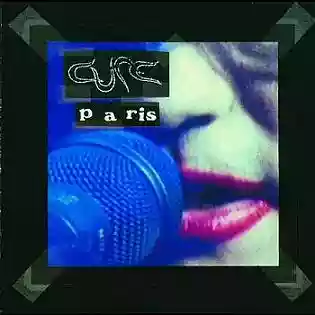
A few months later, somewhat surprisingly, another live album was released, this time titled "Paris". It is a recording of the Paris concert at the Zenith from the fall of the previous year. The setlist, short but well thought out, returns the image of the band most cherished by the devoted fans, which seemed to have been questioned: that of The Cure as champions of a music sometimes dark, sometimes tense, sometimes sweeter and catchier, but always incredibly romantic and emotional. Just think that the first twenty minutes of the concert are entrusted to the glory of "The Figurehead", "One Hundred Years", and "At Night": three majestic gothic frescoes that, in the live setting, come to life, best unleashing their dark solemnity; it's worth noting the unsettling interplay of the two "pornographers" guitars and the monumental keyboards of the "Seventeen Seconds" track, the latter very rarely performed live. The following "Play for Today" enriches the scene with moments of pure epicness, with the audience singing at the top of their lungs along the characteristic melody line; an euphoria soon interrupted by a new atmospheric masterpiece like the recent "Apart", the only extract from "Wish" capable of competing with the dark magnificence of the previous tracks.
"In Your House" serves as an ideal dividing line between a decidedly gloomy first side and a second that will be more pop-oriented, albeit with great class. The sequence includes single-gems like "Lovesong", "Catch", "A Letter to Elise", and a delightful unexpected intermezzo like the whimsical "Dressing Up", performed excellently; culminating in the stunning "Charlotte Sometimes", the quintessential curesong, mysterious and romantic, with keyboards even more prominent than on the album and a very heartfelt, almost dramatic vocal by Smith. The performance closes with the geometric lightness of "Close to Me", and Smith's farewell "merci" that sends everyone home happy and satisfied.
Seventeen years have passed since that event, so why this tribute to "Paris", a live album of a band that counts dozens of albums, official and otherwise? The discography in terms of bootlegs, then, is virtually countless. Well, perhaps because in "Paris" more than ever we find the essence, the best concentration of what the Smith-thought has been able to express to be adored. Rock, pop, gothic, decadence, psychedelia, in one word, The Cure and their pantheon of emotions, all masterfully on display and captured on disc that evening. Alas, to the regret of those who were not among the fortunate at the Zenith that night.
Loading comments slowly
Summary by Bot
The Cure's live album 'Paris' captures their quintessential gothic rock essence during the 1992 Zenith concert. The review praises the band's lineup and performance that balance darker, emotional tracks with more accessible pop tunes. Highlighting both the band's chemistry and a well-thought-out setlist, the album is seen as a heartfelt tribute to the band's career up to that point. 'Paris' stands out by offering devoted fans a deeply romantic and atmospheric live experience.Tracklist Lyrics Videos
The Cure
The Cure are an English rock band formed in Crawley and led by singer-songwriter Robert Smith. Since the late 1970s they have moved between post-punk, gothic atmospheres and pop-oriented experiments, producing widely admired albums such as Disintegration and Pornography.89 Reviews
Other reviews
By whynot
Robert Smith intones the first verses with that voice that always seems on the verge of breaking under the blows of a furious cry.
Decadent, romantic, ghostly, gloomy, merciless. But always with that glimmer of light that by contrast makes the darkness even darker.
