
 •
Rating:
•
Rating:
THE REVIEW
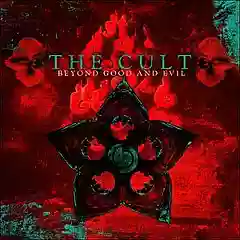
After a phase of mixed fortunes and structural instability, but mindful of a glorious past culminating in the mid-'80s with a trio of very tough albums, the Cult of Ian Astbury and Billy Duffy began their resurgence at the start of the new millennium. And they did so with one of the most robust and determined works of their career: "Beyond Good And Evil."
Two elements immediately stand out upon the first listen to the album: the massive enhancement of the guitar sound and the ultimate reinterpretation of the Zeppelin-influenced style brought to its greatest brilliance.
It is no secret that the Cult had always looked up to Jimmy Page, and although in works like "Love" the dark nuances and mystical-epic cultural references had personalized the sound more significantly (also thanks to the dominant taste of the time), the compositional choice of riffs and the vocal setup of Duffy and Astbury have always evidently harked back to the distorted rock of the '70s. In "Beyond Good And Evil," this choice leaves no more room for doubt and grandly and fiercely celebrates a series of impressions that are hard to extinguish in the hearts of rockers.
What in recent times (especially from the mid-'90s onwards) other global musicians like Aerosmith or Bon Jovi have brought to a popular zeroing of easy appeal, where melody and an almost domesticated iconography prevail, the Cult have instead amplified in the opposite direction, with a sound of unprecedented power and saturation and a lyrical depth that, while at times slips into cliché ("The power," for example), elsewhere catapults into a dimension far from sunny ("American Gothic," "Speed Of Light"). Without straying from what were their warhorses of twenty years ago, Astbury and company re-enter the fray with all their experience and rely on a production that doesn't like half measures. Some instrumental finesse here and there, some nods to the less vulgate grunge, but above all, a lot of rock soul that aims to pierce the eardrums with stunning distortions and sharp choruses. From the splendid pounding "The Saints," to the killingjokian "Rise" and the poignant "Nico," to the dark plots of "American Gothic" and "Ashes And Ghosts," the new Cult play all their cards and create something that, while almost anachronistic on one hand, slaps you in the face with a truth never truly refuted (rock is NOT dead) and demonstrates that with a classic formula, a thrill can still be given.
We often wonder why a band that has already reached its peak of fame and style should resume the discourse years later, risking disappointment if not failure. In the case of the Cult, I believe that the rekindling was not illusory and that this album represents a fine chapter in their history; a chapter that does not shine for musical originality in the strict sense, but that engages with overwhelming rhythms and extraordinary compactness. I emphasize once again the devastating sound of the guitars, which make the ones of Guns 'n' Roses and Nirvana seem like mandolins by comparison.
Loading comments slowly
Summary by Bot
Beyond Good and Evil marks a strong comeback for The Cult, emphasizing a powerful guitar sound and reinterpreting their Led Zeppelin-inspired style. The album avoids mainstream trends by delivering raw rock energy and lyrical depth. Despite not being radically original, it maintains the band's signature intensity and rock soul. This release asserts that rock music remains vibrant and relevant.Tracklist Lyrics
The Cult
The Cult are an English rock band formed in Bradford in 1983, associated with both gothic rock/post-punk and later hard rock, and best known for their mid-1980s to late-1980s albums and singles.13 Reviews
