
 •
Rating:
•
Rating: THE REVIEW
In the vast literary production of Honoré de Balzac, there is a novel, "La Peau de Chagrin," in which the protagonist, after just a few pages, enters an antique store located in the heart of Paris. Like in a dream, he remains ecstatic and astonished in front of the myriad of multicolored fabrics, precious stones with iridescent hues, objects and trinkets of every shape and size; everything piled up and alternated apparently without any order except to bewilder the customer of the moment.
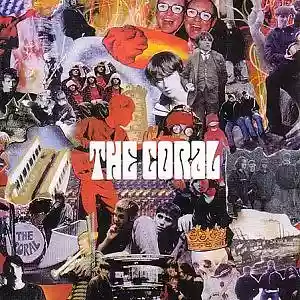
Here, the debut album by the English band The Coral presents many points of contact with this bazaar: fragments of multiple styles and musical genres are stacked with a playful and eccentric approach in a constant whirling of tempo changes, imaginative ideas, and quirky solutions.
With a visceral love for 60s beat and psychedelic micro-expansions that constitute the “background” of almost all the tracks, the sudden shifts in direction and the use of the most disparate musical influences make the album a sonic amusement park where each ride rarely exceeds three minutes.
To the warm, acid ride of the initial "Spanish Main," and the crew of drunken pirates who, on a syncopated rhythm punctuated by a harmonica, sing to the moon in "Shadows Fall," are alternated, for example, the blend of seductive aggressiveness of "I Remember When," and the chart-topping indie single "Dreaming of You." The Doors-esque "Waiting for Heartaches" precedes the ramshackle punk of "Skeleton Key"; the hard-blues of "Badman" follows the hint of sweetened progressive in "Wildfire."
Even within each individual piece, the progression is never linear, but reserves surprises at every turn: the vigorous pace of "Goodbye," for example, unravels in the center into a velvety introspective drift, then resumes with the robust initial guitar riff; the brit-pop of "Calendars and Clocks" gradually transforms into an obsessive rock crescendo.
Psychedelic reverberations, electronic counterpoints, folk inserts, ska, and a broad use of choral singing make the album a continuous play of mirrors and references where The Coral draw from all these musical sources, synthesizing them with freshness and personality and adapting them to a song form of short (sometimes very short) duration. To leave nothing out, there's even a ghost-track, "Time Travel," where the guiding lines are traced this time by a languid reggae.
A joyful, whimsical, sunny, spring-like, bizarre, and eclectic album, well played and even better produced. I leave the bazaar dazed and am eager to go back in!
Loading comments slowly
Summary by Bot
The Coral's debut album is an imaginative mix of genres and styles, drawing heavily from 60s psychedelia and beat music. Its short, dynamic tracks feature constant tempo shifts and musical surprises. The album is playful, well-produced, and showcases the band's fresh and personal synthesis of diverse influences. The review compares the experience to wandering through a colorful bazaar filled with unexpected sonic treasures.Tracklist Lyrics
The Coral
The Coral are an English indie rock band from Hoylake, Merseyside, known for '60s-leaning psychedelic/beat pop filtered through eclectic influences.13 Reviews
