
 •
Rating:
•
Rating: THE REVIEW
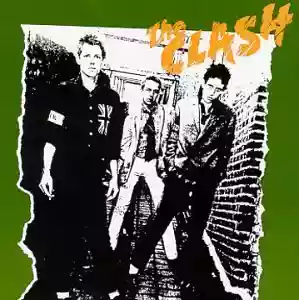
I feel like such a partisan when talking to you about the Clash that—as I've done so far—I should refrain from any comment. The Clash were my uncles, my adolescent discomfort when others listened to Led Zeppelin while I went around with my "Sandinista" shirt and elected Joe Strummer as my personal idol. But I wasn't the only one. England in '77 was swallowed without appeal by the epochal impact of this debut. "The Clash," or when the Clash still pretended not to know how to play. "The Clash," or what was defined by many British magazines at the time as the greatest rock debut ever. It's pointless to be so exaggerated, but if someone ventured such hyperbolic statements, there must have been a reason.
Legend has it that the singer of the pub-rock band 101’ers, Joe Strummer, decided to pack up on the eve of his group's first single, after listening disconcertedly to one of the early Sex Pistols concerts. Son of an ambassador and raised in a high bourgeois environment, Strummer joined in the first months of 1976 the London SS, a group led by guitarist Mick Jones, a working-class boy from Brixton, passionate about a hard-rock indebted to old glories like the Faces and Mott The Hoople. They combined their exceptional compositional skills, naming the new project "The Clash," "noise," aiming for a hard, compact sound, guided by anger but also by the taste for songwriting. They began writing lyrics reflecting the ills of the society of the time, their own, shouting out values and ideals of militancy and the fight for social rights; Strummer and Jones, created as formidable Lennon/McCartney of punk, something new, something that certainly related to the nascent movement (so much that they immediately became a real flag), but also had in itself a strong call to the oldest roots of rock, the purest and uncompromising. It was rock & roll stripped to the bone, as that of the Jam in the same years was a beat-mod stripped to the extreme consequences. It brought back to the raw state, the raw material, the roots of pop history, to graft onto them their own new, magnificent creations. Ours were the first to graft political messages, moreover as sharp as they were brilliant and intelligent, onto the canvas of British punk.
These little shards of a maximum of three minutes became epic manifests of a new, almost lucid, struggle against the system, considered not as something undefined (an instinctive protest against authorities, from parents to politicians, etc.) but as something nameable and identifiable, problems that were as real as unemployment and racism appearing raw, burning without filigree, without delicate words. The guitar becomes the real weapon to use, music an instrument of commitment, not just a means to shock, show off, or make money. In the midst immortal riffs like that of the first single "White Riot" (complete with police siren and broken glass in the subsequent American version), "Career Opportunities," the cruel and sarcastic "London's Burning" (in the future it will move to a more relaxed "London Calling," perhaps a sign of the times), the captivating rockabilly of "Remote Control," up to the brave earful aimed at the Yankees with "I'm So Bored With The U.S.A." Many chocolates for young revolutionaries, but the palm of the unexpected masterpiece certainly belongs to those six experimental minutes of "Police & Thieves," which by the turn of the millennium was elected by some as one of the ten best songs of the century. It's (perhaps) another exaggeration, but this does not detract from the stunning beauty of this simple, passionate track: the Clash amaze us by extracting their unprecedented reggae feature with the cover of Junior Murvin, a novelty that will set a trend in the pubs of English suburbs, naturally combining the homage to a musical genre until then rather neglected with a declaration of intent, to be a band that dares more than their contemporaries, and that will consume its brief artistic journey in the effort to go beyond, to expand its horizons, ending up not being a punk group, or a rock group anymore, but simply the "Clash," eventually being defined two years later with the epithet "the only band that matters."
It is worth noting that this record was released in two versions, the original English one from 1977 with fourteen tracks and the fifteen-track version from 1979 for entry into the still virgin American market. It's an important distinction because the two copies share only six tracks, the remaining tracks are different while in both cases excellent and with the stature of a classic. And it's difficult, almost a game, to decide if one of the two collections is better than the other. Among the wonders of the English record, we have the ironic "Cheat" (with small electronic special effects!), "Protex Blue" sung by an inspired Mick Jones, and the classic singalong of "48 hours." In the American version, historical singles like "Clash City Rockers" (and down to write it on the backpack, on desks, with the penknife...), "White Man In Hammersmith Palais" (perfect symbiosis of reggae and pub-rock), the cover of "I Fought The Law" and the famous "Complete Control," a reaction to the improper management by the manager Bernard Rhodes of the previous single "Remote Control," angry, almost Bolan-like for catchiness but much more rustic, "proletarian." This will also be the first song where the historic drummer Topper Headon makes his appearance, after the departure of temporary Terry Chimes. The Clash, finally with a complete and matured line-up, will know how to put on their gloves, and a few months later at the arrival in the States of this Trojan horse coupled with the subsequent triumphant "Pearl Harbor '79" tour, the surprises will culminate with the birth, right among those distant lands, of the magnificent "London Calling." And after, nothing will ever be the same again, Clash included.
Loading comments slowly
Summary by Bot
This review passionately explores The Clash's debut album as a landmark in punk rock and political music. It highlights the band’s youthful raw energy, pioneering fusion of reggae, and incisive social commentary. Both English and American versions of the album are praised for their unique strengths. The review situates the album as a catalyst for future musical innovation, cementing The Clash's legacy as a pivotal and influential band.Tracklist Lyrics Videos
The Clash
English punk rock band formed in London in 1976. Core lineup included Joe Strummer, Mick Jones, Paul Simonon and Topper Headon. Influential for blending punk with reggae, rockabilly, funk and early rap; disbanded mid-1980s.35 Reviews
Other reviews
By joe strummer
This record is too well crafted to aspire to be the ultimate representative of punk.
"White Riot" is a song, how to say... revolutionary! It's a surge of electricity.
By poison.mind
"'Clash City Rockers' is the first song to take the stage, which will then become one of the most memorable anthems of punk."
"'The Clash', the first CD of the English band, undoubtedly is part of the beginning of punk music history!"
