 •
Rating:
•
Rating:
THE REVIEW
Among the very few luxury survivors of the britpop era, a prominent place has certainly been earned by The Charlatans.
Unlike much more "renowned" and perhaps more successful peers, Tim Burgess and company have sought to add new and always novel contaminations to their music with each album released, always maintaining flattering quality standards.
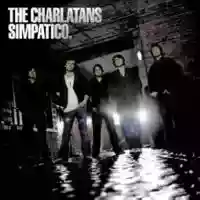
Boasting great success at home (excluding the recent "Up At The Lake," which stopped at a nonetheless respectable thirteenth position, all of the group's albums from 1994 to today have hit the top ten at home), The Charlatans return in 2006 with this curiously titled album: "Simpatico."
"It's a Spanish word, I discover now that it has a meaning in Italian too. In Mexico City, I heard a band called Los Simapticos, and I liked it. Additionally, I read the word sympathetic in Keith Richards' biography, when he was talking about his relationships with someone in the '60s, he said it was 'simpatico' in the sense that there was an understanding with that person. I looked up the meaning in the dictionary, I liked it, and proposed it for the album title," Burgess officially explains.
As for the album's content, the new "infatuation" is, this time, for unusual influences (for the group in question) such as reggae, dub, and funky, while still maintaining the band's typical trademark.
The two singles released to introduce the album also serve the purpose of opening it: "Blackened Blue Eyes" enchants with its piano riff and the guitars peeking in here and there, "N.Y.C. (There's No Need To Stop)" sounds like the Red Hot Chili Peppers were born in Birmingham instead of California.
The discussion becomes much more interesting with "For Your Entertainment," a practical application of the aforementioned contaminations, the same can be said of episodes like "City Of The Dead" and "Road To Paradise." Nevertheless, the typical britrock of "Dead Mans Eye" is not lacking, and the piano embedded in the reggae-friendly melody of "The Architect" is striking. The dirge of "Glory Glory" is perhaps the weak link of the work, so attention shifts to the closing instrumental "Sunset And Vine," between electronics and dub.
Decisive the production by the talented Jim Lowe, someone who already has a clear idea of the direction to take when he enters the studio; the album truly "comes out" wonderfully, it must be said, as a sound output, it is among the best released in 2006.
A work, ultimately, surprising, for a band no longer in its prime, especially considering the fact that recent albums hadn’t exactly been miraculous.
Good comeback, no doubt about it.
Loading comments slowly
Summary by Bot
The Charlatans maintain their britpop relevance with 2006’s Simpatico, incorporating reggae, dub, and funk influences. Produced by Jim Lowe, the album impresses with quality sound and notable tracks like "Blackened Blue Eyes" and "N.Y.C." Despite some weaker moments, it marks a welcomed comeback for the band.Tracklist Lyrics Videos
The Charlatans
English rock band formed in 1988, emerging from the Madchester/baggy scene with the debut Some Friendly (1990) and its hit The Only One I Know. Led by Tim Burgess, their Hammond-driven sound was defined early on by Rob Collins (who died in 1996 during Tellin' Stories), and they later endured the loss of drummer Jon Brookes (2013). They achieved major success with Tellin' Stories and continued with Modern Nature and Different Days.09 Reviews
