
 •
Rating:
•
Rating:
THE REVIEW
Riding the wave of the success of the 45 single "Mr. Tambourine Man" and the album of the same name, the Byrds released another Dylan-penned single from the latter. Unfortunately for them, "All I Really Want To Do" had just been covered and released by Cher, whose version reached number one on the Billboard chart, relegating the "belated" (and wonderful) Byrds cover to the lower parts of the same chart.
McGuinn and company were not discouraged by the setback and quickly returned to the studio to tackle another track, "Turn! Turn! Turn! (To Everything There Is A Reason)," this time a traditional that Pete Seeger had recently adapted to folk by incorporating parts of the text from the Book of Ecclesiastes from the Bible.
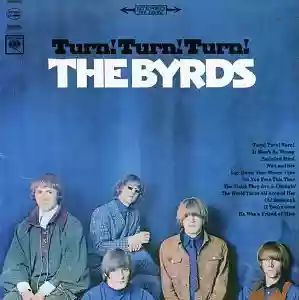
The 45" was a hit, reaching number one among singles in October 1965 (six months after the tambourine), also boosted by "I'll Feel A Whole Lot Better," a splendid B-side written by Clark. Buoyed by this new success, the Byrds began working on and drafting the second long-distance chapter, and the album "Turn! Turn! Turn!" (which once again, as in the debut case, takes the title from the leading single) was released on December 6, 1965.
In the span of eight months, they went from anonymity to the high peaks of the American (this LP reached 17th place) and British charts. The style is still the folk-rock of the debut, characterized by McGuinn's typical "jingle-jangle" Rickenbacker and the multicolored vocal harmonies of Crosby, Clark, and McGuinn himself; but the group's blend has been perfected and refined incredibly. The inevitable Dylan covers ("Lay Down Your Weary Tune" and "The Times They Are-a-changing") lose the aggressive intensity of the originals and become superb, soft, and dreamlike melodies; just like the traditional "He Was A Friend Of Mine" arranged by McGuinn becomes one of the anthems that helped kick off the hippie movement and the seasons of Peace+Love.
As in the previous work, this album features three numbers by Gene Clark, which clearly indicate his inspired creative vein, his way of composing perfect pop songs, blending Dylanesque folk, the recent British Invasion, and the country-western of the vast prairies; and the total sum of all this resides in the 2 minutes and 50 seconds of the splendid "Set You Free This Time."
But Clark's contribution ends with this album, his departure is imminent, effectively leaving the reins of the group to the McGuinn-Crosby duo, who make a general rehearsal here with the song "Wait And See," written collaboratively; as does Hillman, who actively participates in drafting the tracklist, arranging the country-western "Satisfied Man" by Porter Wagoner, which a decade earlier reached the top of the sales charts.
This track signals the future country shift the band would take in the early seventies with Crosby's departure; but only after actively contributing to the explosion of the psychedelic scene, as during the days of "Turn! Turn! Turn!"'s release, the band was engaged in creating the hallucinogenic gem of "Eight Miles High" ... but that's another chapter, this one closes with McGuinn's revisitation of the song "Oh Susanna," by Stephen Foster, a true pillar of American popular culture of the 1800s; which also closes the album in question.
Loading comments slowly
Summary by Bot
The Byrds' Turn! Turn! Turn! album continues the folk-rock innovation established by their debut, featuring improved vocal harmonies and classic Dylan covers. Despite some initial chart setbacks with previous singles, the title track became a number one hit. The album showcases Gene Clark's strong songwriting before his departure and hints at the band's future stylistic shifts. Overall, it captures a key moment in 1960s American music blending folk, rock, and country influences.Tracklist Lyrics Videos
The Byrds
The Byrds were an American band formed in Los Angeles in 1964, widely credited with shaping folk rock via Roger McGuinn’s 12-string Rickenbacker sound and electric interpretations of Bob Dylan. Their catalog is frequently discussed as moving from early folk-rock hits into psychedelia and later country-rock, notably on “Sweetheart of the Rodeo” with Gram Parsons.15 Reviews
