
 •
Rating:
•
Rating:
THE REVIEW
The 1968 had started poorly for the Byrds, despite yet another excellent album, the captivating "The Notorious Byrd Brothers." The train of mass success had already passed by, and other West Coast bands, from the Doors to Buffalo Springfield, were taking center stage. The centrifugal forces that had always characterized the jingle-jangle band had also expanded: after Gene Clark, it was David Crosby's turn to leave Roger McGuinn to his despotic yoke, depriving the group of its main compositional force. McGuinn and Hillman found themselves with their backs against the wall (even drummer Michael Clarke had left). It was Hillman who came up with the idea to get the band back on track: sensing the emerging country-rock trend, the bassist decided to co-opt the brightest star of the genre, Gram Parsons. The future grievous angel, with his raw but surprisingly effective "Safe at Home" from his International Submarine Band, had been the first to venture with a rock approach into the rough and rugged paths of country to communicate his open worldview, and his entry turned the band inside out like a sock.
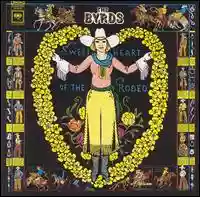
The result was "Sweetheart of the Rodeo," probably the most important country-rock album of all time, as well as the swan song of the Byrds themselves. After all, Hillman had always been the Byrd most oriented towards Nashville: his "Time Between" on "Younger Than Yesterday" featured rustic and pioneering bluegrass guitar insertions. Parsons' charisma and musical versatility, officially joining the Byrds as a keyboardist, did the rest, shaping furthermore the emotional impact of the album, composed of eleven intense and complex episodes capable of infusing their sound with references and visions clearly inspired by the endless American landscapes, like the contemporary albums of The Band and Creedence Clearwater Revival: not surprisingly, the only two original compositions by the band were his, while the rest of the album was made up of covers of traditional songs, or the usual Dylan. The tyrannical McGuinn, however, reserved the vocal parts of almost all the tracks, even Gram's "One Hundred Years from Now" (all the alternate takes are, however, available in the deluxe edition of the album, which is highly recommended to obtain). Feeling decidedly undervalued, Parsons would then defect, citing as a pretext a tour in racist South Africa, to later achieve further artistic heights with the Flying Burrito Brothers and as a solo artist, becoming a basic influence (a random name: Keith Richards on "Sticky Fingers"). But what mattered was done.
To illustrate the magnificence of "Sweetheart of the Rodeo," it would suffice to start with the first track, "You Ain't Goin' Nowhere" by Dylan, taken from the (then unreleased) Basement Tapes. The shimmering jingle-jangle fragrances of McGuinn's guitar accelerate the pace of the original version, supported by superb pedal steel work and majestically country vocal harmonies, and probably offer the best tribute made by the Byrds to their most illustrious mentor, just like the concluding "Nothing Was Delivered," rendered as a poignant and final free song of the Sixties.
Yes, the Sixties. The Byrds were among the main narrators of that libertarian decade: how was it possible that the group that had sung one of the most intense psychedelic anthems ("Eight Miles High") could venture into gospel standards such as "The Christian Life," the canonical twangs of "I Am a Pilgrim" or "Life in Prison," an exaltation of the most traditional American way of life? Far from having renounced the spirit of the era, the Byrds had simply handed the helm to Parsons, the bohemian from Harvard who delved into the music of the fathers to repaint it with stories and characters in the spirit of nonconformity and modernity, with the daring of someone possessing their own stylistic cipher, as amply demonstrated by the present "One Hundred Years from Now." A sublime piece, a live staple for years of Stephen Malkmus, alternating a poignant sense of disorientation with a vivid and bloody self-confession of their unruly lifestyle. Even better is the sublime ballad "Hickory Wind," the most precious jewel in Gram's songbook. Divine steel guitar inlays punctuate the astonished and elegiac regret of a childhood sweet as a sunset in the Midwest, symbolizing a purity perpetually pursued but unreachable.
Before the needle took even him away.
Loading comments slowly
Summary by Bot
Sweetheart of the Rodeo marked a major turning point for The Byrds, embracing country-rock under Gram Parsons' influence. Despite internal tensions and lineup changes, the album stands as a pioneering and emotionally rich work blending traditional songs with modern stylistic vision. Key tracks like 'You Ain't Goin' Nowhere' and 'Hickory Wind' highlight its enduring charm and cultural importance. This album represents the end of The Byrds' golden era and a definitive moment in 1960s American music.Tracklist Lyrics Videos
The Byrds
The Byrds were an American band formed in Los Angeles in 1964, widely credited with shaping folk rock via Roger McGuinn’s 12-string Rickenbacker sound and electric interpretations of Bob Dylan. Their catalog is frequently discussed as moving from early folk-rock hits into psychedelia and later country-rock, notably on “Sweetheart of the Rodeo” with Gram Parsons.15 Reviews
