
 •
Rating:
•
Rating:
THE REVIEW
Who would have ever thought that the Legend, perhaps the greatest in the History of Music, would have begun with a very simple, very banal, very inexpensive: ONE, TWO, THREE, FAH!
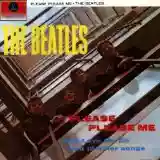
The image speaks for itself, I am referring, of course, to the album "Please Please Me" by "The Beatles," Anno Domini 1963.
The '60s, the roaring '60s, years of radical changes, ideologies, gatherings, discoveries, revolutions, wars, passions. The Liverpool quartet could not help but absorb some of the ferment that simmered in those years. In fact, they became its promoters, initially despite themselves: they were, first and foremost, "artistic heirs" of the so-called "Beat Generation" and the "Angry Young Men" of the mid-'50s, and then, a few years later, rose to pop icon status of the countercultural currents of the '60s (do hippies ring a bell?). But let’s go in order…
Post-war England was gripped by a stranglehold of immobility, formality, authority, and conventions. In this context, the Beatles came like an earthquake to shake up the minds and butts of every young person in Albion, unleashing in them an emotional charge and a rebellious vitality never seen before, at least not on such a scale. Thanks to their spontaneity, their freshness, their irony, their "down-to-earth" manner, they managed to captivate practically the entire young audience. They had the effect of an unexpected school dismissal on a sunny afternoon, a breath of fresh air in the stale English atmosphere. All this, of course, was also reflected in the musical field where they were described as "a charismatic power station," a wild presence on the fringes of English pop that did not rely on the anemic politeness of the London scene. Listening to the album will confirm everything that has been written so far. Doing a track-by-track review would be absolutely pointless; my advice is: let yourself be carried away by the music, by the raw energy it emanates, by the youthful tension released (the opening and closing of the record are two emblematic episodes).
There is then another aspect to consider, often overlooked: the album exudes repressed erotic impulses, it oozes an eroticism eager to emerge. In those years, sexual repression was a fairly common "practice," as was suppressing one's own urges...the Beatles did nothing more than open Pandora's "Box." By now, eroticism was part of the excitement of the phenomenon. This is evident in the lyrics of some tracks: "She was just seventeen and you know what I mean" in "I Saw Her Standing There," the allusive "Please Please Me" that refers to quite imaginable erotic practices, the repeated "C'mon baby," "Shake It" etc...scattered here and there and repeated with a certain "vehemence" etc.etc.
Is it just me being suggestive? I don't think so...I mean, yes, I generally am, but not in this case.
Regardless of musical taste, I believe this record is a true piece of History that should definitely be listened to at least once in a lifetime. I am not speaking exclusively of musical History, but of social, popular, cultural History, etc.
Let’s not trivialize the image of the Beatles by describing them as a "simple" band because they were, objectively, much more. Then, of course, one may or may not like them but they should not be neglected or snubbed because that would be like neglecting or snubbing the moon landing (with due proportions, of course), it would be like neglecting a historical event that indelibly marked the life of the '60s. Be good, come on.
“Please Please Me” is just the first step…
Loading comments slowly
Summary by Bot
The review celebrates The Beatles' debut album Please Please Me as a landmark in both musical and social history. It highlights the band's raw energy, youthful rebellion, and cultural impact during the transformative 1960s. The album is praised for its spontaneity, freshness, and subtle eroticism in the lyrics. Ultimately, it is deemed essential listening for understanding the decade's cultural revolution.Tracklist Lyrics Videos
The Beatles
The Beatles were a British band formed in Liverpool in 1960 by John Lennon, Paul McCartney, George Harrison and, from 1962, Ringo Starr. They revolutionized popular music through songwriting, studio innovation and cultural impact, releasing landmark albums from Rubber Soul and Revolver to Sgt. Pepper’s, the White Album and Abbey Road before disbanding in 1970.173 Reviews
Other reviews
By lucio mazzi
"One, two, three, four" and off they go with 'I Saw Her Standing There', the rock’n’roll that the fathers of rock’n’roll had never been able to write.
‘Twist And Shout’ became so renowned in this version that it made people forget it was also a cover.
By Roberto Zennaro
'From this year, March 23 1963, Rock And Roll, music, history, are no longer the same.'
'The Beatles make their mark on the history of music.'
By paolofreddie
"'Please Please Me' is an album for the young, played like by a school band, full of youthful urges and simple rock 'n' roll."
"It's an immature work, full of covers, and no song can be considered a masterpiece."
