
 •
Rating:
•
Rating: THE REVIEW
Sometimes, during the idle evenings of my university life, I used to find myself in a room with my friend Mauro and the old friends Michele, Gianluca, Marco, and Dario to discuss one of life's great themes: which is the most overrated group or artist in the history of pop/rock music? Or rather, which artist has enjoyed worldwide fame and acclaim entirely disproportionate to the intrinsic value of their works?
The answer was never long in coming, even though it involved endless discussions, and the ranking invariably saw the following in the top three positions: 1) Beatles; 2) Elvis; 3) U2. Mediocre musicians of immense fortune and enormous influence on throngs of young people encouraged to follow their career, sociologically important but musically negligible.
I already know that with these statements I will have drawn the ire of the website's readers, but for some time, this will be my last review, as I will have much to ponder regarding any criticisms that the courteous users, specifically Beatles fans, will want to direct at me, since it is precisely the English quartet I would like to focus on in the following pages.
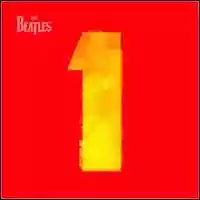
Even though the choice is, in turn, debatable, I want to proceed with an examination of the now-sainted Liverpool group’s music from the album One, a collection of the group's singles that sufficiently summarizes their career (and is not present on the site), with the caveat that I am not trying to deny the historical importance of the Beatles, nor the beauty of some of their songs, but simply to downsize their (alleged) greatness, especially when compared to contemporaries like the Rolling Stones, Kinks, Who, Yardbirds, Pink Floyd, Shadows, Beach Boys, or the great Jimi Hendrix, just to mention groups qualitatively more significant for the history of pop rock and rock as a whole.
Since everyone knows the tracks included in the album, I will not dwell on their superfluous description, but will limit myself to making some brief observations: technically worthy pieces seem to me to be only I Feel Fine, with its nice riff (later revived by Elio in “Pipppero”), We Can Work It Out (practically two songs in one, well connected), Hello Goodbye (almost psychedelic tones), Hey Jude (great ending with the crossing of choruses), Come Together (nice rock blues, but the covers by other artists, like Aerosmith, are better). The remaining pieces, whilst certainly admirable, thanks to always catchy and now classic melodies (as they're used in countless commercials, TV shows, radio broadcasts, etc.) add nothing and take away nothing from a purely musical perspective in the history of rock, paling in comparison to the works of mentioned contemporaneous groups in terms of composition and performance: anyone willing to do so can compare them with any Stones piece of the time, with Train Kept a Rollin' by the Yardbirds, with You Really Got Me by the Kinks, or with the early Who pieces contained in Odds & Sods, like I’m the Face, not to mention My Generation, etc.
The music of the Beatles, if listened to today, also appears irremediably outdated, while the aforementioned contemporaneous groups remain fresh and stimulating, and its supposed modernity and relevance perhaps depend on the fact that, for most, these pieces have become part of daily life, like the Christmas tree during the holidays, or the beach umbrella in the summer, or the start of school in mid-September. It is, then, music that has had, practically, very little influence on artists active in the following decades, surpassed by the contributions of all those artists who emerged in the 1968/70 triennium, among whom I recall the Led Zeppelin, Black Sabbath, Hendrix himself, Velvet Underground, the Who of Who’s Next, Deep Purple of In Rock: music that has little to do with the Beatles and marks the real break in the evolution of modern styles, at least in the rock field.
Apologizing for the assertive tones, justified by the brevity imposed, I await comments. The album deserves a 3, it can be listened to.
Loading comments slowly
Summary by Bot
This review critically examines the Beatles' album One, challenging their musical greatness despite their undeniable global fame. The author acknowledges some technically worthy tracks but argues their influence pales compared to contemporaries like the Rolling Stones and Jimi Hendrix. The review suggests Beatles' music feels outdated today and lacks significant influence on later rock evolution. The album receives a moderate rating and can be listened to with tempered expectations.Tracklist Lyrics Videos
The Beatles
The Beatles were a British band formed in Liverpool in 1960 by John Lennon, Paul McCartney, George Harrison and, from 1962, Ringo Starr. They revolutionized popular music through songwriting, studio innovation and cultural impact, releasing landmark albums from Rubber Soul and Revolver to Sgt. Pepper’s, the White Album and Abbey Road before disbanding in 1970.173 Reviews
Other reviews
By pier_paolo_farina
"Better consider it for what it is, a Greatest Hits, which has many holes as masterpieces like 'A Day In The Life'... are missing."
"'We Can Work It Out' is an immortal song, never tires, a shining example of McCartney’s melodic genius and Lennon’s rhythmic ease."
