
 •
Rating:
•
Rating:
THE REVIEW
In the early Sixties, alongside Elvis Presley and Bob Dylan, the carefree Beach Boys (known officially as Brian, Carl, and Dennis Wilson) were also gaining widespread popularity in America.
They were three carefree and somewhat eccentric brothers: they couldn't care less about the Vietnam War, the end of the American Dream, the lousy kind of Kennedyanism, and the Berlin Wall. To them, none of that mattered. For these young guys, happiness only required a surfboard, a bunch of pretty chicks, and a couple of Hawaiian shirts to show off under the Californian sun.
You could say they were banal, that they were superficial, that they were little more than idiots: it’s true, no one will tell you otherwise, but be careful not to be too cynical; sometimes, as Hanks/Gump teaches us, "stupid is as stupid does" and the Beach Boys, whether you believe it or not, were neither banal, nor superficial, and certainly not stupid.
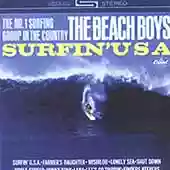
The first album by the Beach Boys is the negligible "Surfin' Safari" (1962) where the three brothers sing, without much conviction, little songs like "Surfin'" or "409". The turning point would come with the second, more refined album: "Surfin' Usa" is a classic beach album, one of those records where half of the songs could be sung at the beach around a campfire during summer. Yet, Brian Wilson (who composes and arranges the entire album) seems more in top form than usual: the heartbreak ballad "Lonely Sea" and the classic "Shut Down" are the clearest examples of how the Beach Boys are commendably trying to shed the label of a mere beach group. Naturally, however, they cannot betray their origins: the leading track of the entire album is "Surfin' Usa", an unabashedly carefree hippy version of the classic rock'n'roll beats typical of Chuck Berry and Bill Haley.
"Surfin' Usa" is a typical pop-beat album from the early Sixties, extremely simple musically, relatively complex vocally. The Beach Boys, deep down, attempt to imitate, in a less sappy manner, the singing art of the Platters: a chorus of voices (in this case three) alternates and often overlaps, in a sort of modern alternating madrigal, for which the old lesson from the Greek choir is not, as one thinks, that far off. Hyperbole aside (but these aren't totally unfounded thoughts), the Beach Boys were the pioneers for many American groups of the late Sixties and mid-Seventies (especially the Village People) and, for at least a decade, they were the most beloved American group among young people, remarkably outshining world-renowned British bands (Beatles and Rolling Stones). There is much to ponder regarding this fashionable explosion of the early Sixties: leftist revolutionary protesters idolized Bob Dylan, while young and bourgeois Californian guys saw the Beach Boys as myths as well as idols.
"Surfin' Usa" is a crucial album in the history of pop music (as "Sgt. Pepper's Lonely Hearts Club Band" by the Beatles would be in 1967) but it is also the most glaring example of how one can reach the hearts of millions of youngsters by focusing not only on youthful charm but also on quality. Perhaps the youngsters of the early Sixties knew almost nothing about musicality, sound, and rhythm, but it is admirable how the three Wilson brothers try not to appear crude and ignorant at all costs: the musical quality of "Surfin' Usa" is commendable and captivating. Don't believe it? Try listening carefully to "Surf Jam", doesn't it sound musically perfect? Of course, not everything works wonderfully; here and there the record seems to stumble, but one cannot expect perfection from the Beach Boys; you can ask for quality, not perfection.
"Surfin' Usa" would achieve a resounding commercial success, so much so that it is still considered today the most representative Beach Boys album, even more than the so often praised "Pet Sounds" (1966, very good but not exceptional). A little curiosity: it was thanks to "Surfin' Usa" that John Milius, in 1977, found the inspiration to create "Big Wednesday". Do you understand the importance of the Beach Boys?
Loading comments slowly
Summary by Bot
Surfin' USA by The Beach Boys is a defining album of early 60s surf rock, showcasing Brian Wilson’s refined compositions and vocal harmonies. Despite its simple musical base, the album holds a deep cultural significance as an expression of Californian youth and carefree spirit. The review highlights the album’s quality and its impact on music history, noting its commercial success and influence on subsequent artists. It emphasizes the band's ability to combine youthful charm with notable musical craftsmanship.Tracklist Lyrics
The Beach Boys
The Beach Boys are an American rock/pop group formed in Hawthorne, California, best known for their vocal harmonies and for Brian Wilson’s studio-driven ambition that reshaped 1960s pop, with landmark releases such as Pet Sounds and the long-mythologized Smile-era material.25 Reviews
