
 •
Rating:
•
Rating: THE REVIEW
IT WASN'T JUST THE BAND OF BOB DYLAN … yet we always go back there
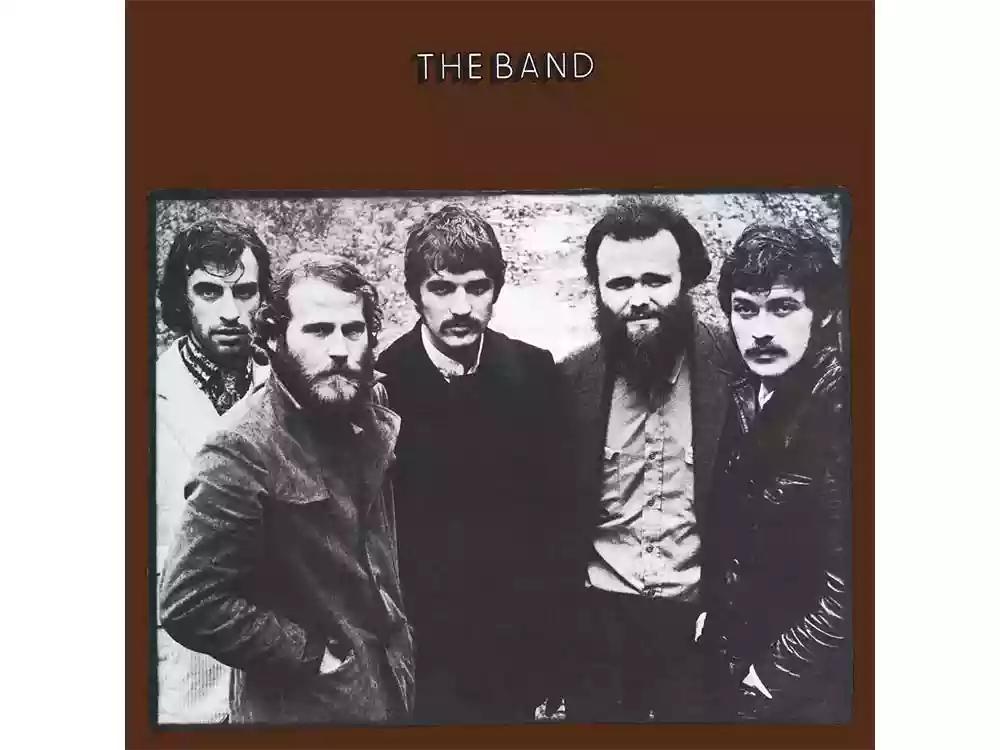
The Band got its name during the months of collaboration with Bob Dylan during that intense but obscure period following his "mysterious motorcycle accident," from which we have the Basement Tapes and the first two albums by Robbie Robertson and company, namely Music From Big Pink and indeed this self-titled album that hasn't stopped fascinating us despite its 50 years. It's thanks to an original blend of different musical genres, all typically American (from country-folk to blues with hints of bluegrass and a rhythm section echoing R&B) as a precursor to what we now call roots-rock or Americana. It's a real shame that among the album notes, which are otherwise absolutely minimalist, the song lyrics are missing because it's not easy to navigate (obviously for an Italian and in the absence of the internet) through the complexity of the words that refer to themes that are quite unfamiliar to us, like the civil war between Unionists and Confederates for the album's most famous piece ("The Night They Drove Old Dixie Down") or the truck driver of "Up On Cripple Creek" and the union worker of "King Harvest, Has surely Come." Even unaware of the lyrics, there's still the magnetic allure of The Band’s sound, where Robertson, Hudson, Danko, Helm, and Manuel—all multi-instrumentalists—would alternate vocals and swap roles: just to mention, in one of my favorite pieces, the spirited "Rag Mama Rag," where keyboardist Richard Manuel sits at the drums in place of Levon Helm, who here is instead on the mandolin and vocals; while he returns to the piano and lead vocalist for the inspired "Whispering Pines," an almost mystical ballad that recalls Dylan's "I Shall Be Released." Because in the end, we always go back there, to that reciprocal cause-and-effect relationship between the minstrel of Duluth and "his band," which would only be resolved years later with the legendary The Last Waltz. Staying with this album, note the prominent role—in the collegiality of interpretations—that Robbie Robertson as the lyricist would assume from there on. And a few more words on the graphics: on a brown background—so that The Band's album became the "brown album" in parallel to The Beatles' "white album"—the beautiful B/W photos by Elliott Landy (especially the slightly grim cover) make it an iconic object in itself and another reason to have it in your record collection.
Loading comments slowly
Summary by Bot
This review celebrates The Band's self-titled 1969 album as a seminal work in roots-rock and Americana. It highlights the group's multi-genre fusion, intricate musicianship, and deep connection with Bob Dylan. Despite challenging lyrics that reference rich American history, the album's magnetic sound remains timeless. The iconic album art also adds to its status as a classic collectible.Tracklist Lyrics
The Band
Canadian-American roots-rock group formed by Robbie Robertson, Levon Helm, Rick Danko, Garth Hudson, and Richard Manuel; emerged from backing Bob Dylan to release seminal albums like Music From Big Pink and The Band. Their 1976 farewell concert, The Last Waltz, was filmed by Martin Scorsese.09 Reviews
