
 •
Rating:
•
Rating:
THE REVIEW
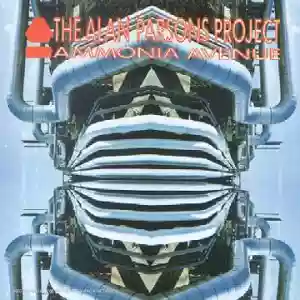
Well, since the other review on DeBaser speaks positively (through metaphors) about this album, I will tell the story of "Ammonia Avenue" from my perspective as a disappointed lover. Yes, because the English group led by the eclectic sound engineer of Pink Floyd was my first musical love, so much so that for a long time, I focused my attention exclusively on them, much like the good mien_mo_man on Rundgren and various amenities.
What shocked me most was the overwhelming influence the Eighties had not only on Parsons but on many other artists from the Seventies scene. So much that I concluded, after a long chain of mental musings, that today's musical decline is nothing more than a continuation (and sometimes a reimagining) of that decade. If you think about it, "studio" production was born in the Eighties, during which technology reached its peak; as well as the purely "commercial" approach (see Mtv) and a progressive massification of culture. Whether we like it or not, this isn't a personal judgment, but a sociological thought, because in fact, in my opinion, today we're more or less (for the worse) like twenty years ago.
And the thing that saddened me the most was precisely the APP's shift towards Eighties sounds. After loving the esotericism of "Tales," the science fiction of "I Robot," the rock-orchestral orgy of "Turn of a Friendly Card," the best-selling LPs instead draw on the schematics of the English pop of the time. Thus, what emerges is compositional fatigue, if not coldness, as well as a "plasticized" approach that obviously made me wince. Except for "Pipeline," an excellent instrumental piece that nevertheless reveals itself a bit cold, as well as the very poignant title track, the rest of the album seems an attempt to speculate after the success of "Eye in the Sky," hastily. The melody of "Don't Answer Me" makes one yawn; the American FM rock of "Let Me Go Home" seems like a fish out of water to me; the other tracks result bland, uninspired, leaving no mark. And above all, instrumental imagination is sacrificed in place of anonymous electronic drums and well-calibrated, but icy, synths.
Then it must have been like this: the incredible success of the previous record leaves them stunned, and they decide to set aside the original solutions of previous years to strike while the iron is hot. What results isn't a properly "bad" album, but it seems the group has to compose and play something that doesn't belong to them unwillingly: they therefore come to terms with the market, giving up their very particular style.
I'm a disappointed lover. Because I would have preferred to listen to more suites filled with mystery, funk-prog pieces, classic arrangements, and futuristic instrumentals. What a shame. Even though this review will probably not grab your attention (who cares about a harmless album from '84), I take this opportunity to discourage this album to anyone wanting to approach the Alan Parsons Project. And especially to counter the enchanted atmosphere (rightly so) of Pibroch's review.
Loading comments slowly
Summary by Bot
This review expresses disappointment in The Alan Parsons Project's 'Ammonia Avenue' due to its heavy 1980s commercial sound and loss of the band's earlier progressive and orchestral style. While acknowledging a few decent tracks, the reviewer criticizes the album's cold and uninspired compositions. They view the work as a surrender to market trends and urge listeners seeking the band's original essence to avoid this album.Tracklist Lyrics Videos
The Alan Parsons Project
The Alan Parsons Project was a British studio-based progressive/art rock project founded by Alan Parsons and Eric Woolfson, known for concept albums, polished production, orchestration, and a rotating cast of guest vocalists and musicians.19 Reviews
Other reviews
By Pibroch
"Maybe it’s not really my night, after all. Because people are always the same, they never change."
"Despite all the doubts, someone of them knew and, stone by stone, they built it, high. A ray of hope."
