
 •
Rating:
•
Rating:
THE REVIEW
There is no 2 without 3... Yes... It's a shame no one notices.
Let’s be honest... In the music field nothing is allowed. In many cases, a band’s success (and appreciation for the band itself) is directly proportional to its static nature.
Woe to changing something, woe to playing differently, woe to attempting experiments (unless they are so radical as to be revolutionary), and woe to developing different musical solutions.
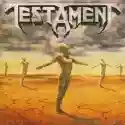
With this premise (and conviction) I am about to review what I consider one of the best Thrash Metal albums of the late eighties from the Bay Area: the controversial "Practice What You Preach," the third work by Testament.
Why controversial?
Maybe because it came after those two Thrash milestones "The Legacy" and "The New Order"? No! Maybe because it tried to imitate the sound of the more famous Metallica (which is absolutely not true in my opinion)? No! Maybe because it seemed to wink at certain "easy listening" solutions that were interpreted as an attempt to make everything more "accessible"? No (and enough already... damn it)!
Controversial simply because few were able to understand the real intent that Testament had set since they formed in 1983 under the name Legacy: trying to propose a devastating, fast, and aggressive music (in line with the Thrash movement) but introducing a "melodic sensitivity", which no one had ever proposed before (at least in the Bay Area). Achieving the intent of the great artists of Heavy Metal: fusing brutality and melody into a single, boiling, musical pot.
Their debut in 1987 was one of the most devastating and acclaimed in the world Metal scene, which rested on violent and fast Thrash foundations but at the same time presented a tight-knit, original band, full of ideas, with an incredible ability to develop them and with a maturity that no other group had shown on their debut... Yet it was already clear with songs like "Alone in The Dark" the harmonic approach diversity that set them apart from most of their peer and homegrown bands. The subsequent "The New Order" was seen by many as a reaffirmation of the previous work's sound, but to the more attentive, it was immediately clear the evolutionary development attempted and accomplished by them: reinvigorating everything in an aggressive synthesis of firm and square tones, with softening of the sounds which corresponded to a softening of the cutting and "raw" characteristics of the legendary debut (melody becomes much more part of the DNA of the songs compared to the works of their cousins Metallica and does not limit itself to sudden breaks put here and there).
But it is with this third album that Testament made the decisive step towards sound research, tending towards the song form, started with previous works.
Let's say that for Thrash fans (and of previous albums) it was quite a blow... Testament's "sound journey" was soon smeared with accusations of high treason aimed at gain, and many lamented the loss of the "old" works.
But let’s not misunderstand... The album in question is absolutely not "easy". We are not dealing with a work of simple assimilation or soft sounds... The boldness and the fast and brutal frontal assault are characteristics that don't abandon them (listen to the tense Title-Track in this regard), we can only say that in this work we find, hidden here and there, Heavy streaks that alternate with Thrash slashes mixed together with melodic and very varied parts concentrated in Louie Clemente's drum rhythms and in the truly exciting guitar work at times (let's remember that Testament counted among their ranks one of the best and most talented guitarists of the time, Alex Skolnick, later in Savatage and a myriad of rock projects).
With this "Practice What You Preach", Testament do exactly what they secretly preached from the beginning, trying to smooth out the Thrash roughness to derive a music aimed at pleasing all the demanding Metal people.
The work is truly very varied: frantic moments of high Thrash school (the title track and the very violent "Sin Of Omission"), neoclassical solos with incredible melodic balances (by the great Skolnick), Rock-oriented recalls ("Perilous Nation"), melancholy "changeable" relaxations ("The Ballad", a song you could play to your grandmother and then watch her flip on the rocking chair), outbursts on the edge of Punk-Hardcore (the very fast "Nightmare") and deep instrumental and erratic rhythms ("Confusion Fusion").
Chuck Billy's vocal lines, although sometimes dangerously close to Hetfield's style, are definitely more ductile and dynamic (as well as varied and personal) compared to his more famous colleague (in this work we hear the first growl hints that will characterize the more recent releases).
The only "formal" flaw, according to yours truly, lies in the monotonous production that does not fully emphasize the compositional effort made by the group.
Ultimately this album may not be as powerful, aggressive, and raw as its incredible predecessors (and I don't know if that's a good or a bad thing... you decide) but it is very pleasant and greatly inspired, and it certainly cannot be said that in this record Testament betray the intents, perspectives, and ideals of their music.
Subsequently, they will lose themselves in the darkest period of their career, marked by constant line-up upheavals and a determined, stubborn, and sometimes excessive search for the "song form" which will lead the band to experiment with not always successful solutions (especially with the criticized "The Ritual")... In the long run, they will manage to recover and produce one of the best Metal works of the late millennium ("The Gathering") before leaving us fans with bated breath in anticipation of a new and apocalyptic return.
Practice What You Preach remains the last great Metal piece by Testament in the eighties, which stands alongside its predecessors without disgrace (even though different) and is one of the few attempts to reinvigorate and reassess a sound (Thrash) which in those years (1989/90) began to dangerously creak and crumble precisely because of its staticity.
Loading comments slowly
Summary by Bot
This review praises Testament's third album 'Practice What You Preach' as a bold step in thrash metal during the late 1980s. It highlights their innovative fusion of melody with aggression, noting the album's variety and talented musicianship, especially Alex Skolnick's guitar work. Some critique is given to the production quality, but overall the album is recognized as an important and inspired work that challenges thrash metal's static nature while staying true to the band's core ideals.
