
 •
Rating:
•
Rating: THE REVIEW
Let's face it... Testament has lost their tranquility for years... Perhaps for too long... Perhaps for so long that anyone else would have given up... Any other band would have gotten tired and said "thanks, it was nice, goodbye".
With line-up changes more frequent than autumn rains, second thoughts, illnesses that have debilitated various members for several periods (and still do), dubious stylistic directions and criticized but courageous attempts at musical evolution, they haven't had a moment of calm since 1990. Saying that the nineties were difficult years for Testament is an understatement. Indeed, it seems that in the previous eighties they left behind that personal balance and musical freedom that had influenced and characterized thrash masterpieces like 'The Legacy', 'The New Order'. Moving into the nineties, almost as if they were victims of an "anticipated millennium-bug" (and certainly not helped by the dark period that metal in general and thrash specifically were going through), that balance broke definitively and left the band adrift in the sea of "accessible experiments" (see 'The Ritual'). However, they resisted and tried, for better or worse, to search in every direction for that lost balance. They looked towards melody ('Soul Of Black' and the aforementioned 'The Ritual') but didn't find it, so after changing several members (among whom was the great Skolnick), they decided to aim towards a sonic extremism and the result was the successful 'Low', which marked a decisive return to the aggressive sounds of their beginnings with a modern twist and a curious peek towards extremism on the verge of Death Metal.
It almost seemed as if the search was over, that the balance had returned (thanks to the entry of virtuoso guitarist James Murphy and dynamic drummer John Tempesta), and even the fans, disappointed by previous works, seemed to have proclaimed a miraculous resurrection. But misfortune was lurking around the corner. The umpteenth instability, the umpteenth loss of tranquility (which led to the departure, for artistic reasons and personal divergences, of Murphy, Tempesta, his replacement Dette, and founding member Christian [bass]), led to an unprecedented crisis that resulted in the band's disbandment in 1996.
But the spirit of the band did not yield... after a hiatus with Dog Faced Gods, Chuck Billy and Eric Peterson rolled up their spikes... em... their sleeves and reformed the band by calling to their court the talented Glen Alvelais (guitar), Derrick Ramirez (bass, former guitarist in their early days), and his majesty Gene Hoglan on the drums. The result of this was 'Demonic'.
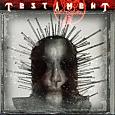
Born out of frustration, anger, and suffering, "Demonic" presents itself as the most brutal and insane work of the band, where the discontent and disillusionment towards the past is fully perceived alongside a morbid awareness of the will for rebirth. Gray, painful, and unhealthy atmospheres, with a more resigned than threatening nature (almost disappointed, as if to say: "you made us angry and now we punish you!") maliciously combine with fiery and deliberately violent passages, symptoms of a dominant aggressive discontent.
Musically uncompromising, the album is the not entirely natural continuation of what the band had done with the previous 'Low'. It continues, by intensifying the approximation to Death Metal sounds hinted at in that work, further weighing down the sound to create an impenetrable sonic wall. The tempos slow down to a density never before experienced by the band, and almost all the tracks present themselves as massive and brutal mid-tempos distinguished by a heavy work of rhythm guitar and an incredible and dominant use of growl vocals by Chuck Billy. In a "demonic" mix of styles, the absolutely Thrash vein that Testament manages to infuse into each track stands out, blending everything with the more "square" American Death and with a minimal (and unintended) nod towards European Melodic-Death.
The perhaps excessive homogeneity of the compositions may be the only weak point of 'Demonic', making a track-by-track description of the work almost unnecessary as it presents itself as tense and appreciable in every part. Nevertheless, worth highlighting are "Demonic Refusal" with its apocalyptic pace, the paranoid "John Doe", the incredible assault of "Murky Waters", and the desperate "New Eyes of Old" (while "Hatred's Ride" seems the ideal link between 'Low' and this album).
The technical performance of the various elements is, as usual, precise but, the most attentive will notice how Gene Hoglan, although certainly contributing to hardening the sound, is not at his best, giving us a drum work neither praiseworthy nor blameworthy.
Ultimately, I consider this album a transitional record in Testament's career, necessary for the birth of the masterpiece that is the subsequent 'The Gathering', and absolutely successful. It may not be the band's best record, it may not be an innovator or an absolute masterpiece, but it stands as one of Testament's most spontaneous and heartfelt albums, an unknowing offspring of the moment's desperation and veiled with a "drama" never present before and never to be repeated again.
The sound of anger, for a band to which fortune has often turned its back... But, as Signorelli used to say, perhaps it's the curse of being metalheads to the core... "we reach for the stars, but always and inevitably remain with our feet planted in the mud".
Loading comments slowly
Summary by Bot
The review highlights Testament's turbulent 1990s era culminating in 'Demonic,' a raw and brutal album showing their return to aggressive thrash roots mixed with death metal influences. Despite lineup instability and stylistic shifts, 'Demonic' stands as a heartfelt, intense, and necessary transitional record before their masterpiece 'The Gathering.' It features heavy, mid-tempo riffs, growling vocals, and emotional depth tied to frustration and rebirth.Tracklist Lyrics
