
 •
Rating:
•
Rating:
THE REVIEW
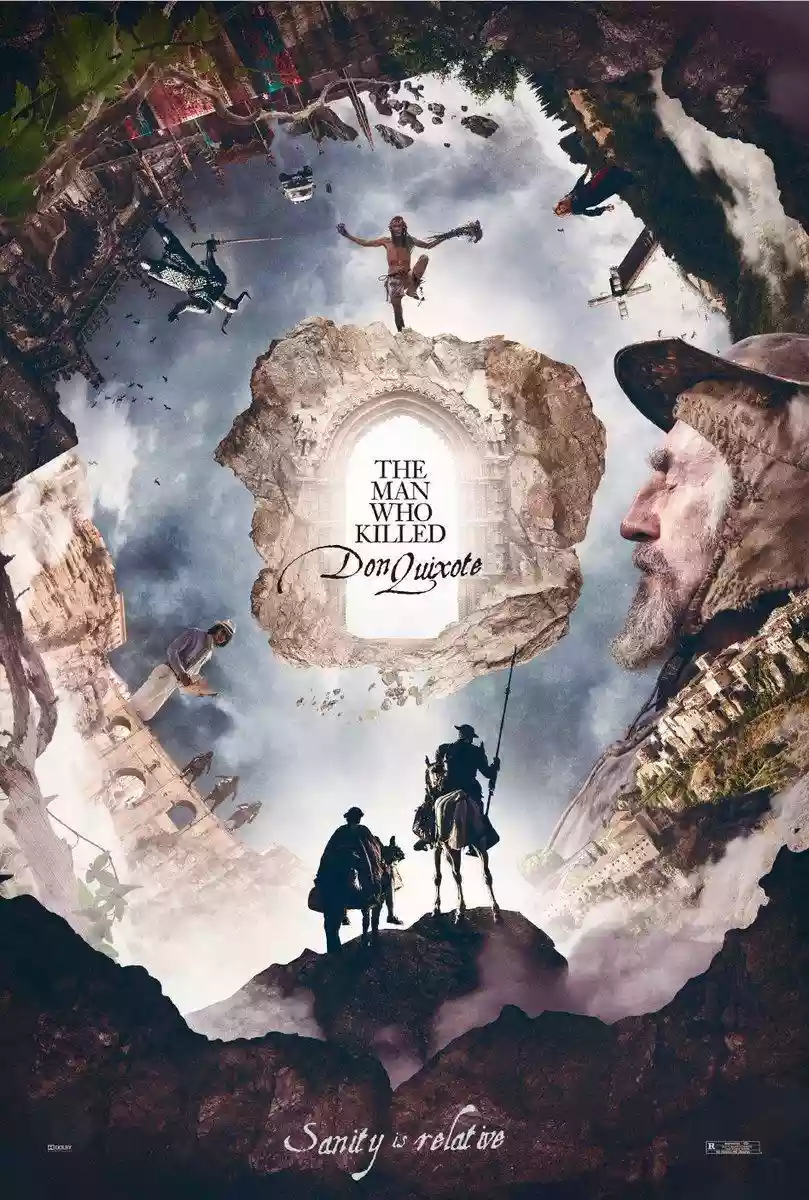
Two years ago, around this time, The Man Who Killed Don Quixote was in theaters, the film with the longest and most troubled gestation in the history of cinema, a hymn to perseverance and love for this art.
Why is this testamentary film by Gilliam one of the most beautiful and precious of the last decade?
Because it is a film that shows how the power of cinema, imagination, and stories is not at all something intangible, but rather something deeply physical and spiritual at the same time, an utterly timeless and limitless force, something we still need now more than ever, and something we will need forever. And it has a real and concrete influence on the life of those who are captivated and in love with it. Something that, in the end, does not leave you and never will.
Immediately considered by many as Gilliam's ‘8 1/2’ (the Fellini masterpiece has always had a great influence on the director of Brazil - the latter is precisely the example), in reality, it is something extremely personal and intimate, and perhaps it is in this respect that the comparison becomes fitting. A director and the work he wants but cannot stage, and reality and fantasy, dream and imagination become one. But is this conventional and schematic - and, at times, reassuring - distinction really important?
For all this and much more, I consider Gilliam's work an invaluable masterpiece. Of love and vitality.
And for this, I will never stop thanking him for the emotions of that theater viewing, right from the ironic opening caption, which referred precisely to the endless and tortuous epic labor of this dream. Seeing it finally realized was a moving feat and, in itself, already a fairy tale with a happy ending.
Loading comments slowly
Summary by Bot
This review celebrates Terry Gilliam's film as a stunning, heartfelt masterpiece born from decades of struggle. It highlights the film's embodiment of cinema's power as a spiritual and imaginative force. The work is praised for its unique blend of reality and fantasy and its personal significance. Considered invaluable and full of love and vitality, the film leaves a lasting emotional impact.
Terry Gilliam
American-born British film director, screenwriter, animator, and former member of Monty Python. Known for visionary, surreal, and satirical works including Brazil, Twelve Monkeys, The Fisher King, Fear and Loathing in Las Vegas, Tideland, The Imaginarium of Doctor Parnassus, and The Man Who Killed Don Quixote.09 Reviews
Other reviews
By joe strummer
This film is an act of beauty, with no need for arguments to sanction its value.
The success lies in not surrendering to the world besieging dreams; it’s not necessary to conquer it, just to resist it.
By Armand
Don Quixote is only poetry, and it is always real because it is poetry.
The eternal return of Don Quixote... is the invisible divine rhythm that holds up the entire structure of existence.
