
 •
Rating:
•
Rating:
THE REVIEW
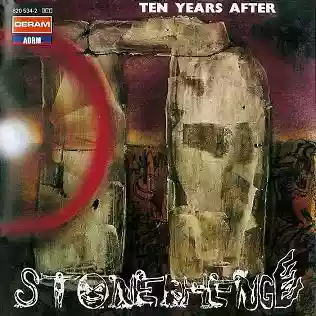
The third album by "Ten Years After" titled "Stonedhenge" was recorded between September 3 and 15, 1968 at the British Decca's West Hampstead Studio, and was released on February 22 of the following year, reaching number 6 on the UK sales charts; in the US charts, however, it didn't go beyond 61.
The album (lasting about 35 minutes) consists of 10 tracks, all signed "Ten Years After", one of which was released as a single on November 29, '68 ("Hear Me Calling") with a shortened version of "I'm Going Home" on the B-side.
The first track, "Going to Try", is a varied blues musically, unlike the vocals, where Alvin Lee repeats the same phrase throughout the song alternating with frantic instrumental parts and decidedly slower ones. Good organ section over the sound landscape created by the musicians. "I Can't Live Without Lydia", written and played entirely by the keyboardist Chick Churchill, is an enjoyable piano piece of 1 minute and 20 seconds leading us to "Woman Trouble", a very jazzy blues with organ, guitar, and bass solos that perfectly converse with the drums.
Again, a short piece "Skoobly-oobly-doobob", where this time it is Alvin Lee entertaining the listener with solos perfectly mirrored by his voice, all executed flawlessly. Remarkable and at the same time entertaining. Then comes the moment of the already mentioned "Hear Me Calling", a song in full "Ten Years After" style with a guitar solo in full Alvin Lee style dominating the entire middle part of the piece, probably the best of the whole album.
"Sad Song" is a repeated bass line for a good 3 minutes with Lee’s voice perfectly matching the rhythm that increases but doesn’t change the structure of the song. The title couldn't describe it better. In "Three Blind Mice", it is up to the drummer to accompany us to the next track with tom hits without drawing too much attention in his minute-long occupation; a highly negligible piece, allowing for even greater appreciation of "No Title". 8 minutes of blues, beginning in the same vein as "Sad Song", but culminating in impressive solos by the good old Alvin Lee. After this, organ and psychedelia, a new entry for "Ten Years After".
Thus, we arrive at "Faro", written by Leo Lyons, which following the intentions of the previous tracks ("I Can’t Live Without Lydia", "Skoobly-oobly-doobob", "Three Blind Mice") allows each individual musician to showcase themselves in total solitude, again for just over a minute and going completely unnoticed. It is then up to "Speed Kills" to close the album with train and guitar whistles. A song that recalls the wild west, when cowboys chased cattle across the prairies of Arizona.
A presumed train accident then ends the song and the album, which can be considered the last of the purely blues line from "Ten Years After", as from "Ssssh" the band will move to decidedly more hard rock territories.
Loading comments slowly
Summary by Bot
Stonedhenge is Ten Years After's third album, recorded in 1968, known for its strong blues rock foundation with hints of psychedelia. Alvin Lee's guitar solos stand out, especially in tracks like 'Hear Me Calling' and 'No Title.' The album showcases individual musicianship with short instrumental pieces and marks the band's last pure blues record before shifting to hard rock.
Ten Years After
Ten Years After are an English blues-rock band strongly associated with the late-1960s British blues boom and the Woodstock era, led by guitarist/singer Alvin Lee.12 Reviews
