
 •
Rating:
•
Rating:
THE REVIEW
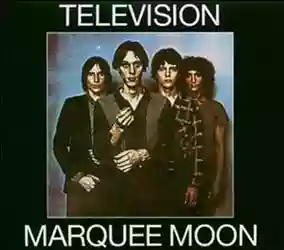
Without any shadow of a doubt, one of the masterpieces of the American new wave and the entire history of rock, certainly to be counted among the most important and influential albums of all time. The band first gave their cries in 1975 with the release of some singles by independent labels, leading to the publication of their first full-length effort two years later, thanks to the strong personality of leader Tom Verlaine (real name Tom Miller, and even the stage name is quite a declaration) and their presence on the scene at New York's CBGB's, the undisputed "temple" of the new American rock of the late '70s, where legends such as Patti Smith, Talking Heads, and Ramones, among others, cut their teeth. The task of opening the dance is entrusted to the turbulent garage of "See no evil"; it's the year of grace 1977, and you can feel it: we are in the midst of a punk revolution, and the "old guard" of what could be called "classic" rock is being shattered with iconoclastic fury by the almost brutal and uncompromising immediacy of three-chords-and-go. The second track, "Venus," is for me one of my favorite songs of all time, to which, for various reasons, I have a deep connection: over a dazzling tapestry of jingle-jangle chords with clear sixties reminiscences (Byrds brand, to be precise), a melody of elusive beauty soars, with an almost magical and surreal lyric; but it’s Verlaine’s crystal-clear voice that really moves, simultaneously seductive and evocative. The following track, the muscular "Friction," stands out for the entirely original and innovative use of the guitar, which practically dictates the rhythm of the entire track, sometimes lurching, sometimes obsessive, then exploding in sharp and sudden accelerations. But it is in the long episode of the title track that the particular Television-magic is perfectly sublimated: the first part is characterized by Verlaine's detached and mechanical delirium, now devoid of any human feature, supported by the robotic and relentless rhythm section, followed by a long guitar excursion that rightly enters among the most memorable solos of all time. This might seem completely anachronistic and out of place in an era where anything even vaguely resembling a solo was considered criminal, and the last "guitar-heroes" were forced to live in a semi-clandestine state. In reality, there is no virtuosic complacency here, nothing that might suggest a hollow and pompous "instrumental onanism" (pardon the expression). The guitars of Verlaine and Richard Lloyd converse perfectly, in a rare and miraculous blend of vigor and minimal elegance, echoing the Velvet Underground and Coltrane-style improvisations, dragging the listener into an ecstatic and almost cathartic, purifying crescendo, difficult to describe in words. However, what strikes most is the extraordinary timbre of the six strings, which transitions from tormented, lacerating, dissonant, to liquid, almost impalpable, to the point of, as Patti Smith observed, almost emitting bird sounds. There's barely time to recover when the martial "Elevation" arrives, with singing so cold and alienating that it would pair with "Venus" if not for its refrain, horrendously disfigured, torn apart by sharp and relentless guitar slashes. "Guiding light," a delicate and evocative ballad, and the epileptic "Prove it," with its imaginative rhythm, seem finally to bring the album's tones back to earth, on more human and reassuring levels. But in reality, all this serenity is mere appearance: Television's world is a sick and alienating universe, cynical and desolate, with no possibility of salvation, where calm is dictated solely by resignation, by inevitability. This is perfectly demonstrated by the concluding "Torn curtain," magnificent in its slow, majestic, and at the same time evocative progress, filled with malaise and existential spleen.
Ultimately, an unrepeatable album, a liaison between two eras, miraculously balanced between the vague flavors of certain "old" rock (Byrds, Velvet Underground, Jefferson Airplane) and new trends of the time, fundamental in pointing out new paths for future generations to follow (starting with R.E.M., reaching Radiohead, passing through Sonic Youth). Or perhaps more simply, a timeless album, like all true masterpieces.
Loading comments slowly
Summary by Bot
This review praises Television's Marquee Moon as a groundbreaking and influential album in American new wave and rock history. It highlights the band's origins, the iconic New York CBGB scene, and the innovative guitar work of Tom Verlaine and Richard Lloyd. The album is lauded for its blend of classic rock influences with the emerging punk spirit of the late 1970s. It remains a timeless masterpiece that shaped future generations of musicians.Tracklist Lyrics Videos
Television
Television is an American rock band formed in New York City in 1973. Core members include Tom Verlaine (vocals, guitar), Richard Lloyd (guitar), Billy Ficca (drums), and Fred Smith (bass; replacing founder Richard Hell). Central to the CBGB new wave scene, they debuted with Marquee Moon (1977), followed by Adventure (1978), disbanded, then reunited to release the self-titled Television (1992). They are renowned for intricate dual‑guitar interplay and literate, art‑punk songwriting.09 Reviews
Other reviews
By jeremy
The band’s sound is fundamentally based on a solid guitar architecture, with Verlaine and Lloyd extracting wonderful harmonies from their guitars.
Songs like See No Evil, Venus, Elevation, and the visionary and minimalist ten minutes of the title track are spine-tingling.
By NickGhostDrake
Fuck Tom Verlaine, because I believed in virginity and instead, he told me everything had already been raped 30 years ago.
And for a child it is always a source of pride when told 'how beautiful you are... You are just like your father.'
By David Bowie
Few resources but many ideas.
'Marquee Moon' is a forward-looking record for compositional and stylistic ideas, anything but dated and ready to be rediscovered.
By vinrock
Despite Television’s sound precision, it is not cold or impersonal; the guitars intertwine nervously, responding to each other, accompanying the singing and highlighting the more expressive passages.
Marquee Moon is an album that every music enthusiast of yesterday and today must discover, or rediscover, at least to understand a significant part of today’s bands.
