
 •
Rating:
•
Rating:
THE REVIEW
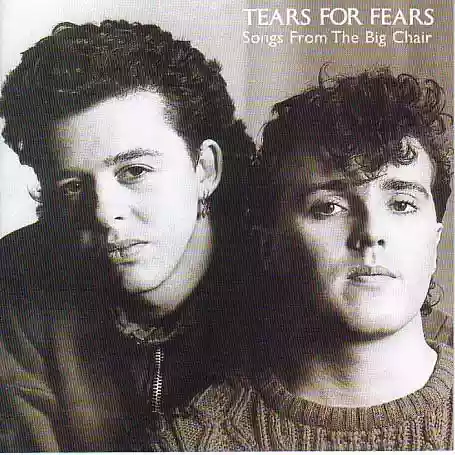
Wow! Let's start from the beginning, while wandering through record stores, I stumble upon the deluxe version of "Songs From The Big Chair", an album I know perfectly but didn't have on CD, so what better occasion than to purchase the "Luxury" version including all the b-sides of the singles and the "rarities," which are the extended versions of the 12" or the shortened versions of the 7". I listen to it again thoroughly and with dedication to rediscover what I remembered and perhaps to grasp what I had initially missed.
Well, the highest rating for this album, in my opinion, is obligatory, but before deciding to create my "debaserata" on this album, I think: "I wonder what they've said about 'The Big Chair' on DeBaser". To my great surprise, I discover that there is no specific review of this gem of pop-rock of immense elegance and quality. There are listings for other albums (almost all excellent) by TFF but not for this one, so I decide to make it myself. I also think that despite being relatively young (33), I spent years, between 16 and 25, convinced that albums of this genre or by these bands were for shallow kids, so I devoted myself exclusively to adoring stuff like Gentle Giant, PFM, Van Der Graaf Generator, and more or less known progressive rock. The "University of Progressive Rock" helped me enormously, and I will always be grateful for it because when I realized that other things could be interesting, I started listening to practically everything but with different mental foundations, and voilà, albums like this one, among many others, couldn’t possibly go unnoticed.
Moving on, and forgive me for doing it only now, to my assessment of this TFF "must", I find myself in the situation of reviewing the deluxe version (full of frills and trimmings) or the standard version. I decide to analyze the classic version but noting that the seven b-sides included in the first CD of this version are almost all instrumental, very minimalist "The Marauders" is the best, then "The Big Chair" and "Pharaos". Sweet, however, is "Sea Song" a splendid cover of an equally splendid song by Robert Wyatt, which would not have been out of place in the official track list. While on the second CD of "rarities," a couple of great remixes of "Shout" and "Rule The World" stand out. But let's focus on the album as "mom conceived it". "Songs From The Big Chair" has clear references to the '60s psychedelic but also, and it’s obvious, to the '80s pop. This blend of sounds, mixed as well as could be, creates a product very "ahead" for its time, even though based on already known foundations. If we want to find a little flaw in Orzabal and Smith's work, we can identify it in the vigorous decision to massively overdub the work, thus reducing the "freshness" factor.
The title is said to have been influenced by a British mini-series (book and TV) called "Sybil," which told the story of a woman with multiple personality disorder who often took refuge in her personal "big chair - big chair". Not to forget Ian Stanley's important work during the production phase (keyboardist and composer), Chris Hughes, and David Bascombe, who had the great merit of assisting the "title" duo in practicing this new sonic and compositional path. The electric start with "Shout" is record-breaking. A song so famous yet so varied. A structure that for six and a half minutes seems always on the same plane but has within it numerous points of different and excellent success: "In a violent era, you shouldn't have to sell your soul in black and white. They should really know, those over there, with an obsession in their heads, those for whom you are a good guy. Greet them, you shouldn’t jump for joy.".. It continues with the splendid elegance of "The Working Hour" with Mel Collins and William Gregory’s saxophones in great prominence and the equally extraordinary and successful "Everybody Wants To Rule The World," which with more pop rhythms unfolds a refrain that crashes into your head in an indelible way: "There’s a room where the light won’t find you, holding hands while the walls come tumbling down, when they do, I’ll be right beside you, happy we’ve almost made it, sad they have to fade it, everybody wants to rule the world".
More powerful is the engaging and obsessive "Mothers' Talk", another gem of electronic synth-rock with a thunderous job on electric percussion and more. You return to dream with the nocturnal and dreamy ballad "I Believe", a piece for sax and piano that demonstrates TFF’s uncommon versatility. Listening to this piece, which comes after memorable but always exceptionally elegant hits, one might judge "Songs From The Big Chair" surprising for having managed to sell millions and millions of copies unlike the famous "One Shot" created in the '80s "just" to sell but without offering deeper emotions even years later. "Broken" is instead the rock piece of the album. A wild and thrilling semi-instrumental with Orzabal's and especially Neil Taylor’s guitars that perhaps leave us too soon (the track unfortunately lasts only two and a half minutes) but have the merit of leading us to yet another masterpiece "Head Over Heels", where a well-executed piano riff accompanies the entire song, modifying and weaving itself also into guitar and keyboards: "I’m lost in admiration, could I need you this much? You’re wasting my time. You’re wasting my time. Something happens, and I’m head over heels. I don’t discover until I’m at my heels". The track grandly closes with a call back to the already mentioned and spectacular "Broken", further elevating its preciousness. "Listen", listen indeed, I say. A minimalist and lengthy escape from earthly reality. Let yourself be guided by the sonic framework created by the keyboards and synthesizers that will gracefully fill your ears for almost seven minutes, during which Orzabal's and Marylin Davis' voices and a few slow electric guitar riffs will help ensure you don't get lost in nothing. The album’s only "non-single" along with "Broken," but darn it, if only there were more "non-singles" like these two!
The album closes with a reprise of "The Working Hour" in a so-called "Piano Version," more stripped-down (practically mono-tone voice and keyboard, with hints of sax) but nonetheless interesting. In conclusion, I will say nothing more than to recommend you to listen if you already have it at home or buy it if you don't possess it yet.
Loading comments slowly
Summary by Bot
This detailed review revisits Tears For Fears' iconic album Songs From The Big Chair, highlighting its blend of 80s pop and 60s psychedelic influences. The deluxe edition's rare tracks and remixes add depth, while standout songs like "Shout," "Everybody Wants To Rule The World," and "Mothers' Talk" exemplify the album's brilliance. The reviewer praises the album's timeless quality and musical craftsmanship despite some overdubbing excess. Overall, it’s highly recommended for both longtime fans and new listeners.
Tears for Fears
Tears for Fears are an English pop rock/new wave duo best known for their polished ’80s hits and albums, centered on Roland Orzabal and Curt Smith. Their best-known era spans The Hurting (1983), Songs From the Big Chair (1985) and The Seeds of Love (1989), followed by periods of separation, later reunion work, and a late-career comeback with The Tipping Point (2022).11 Reviews
