
 •
Rating:
•
Rating:
THE REVIEW
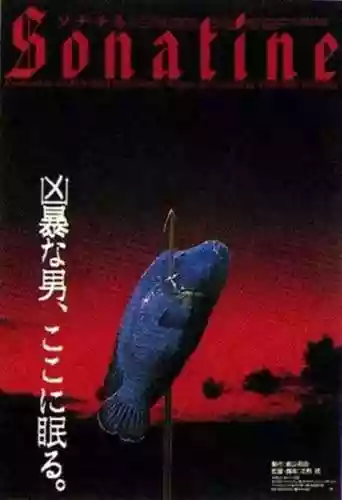
Often in novels and films, there is much more than what is actually meant to be conveyed, or it may be that we imagine all this; it's a trap that's easy to fall into. Who knows... In "Sonatine," it's not only about the Yakuza, what is usually defined as the Japanese mafia, that is discussed. There's something more that Kitano wants to show us, and he manages to convey it to his audience.
The story is this: the head of a powerful Yakuza, Kitajima, sends one of his most trusted lieutenants, Murakawa (played by Kitano himself), to Okinawa, where a gang war is breaking out. The situation doesn't seem that dangerous, but Murakawa is worried; he would like to leave, his sixth sense urges him to be cautious, and he only takes his most trusted men with him. The welcome there is explosive, literally, and he is forced to take refuge with his men in a small house by the sea (one of the constant elements in Kitano's films), far from the city. It is there that the key situations of the film develop, thanks also to an encounter with a girl who loses her head for Murakawa. The gang war and everything else suddenly disappear from his mind, and he begins to have fun with his men, shooting off fireworks at night, watching his men play sumo and mocking them by pretending to kill them when he is aware that the gun is unloaded.
This idyll, however, is interrupted by a man who walks unnoticed and by a strange nightmare: a Russian roulette that concludes with Murakawa’s killing. The same game that reveals the protagonists' anxieties, as in another famous film: "The Deer Hunter" by Michael Cimino. Thinking about it, they have many elements in common: the anxieties are similar, there's a shared sense of life's emptiness and suffering. There are the ways and timings of criminal organizations that permeate the characters and have now built them, rebellion is constituted by a strange return to childhood and an harmony that can only be broken with blood. Besides Murakawa, there are two other fundamental roles: the youngest of his men, in his first experience of this kind, and Miyuki. The girl. In these two, there is a different attitude toward weapons, life, and in their relationship with people, but paradoxically, they are linked by an imperceptible and shocking fil rouge.
We are talking about a film and, before an actor, about a great director. Kitano confirms himself as a great master of shots, with superb photography and an editing that completes everything (Kitano writes the script and also does the editing, so everything first-hand). All this is summed up with extraordinary music by Joe Hisaishi, of great atmosphere, which starts and ends at the right moment.
A masterpiece, not the only one by the Japanese Master. A ranking in this sense is impossible
Loading comments slowly
Summary by Bot
Sonatine is more than a typical Yakuza film; it explores the emptiness and anxieties within its characters. Kitano’s direction shines through superb cinematography and editing, paired with Joe Hisaishi’s evocative score. The film balances violent gang conflicts with tender moments, portraying a haunting narrative. Sonatine remains a masterpiece and a testament to Kitano's cinematic skill.
Takeshi Kitano
Takeshi Kitano is a Japanese filmmaker, actor, and comedian (Beat Takeshi) known for minimalist staging, deadpan humor, sudden violence, and lyrical pauses. His films range from yakuza dramas to samurai reinventions and tender, near-silent fables by the sea.08 Reviews
