
 •
Rating:
•
Rating:
THE REVIEW
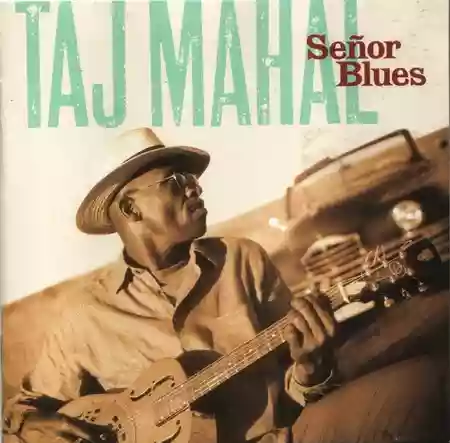
The blues is dead and buried. And it has been for quite some time. Many believe it, and especially more and more people do. Who knows what went through the mind of Henry Saint Clair Fredericks, known as Taj Mahal, when at the end of the '70s he was dropped by Warner Bros. Records after his contract ended, without managing to secure a new one with other record companies. Tough times, dominated by hard rock (with whispers of metal), pop, and disco music, in which making a great blues record is extremely difficult. Taj doesn’t know this, but he quickly realizes it. But when something is your entire life, you don't give it up so easily, so the American bluesman packs his bags and moves to Hawaii, where he recruits the members who will form "The Hula Blues Band," with whom he will play for much of the '80s. The return to recording happens in '88 with 'Taj,' followed by a long line of decent albums alternating with very good, if not excellent, ones. Culmination of this rebirth of the American bluesman is undoubtedly "Señor Blues," a small breviary of black music: predominating are blues and soul, but our musician is open to a wide range of influences, which add an extra tone of unpredictability and charm to his works.
The initial "Queen Bee," the first of the three original tracks included, is a perfect witness of this trend that characterizes the entire album, with its reggae influence enriching a song where Taj's splendid voice emerges imperiously, as powerful as in the good old days and enhanced by time with soulful nuances. The journey into black music continues with daredevil gospels, wild funk, and even jazz, but it is especially the soul that predominates. Some have an almost pop flair ("Having A Real Bad Day"), others a devastating energy, not to mention two or three ballads (including the exceptional "21st Century Gypsy Singin' Lover Man"). There's also room for blues, Taj's first love, which besides playing the lead role in a couple of episodes is the true least common multiple of all the pieces of this engaging album.
Accompanying the leader, always busy with harmonica, dobro, kazoo, and voice, is pianist John Cleary (author of two songs), the organ of Mick Weaver, the guitar of Johnny Lee Schell, and the rhythm section made up of Larry Fulcher and Tony Braunagel. Enriching the sound finally are The Texacalli Horns, a duo committed to the horns, and a group of backing singers; all perfectly coordinated by the precise production of John Porter which makes the sounds perfect without distorting Taj's sound.
Paying homage to Otis Redding and Marvin Gaye, passing through T-Bone Walker and jazz pianist Horace Silver, Taj Mahal creates a homogeneous album (winner of a Grammy for Best Contemporary Blues Album) despite the diversity of genres interpreted, fun and fresh from the first to the last note.
In the face of those who say the blues is dead.
Loading comments slowly
Summary by Bot
This review highlights Taj Mahal's 1997 album Señor Blues as a triumphant comeback and a rich blend of blues, soul, jazz, and funk. Despite blues being considered 'dead' by many, Taj Mahal proves its vibrant life through diverse influences, excellent musicianship, and soulful vocals. The album's production and collaboration contribute to its freshness and energy, culminating in a Grammy-winning contemporary blues record.Tracklist Lyrics Videos
02 Think (02:36)
03 Irresistible You (03:14)
04 Having a Real Bad Day (04:03)
05 Señor Blues (06:45)
06 Sophisticated Mama (03:57)
07 Oh Lord, Things Are Gettin' Crazy Up in Here (04:39)
08 I Miss You Baby (03:31)
09 You Rascal You (04:09)
10 Mind Your Business (02:42)
11 21st Century Gypsy Singin' Lover Man (05:45)
12 At Last (I Found a Love) (02:41)
13 Mr. Pitiful (02:55)
Taj Mahal
American blues musician and multi-instrumentalist born in 1942 in Harlem. After forming the Rising Sons with Ry Cooder, he launched a solo career in the late 1960s, blending traditional blues with soul, reggae, funk, and global influences. Widely acclaimed for seminal albums like Taj Mahal and The Natch'l Blues, and later Grammy-winning work including Señor Blues.04 Reviews
