
 •
Rating:
•
Rating:
THE REVIEW
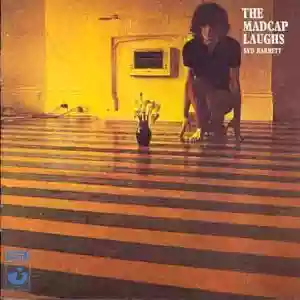
The Madcap Laughs... And what laughs! Cheerful, hysterical, desperate. Laughs that have kept us company since 1970 and that, perhaps, will never fade. This is Syd Barrett: an incomprehensible artist, strange, crazy, drugged, but unique in his genre. A young man who stood out for having created the most significant psychedelic album and who, just a few years later, in solitude, disowned all that, creating two solo works that are "just" a deep and immense gash in his soul, musical autobiographies, declarations sometimes hidden and other times as clear as the sun.
And what is "The Madcap Laughs" if not the first, and perhaps the most evocative, part of this autobiography? Indeed, the elements needed to define it as such are not lacking: the work is a melting pot of emotions, an immense cauldron in which lie, mixed and confused, all the most disparate thoughts and sensations. There is love, confusion, fear of loneliness, despair, euphoria, adolescent romanticism, and childlike innocence. Nothing is missing. So why does someone stubbornly see it only as an "insignificant" album written by an unstable person? This might never be understood. "The Madcap Laughs" is a completely naked and raw work, a snapshot of Barrett's mind, sometimes romantic and poetic and other times desperate and pessimistic. But this is precisely why it's a unique masterpiece capable of describing like few others the genius of its creator.
It begins with "Terrapin", an innocent declaration of love ["I really love you and I mean you the star above you, crystal blue, well, oh baby, my hairs on end about you"] sung in a sweet and absent-minded tone that unwinds on a slow, simple, and repetitive rhythm. Then comes "No Good Trying", in my opinion, one of the album's gems, with a clear and decisive tone and an insistent rhythm, featuring a strongly predominant drum that is insistently heard until the end of the track. The next track is "Love You", a lively ballad characterized by a text full of assonances and a strong taste of a nursery rhyme ["Honey love you, honey little, honey funny sunny morning, love you more funny, love in the skyline baby"], both typical elements of Barrett's compositional style. And follows "No Man's Land", another gem, sung with a confident voice and highlighted by a fairly solid instrumental base. The spoken ending is said to have been accidental, but once he heard it, Syd liked it, so it was not eliminated.
And so far, "The Madcap Laughs" seems like a completely normal album written by a perfectly healthy singer-songwriter with no problems or hints of despair. This other aspect of its composer begins to manifest with the track following "No Man's Land", "Dark Globe". Here the intonation is often wrong, too high; the voice begins to show the first veins of despair and madness. The lyrics express all Barrett's fear of being forgotten; he seems to almost ask for pity, declaring he's "only a person" ["I'm only a person whose arm bands beats on his hands, hang tall. Won't you miss me? Wouldn't you miss me at all?"]. But everything returns to normal with the beginning of "Here I Go", a nice and serene little song with a lively rhythm and lyrics that represent a sort of modern fairy tale (it's said that Syd wrote it in the studio in just a few minutes). Next is "Octopus", a track that encapsulates the childlike spirit of its author, the love for carousels typical of a little boy, a boy that in Barrett never fully grew up. A small curiosity, "Octopus" was the only track from the album to be released as a single and reached number 40 in the UK chart.
The next song is "Golden Hair", lyric 5 of "Chamber Music" by James Joyce. The poem was turned into a song during the Pink Floyd era, but only with his first solo work did Barrett have the opportunity to release it. The rhythm used is slow and relaxing, the voice sweet and soothing. It is followed by "Long Gone", with a fairly repetitive and simple rhythm. Here you can see a man beginning to lose control. The singing is not at all engaged, the tone almost unmotivated. Then follows "She Took A Long Cold Look", in my opinion, somewhat irrelevant. The first imperfections begin to be noticed; in fact, at the end, an external voice is clearly heard, and the track itself ends abruptly. "Feel", as off-key and imperfect as it is, is, in my opinion, very expressive. Syd seems abandoned to himself, and the only consolation is perhaps strumming his guitar and pushing his sensations outward. Once again, the track is cut off immediately, and at the end, the singer's voice is distinctly heard saying something. And after "Feel" comes Barrett plummeting into the abyss of despair. The first song that witnesses this is "If It's In You", the embryo of something that might have touched decency, but in its current state, it only manages to astonish. The voice is blatantly off-key; whether this was done on purpose or not is unknown, but certainly, the result is not the best. One might wonder why Dave Gilmour, who was entrusted with releasing the work, included this track and discarded others much more serious and rational that were later published on "Opel". The question might remain unanswered, but meanwhile, the doubt, or rather, the astonishment, remains. After the carnage of "If It's In You" comes "Late Night", the last song (and pearl) of the album. The tone is between depressed, imploring, and sobbing. There are no smudges; everything is perfect, sad, and despairing. It's said that the song was written by Barrett right after his departure from Pink Floyd. Indeed, taking a close look at the lyrics, certain lines would confirm this ["Inside me I feel alone and unreal"].
And so the album has ended. Amid insecurities, euphoria, and despair, Syd managed to create a true masterpiece. A different masterpiece, more introspective, but still unique.
Loading comments slowly
Summary by Bot
The review praises Syd Barrett's 1970 solo album The Madcap Laughs as a unique and raw musical autobiography. It highlights the emotional depth covering love, despair, innocence, and euphoria. The album’s mix of imperfections and genius captures Barrett's troubled mind and artistic soul. This work is seen as a timeless psychedelic masterpiece despite its flaws. The reviewer details key tracks that reflect Barrett’s genius and fragility.Tracklist Lyrics Videos
Syd Barrett
Syd Barrett (Roger Keith Barrett) was an English singer-songwriter and guitarist, best known as a founding member and early creative force of Pink Floyd. After leaving the band amid worsening mental health, he released two solo albums in 1970 (“The Madcap Laughs” and “Barrett”) and later became the subject of extensive posthumous/archival releases.22 Reviews
Other reviews
By giov
"You play without rules and keep thinking that your guitar on 'Here I Go' is pretty out of tune. Someone, in the future, will think it’s some strange seventh chord and that you’re a genius."
"You are the most suffocating spark at this precise moment. You are the walrus. You are ‘The Walrus.’"
By endriu
Syd did not want to expose himself to the public, didn’t want to become a VIP or be constantly in the spotlight; he just wanted to tell his rhymes with his guitar to people.
The Madcap Laughs is much more suited to Syd’s personality, free to roam to distant places with his acoustic guitar, without a necessarily full-bodied accompaniment.
By Valeriorivoli
Madcap Laughs is the psychotic diary of an artist on a no-return journey within himself.
To be listened to in all its genuine madness on foggy and gloomy days, hoping for a sunny dawn to dispel the ghosts.
By gluca1985
"The songs on 'The Madcap Laughs' are in continuous evolution, suspended in a dimension accessible only to Barrett."
"He gifts us not an album but rather a piece of himself, a snapshot of his life."
By luludia
I want to live here, in this magic bubble, in this limping and crooked grace.
The songs from 'Madcap' were for me the luminous appearance of something I didn’t think existed, a stripped-down and lazy, amateurish and childlike music, capable, like few others, of caressing the heart and soul.
