 •
Rating:
•
Rating:
THE REVIEW
This fifth studio effort by Supergrass (released shortly after Ferragosto nearly three years after the whimsical "Life On Other Planets") is likely destined to mark a point of no return in the career of the now quartet (with the permanent addition of Gaz Coombes' cousin on keyboards) from Oxford. This group was able to pull authentic gems of vibrant punk pop out of its hat in the second half of the '90s.
"Road To Rouen" is the album that comes immediately after last year's retrospective "10" and in the light of the first listens, it represents the conclusion of the "carefree" era of this group, which survived (not without a few missteps) the Britpop wave of 10 years ago: it must be stated that the goofiness and brightness of Supergrass now seem to be left definitively behind for a more considered, reflective, and intimate approach, as a testament to an artistic maturity finally reached.
This "maturity" (sincere although almost flaunted), however, presents, similar to other "turns" of other English pop bands, two sides on which one can debate for a long time: during the album that is not devoid of a certain charm (the delicate ballad "St.Peterbourg" chosen as a single shines with independent splendor and was unfairly relegated to a No. 22 in the English charts). It seemed to me that the group's intention was to create a "travel" album, ideal for the car stereo, in a style that closely recalls the sounds of American rock of the '70s (Neil Young and Eagles foremost) with a tendency towards songs with a bitter and lived tone (the recent passing of Gaz's mother surely had its weight).
It is, therefore, an album exactly "end of summer" and presents stylistic solutions far removed from the colorful glam pop of recent works, in a certain sense resuming the intimacy of the 1999 self-titled album, for instance in the opener "Tales Of Endurance (Part 4,5 and 6)" which recalls acoustic Pink Floyd, or the paced "Low C", a ballad indeed very seventies and very sad.
The gaze aims to evoke somewhat decadent and bohemian atmospheres, with an underlying melancholy only hinted at in previous works: exceptions are the instrumental "from the AM station" "Coffee In The Pot" and the title track dangerously close to certain "Americanisms" of the Stereophonics (albeit endowed with rather elegant production).
The judgment is still decidedly positive, and it could have even been enthusiastic if all the tracks had maintained the poignant tension of the concluding "Fin", which in its moving minimalism is worth the entire and overflowing last Coldplay album.
The less happy aspect is the realization that these, as convincing and grown as they may be, are not the Supergrass we were used to listening to: there is no irony, there are no playful winks at the charts, there is no punk carefreeness... Gaz and company are now 30 years old, and in the higher moments of the album, feelings of nostalgia, bitterness, melancholy prevail, where the sounds of the past are no longer used as mischievous citations but as a background to intimate reflections supported by poetic and ambitious songwriting.
Adhering to a "rule" of the '70s, the album contains just 9 tracks for a total duration of barely 35 minutes: little for a comeback so eagerly awaited by fans, who could already be puzzled by the "change of course" of this album.
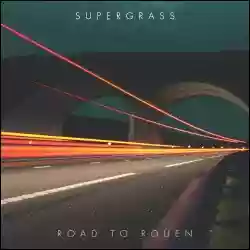
Furthermore, the cover for the first time does not present the group's large faces, a detail of no small importance: a sign that perhaps something has indeed changed in the Supergrass camp.
Loading comments slowly
Summary by Bot
Supergrass' fifth album, Road To Rouen, signals a mature and reflective turn away from their earlier playful Britpop sound. Influenced by 70s American rock and tinged with melancholy possibly due to personal loss, the album delivers intimate and poetic songs. Though it may puzzle longtime fans expecting their characteristic energy, it offers a poignant and artistically ambitious experience. With only nine tracks and a subtler presentation, it marks a defining moment in the band's career.Tracklist Lyrics Videos
Supergrass
Supergrass are an English rock band from Oxford formed in 1993 by Gaz Coombes, Mick Quinn, and Danny Goffey; Rob Coombes later joined as a full-time keyboardist. They broke through with I Should Coco and the hit Alright, evolved through the introspective Supergrass (1999) and Road to Rouen, and returned to louder guitars on Diamond Hoo Ha. They split in 2010 and reunited in 2019.07 Reviews
