
 •
Rating:
•
Rating:
THE REVIEW
The 1980s were a disaster for many rock legends. Think of those songwriters (Neil Young and Joni Mitchell come to mind) who tried to adapt to the trends of the times by wrapping their melodies in synth-pop beats with dismal results, or David Bowie, who needs no explanation.
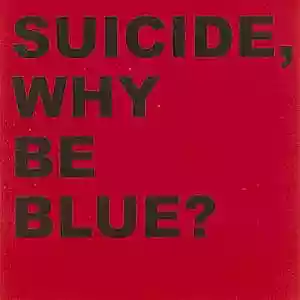
The malaise of the '80s synth wave, however, spared not even those who had their feet planted firmly in electronics.Despite a good album released in '88 ("A Way Of Life"), Suicide was not spared from this collective identity crisis, hitting them with a three-year delay. It is, in fact, 1992 when "Why Be Blue?" is released, but it sounds like ten years earlier. Already in the early '90s, these soulless synths were outdated, and it’s no surprise that this anonymous work was forgotten even by their most die-hard fans.
It's silly to say that the debut days are far away (they were already distant by the second album), that there is no more sound invention, avant-garde, or aggression: replicating that album is practically impossible. Such a milestone can never again be equaled, neither by Suicide themselves nor by those bands that wish to be them.
No one is asking to rewrite a "Frankie Teardrop," a "Cheree," or a "Ghost Riders," but at least to continue their career with dignity and with pleasant and inspired records (and "Second Album" and "A Way Of Life" were) if retirement is not a real option.
Instead, "Why Be Blue" is a disaster, and it's sad to say it because I am one of those many die-hard fans who would like to forget it. An album that seems to be released just to exploit the name once more in memory of those long-gone golden years, with ten absolutely forgettable melodies, sound accompaniments that couldn't be more '80s, tedious and straight from the bottom of the warehouse.
Not a memorable song, not an intuition, not a usefulness. It's not worth naming any of the tracks because they could easily have different titles given how interchangeable, banal, mediocre they are. Listless choruses that wouldn't look out of place in those nostalgic Media Shopping boxes, dictated by a total inability to attract attention and to be listened to a second time.
And Alan Vega doesn't even sound like himself. If someone told me it was his namesake singing, I wouldn't struggle to believe it. I want to be biased, I want to succeed in appreciating it, but I can't. I really can't.
"Why Be Blue" is only to be remembered as confirmation that you don't come out of the '80s alive without having released at least one crappy album (unless you are Bruce Springsteen, Kate Bush, or Tom Waits, but those are exceptions), that the collective hysteria of recycling, adaptation and the complete oblivion of what made one's work great has affected almost all legends, sooner or later.
And that's it.
Loading comments slowly
Summary by Bot
The review harshly critiques Suicide's 1992 album 'Why Be Blue?', describing it as an uninspired and forgettable effort reminiscent of outdated 1980s synth-pop. The album fails to capture the innovation and edge of Suicide's earlier work, disappointing even longtime fans. Vocals and melodies come across as bland and interchangeable, making the record a low point in the band's discography. The reviewer laments the album as a symptom of the era's trend of recycling and dilution of once groundbreaking artists.Tracklist Videos
Suicide
Suicide were an American music duo formed in New York City, best known for the influential 1977 album “Suicide” and the song “Frankie Teardrop.” The group centered on Alan Vega (vocals) and Martin Rev (keyboards/electronics), using minimal electronic loops and confrontational performance to fuse rock ’n’ roll attitude with avant-garde electronics.11 Reviews
