
 •
Rating:
•
Rating:
THE REVIEW
Here you need to be careful. We are talking about a legend.
Or about the favorite band of the Spacemen 3 (who recorded the cover of “Che” from the first album of Suicide on the B-side of “Revolution,” which can be heard in its original magnificence in streaming at the link below the click).
Alan Rev and Martin Vega formed in New York in 1971 when New York was a hotspot of avant-garde scenes like Velvet Underground, Lydia Lunch, New York Dolls, plus the American punk of the Ramones. The quintessential electronic duo. The inventors of the electronic duo (to be followed in the formula without ever approaching their danger and "disturbance" factor by Soft Cell, Sparks, Orbital, plus all the British synth pop).
The shows where Vega would smash his face until bleeding with the microphone. The provocations in front of the punk audience in London in 1977, and the two of them on stage, keyboards, drum machines, and voice. In the time of punk. The riots.
Suicide is more than a band, they are a statement, an artistic statement. And they haven't recorded much over all these years, partly due to the band's instability. At home, we have “Half Alive,” a beautiful live album, and “A Way of Life” (1988). We lack the first “Suicide” (of which we know “Rocket USA” and “Che” in versions by - and with the Spacemen). Recently, reissues have come out for Mute, and this time we’ll get them; but even the second album was a collection of old tapes.
Suicide is dangerous and avant-garde even today: they have always built all their songs on a single sequencer loop on which the voice à la Elvis on crack, like a devastated crooner, reverberated and blasted into a thousand in Vega's chorus and delay, always upfront, straight in your face, painting spectral and apocalyptic landscapes.
The new work does not abandon the formula, cutting-edge today as it was 25 years ago, but Rev's sounds are updated, “Misery Train” sounds like a Röyksopp loop, elsewhere there’s a noticeable hip-hop break, and the rest is simply FUCKED UP.
The revolutionary genius still lies today in destroying all classical pop song structures, intro/verse/chorus/verse, and using only the chorus, always the same, which over time becomes a mantra with Vega's “hey” and “huh” animating the piece (“Power Au Go Go”, truly groovy).
Perhaps La Monte Young's theories should also be mentioned, but we’ll leave them to you on Google.
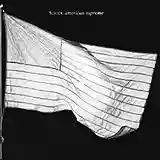
“Swearing to the Flag” (swearing on the American flag, the one on the cover, or cursing?) is acid house, like, say, the Shamen.
“Begging for Miracles” is a loop akin to Chemical Brothers, but as stated above, only that, only that single repeated phrase.
“Dachau, Disney, Disco” is a cacophony of white noise.
Suicide is indefinable. Suicide is the greatest. Even today, ahead of everyone else. Cult.
Loading comments slowly
Summary by Bot
This review celebrates Suicide's 'American Supreme' as a legendary avant-garde electronic album. The duo’s pioneering use of sequencer loops and provocative punk energy remain cutting-edge. Their sound challenges traditional pop structures, embracing minimalism and raw intensity. The album updates their classic style with modern elements like hip-hop breaks and acid house influences. Overall, 'American Supreme' is hailed as a cult masterpiece still bold and relevant today.Tracklist Videos
Suicide
Suicide were an American music duo formed in New York City, best known for the influential 1977 album “Suicide” and the song “Frankie Teardrop.” The group centered on Alan Vega (vocals) and Martin Rev (keyboards/electronics), using minimal electronic loops and confrontational performance to fuse rock ’n’ roll attitude with avant-garde electronics.11 Reviews
