
 •
Rating:
•
Rating:
THE REVIEW
Having grown up musically wrapped in abrasive flannel shirts, the feats of brit-pop in the past decade always left me indifferent, if not irritated by much of their emptiness. However, I must admit that I've always had a soft spot for early Suede.
Brett Anderson, despite his arrogance and a considerable slap-worthy face, knew how to write perfect pop songs, best synthesizing the words of his great inspirers (from Bowie to Japan, obviously passing through the Smiths). Furthermore, the imagery evoked by his lyrics, inspired by novels like "Territori londinesi" or "Time’s arrow" by Martin Amis and the complete works of Hanif Kureishi, transcended the banal dimension of the little song in much of the Albion's musical production of the period. London and the loneliness of its suburbs, its streets crossed by fast cars driven by dissolute characters seeking redemption, elegant women (how many times does Brett whisper that phoneme, "She...") with their ambiguous habits, both sexual and chemical: all of this the quartet's music seemed the perfect soundtrack. Notoriously the core of Suede's art resides in the first album: one of the best UK-labeled of the '90s, with gems like "Pantomime horse", "She's not dead" and "So young".
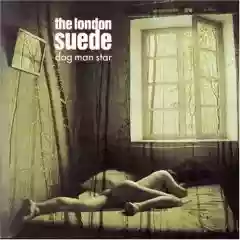
"Dog man star" was its worthy successor, but it marked the end of the ride: indeed, the talented guitarist Bernard Butler, the musical deus ex machina, left his companions emulating his idol Johnny Marr with recordings already completed, and from then the London group's career embarked on a tunnel with no exit.
This album was among the most ambitious in the United Kingdom of the last decade: a true baroque delirium, because to the already known glam-dramatic component, sumptuous arrangements were added to give the work an epic character. There are no shortages of crystalline pop numbers, like the atmospheric "The wild ones", the twilight "The two of us" or the tender "The power". But the moments that define the magnificence of the album lie elsewhere, in the obliquity of certain scores where it seems to hear the totem Bowie raped by Phil Spector (the tortuous "Daddy's speeding", which flirts with the James Dean myth, the grand "New Generation"), while in "The asphalt world" and "Still life" the alchemy unfortunately sounds bombastic rather than grand. The rock and roll canons of a "The drowners" instead are found in the lively "We are the pigs", "This Hollywood life" and "Heroine", where Butler is always leading the dance, among the emphatic vocals of Anderson.
The symbolic song is probably "Black or blue", a syrupy love song set against a backdrop of a degraded London, searching for a way out towards Heathrow. A bit over the top, just like the whole career of the band has been.
Ultimately "Dog man star" was a controversial album, certainly full of gaps but endowed with great personality. Managing to emphasize the most controversial aspects of their aesthetic (existential languor, the kitsch exacerbation of the glam factor, the brazen and romantically formal decadence) while minimally affecting expressive urgency is the prerogative of great bands.
Loading comments slowly
Summary by Bot
Dog Man Star, Suede's ambitious and richly arranged second album, stands out as a glamorous and baroque entry in 90s UK rock. The album combines vivid lyrics inspired by London’s urban life with sumptuous musical arrangements. Guitarist Bernard Butler’s departure marked the end of the band's golden era, but this work remains a standout for its blend of glam rock and pop sensibilities. Despite some bombastic moments, it showcases Suede's unique aesthetic and emotional depth.
Suede
Suede are an English rock band associated with 1990s britpop, known for glam-leaning alternative rock and Brett Anderson’s theatrical frontman role. After disbanding in 2003, they reunited and released a well-regarded run of albums including Bloodsports, Night Thoughts, The Blue Hour and Autofiction.18 Reviews
Other reviews
By RinaldiACHTUNG
Brett introduces the band and Dog Man Star in an intro that reminds me of a certain Sgt. Pepper, bewildered and hopeful that the century will end crushed by violent hands.
While the world ends, ... we look out the window at the cars speeding by like they were insects, and we wonder: is this inert life really all I own?
