
 •
Rating:
•
Rating:
THE REVIEW
Nothing lasts forever. Not even if you are sure of the contrary.
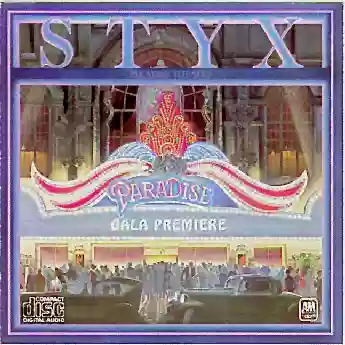
On July 7, 1958, after six months of planning, the demolition of the "Paradise Theater" in Chicago was completed. When it was opened in the year of our Lord 1928, the idea was that it would last forever, magnificent in its squandered grandeur; emblematic splendor and unheard advertising campaigns did not seem to give rise to any doubt. From the start, however, things did not go as planned: the cinema did not take off as it should have, and the advent of sound in films also revealed an unforeseen acoustic inadequacy. Finally crushed by the rise of a clumsy and ungainly domestic entertainer, it was eventually closed in 1956, sadly. The Company agreed to a very laborious demolition: it was perhaps the most successful spectacle at the sad Paradise.
The story of this "cinema of dreams" is revived 22 years later by a band that, slow to start, was finally establishing itself in the United States in a musical trend that was raging and varied from the experience of a constellation of more or less important groups, from Boston to the very talented Kansas. Styx was their name; pomp rock their genre, some would say. Perhaps: their music, with a solid pop rock foundation, could certainly be considered crafted by subtle progressive strokes, if only for the magnificent brass patina that accompanied it throughout the storyline.
"Paradise Theatre" (with the horrid bileteral inversion so cherished overseas) is a concept album: it echoes the thirty-year inglorious history of the cinema of the West Side of Chicago, from the pomp of its debut to the sadness that envelops its cold materials. "A.D. 1928", therefore: while the fragrant ladies with unwatchable furs crowd into the bright, smoke-filled lobby, a voice glorifies what will be, what must surely be. The melody is fantastic, without mincing words; the piano shines on its own and this intro will prove to be the central theme of the show, recurring repeatedly to mark the dust of time. "We need your spirits high to turn on this theater lights and brighten the darkest skies, here at the Paradise.”
"Rockin’ The Paradise" then bursts like an impetuous thunder: the drawn-out yet gentle melody rises on a stage of black and white ivory, while the drum beats frantically behind the curtain. Allow me, beautiful; beautiful and certainly misleading. The following "Too Much Time On My Hands" indeed disrupts the lineup with its atmosphere bordering on the space rock of the Rockets; however, a track that gains depth with repeated listens. The first act continues with "Nothing Ever Goes As Planned": the register returns to the guitars of Tommy Shaw and James Young for a catchy ballad which, in its saxophone-infused chorus, seems to recall the contemporary works of the Alan Parsons Project. The reference to the Paradise Theater is evident: "You’ve done your duty and paid a fortune in dues: still got those Mother Nature’s Blues”. Highlighted, despite the song not being particularly deep, is the solid bass (and the name) of Chuck Panozzo. The first act, however, closes with a great track, introduced by the main theme (after all, we're talking about a suite — there is often no obvious break between individual tracks). “The Best Of Times” stands as a manifesto of a staple of the genre, the inevitable choral refrain, here truly intense and evocative.
There are still some elderly gentlemen who, refreshed in the luxurious bathroom, have not yet returned to their seats on the moist velvet of the dusty seat when the lights turn back on; among the most disparate voices, deceptive trumpets announce the resumption of the last show. "Lonely People", a relatively hard track, shines a spotlight on the state of mind of the Company while a guitar paints a canvas slowly but with a firm point by the bass and drums of the other Panozzo, John. "Oh my God, well we both are empty, Paradise and me: do you believe I’m still chasing rainbows when everywhere I see lonely people?”
"She Cares" is a flowing song, with choirs and piano like autumn rain easing the tension before the beautiful and nervous "Snowblind", driven by the shrill keyboards of Dennis De Young and guitars that know when to speak. Unfortunately, the curtain is already seen falling; people will not return to the Paradise, other interests now captivate society: we all know it’s the American way. "Half-Penny, Two-Penny”, ashes to dust. Musically, a good little rock song slightly tinged with prog whose choral parts supported by patriotic cries ("Back home across the sea where I know that I will be free.”) merge into a musical tailpiece made effective by the saxophone (the sad instrument par excellence). Here it is, one last time: that melody still resonates in "A.D. 1958", before the void, before the few disconsolate notes of a "State Street Sadie."
And so, my friends, we’ll say goodnight for time has claimed its prize; but tonight can always last as long as we keep alive the memories of Paradise.
Loading comments slowly
Summary by Bot
This review highlights Styx’s 1979 concept album Paradise Theatre, which revives the history of a lost Chicago cinema through a mix of pomp rock and subtle progressive elements. The album is praised for its storytelling, memorable melodies, and rich instrumentation, including brass and saxophone. Standout tracks like “Rockin’ The Paradise” and “The Best of Times” are emphasized as emblematic of the album’s strength. Though acknowledging some less deep moments, the review celebrates the album as a compelling rock opera and an enduring musical experience.
Styx
Styx are an American rock band from Chicago, widely associated with AOR and “pomp rock,” often described as balancing pop-rock directness with progressive-rock flourishes and prominent vocal harmonies.11 Reviews
