
 •
Rating:
•
Rating:
THE REVIEW
The Glam Rock, a genre often underrated. A genre that has always been considered "minor", not sophisticated enough to be Progressive, nor robust enough to be Hard Rock. A genre for which even the most generous only save David Bowie and Roxy Music. Some brave souls add T.Rex, Queen, and Sparks to the list of the Good. No one, of course, would dream of citing the big names like Gary Glitter, Suzi Quatro, Slade, Sweet, and others. But in my opinion, the Cockney Rebel deserve a small place in the history of rock.
The group existed for a couple of years, just to produce two pivotal albums of Glam, before disbanding and reforming as Steve Harley & Cockney Rebel, and playing that famous "Make Me Smile (Come Up And See Me)" featured in countless commercials. But the original core of the group has little to do with the refined pop of this last song: Steve Harley (vocals), Milton Reame-James (keyboards), Jean-Paul Crocker (electric violin and guitar), Paul Avron Jeffreys (bass), and Stuart Elliott (drums) had shaped a personal version of glam rock, very close to certain progressive sounds. Already in their first album "Human Menagerie" (1973) their greatest peculiarity is noticeable: creating extremely engaging and catchy songs without practically using the guitar. That's right, in an era of guitar heroes, the Cockney Rebel entrusted their solos to an electric violin, relegating the guitar to the simple role of (rare) accompaniment.
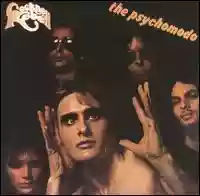
Their second album, "The Psychomondo" (1975), confirms and expands the strengths of the group. Starting to listen to the album, one is immediately struck by distant sounds, as if arriving when everything is finished (sounds that reprise the melody of the last track). "Sweet Dreams" begins, a brief piece built mainly on a violin solo, where Harley's particular voice makes entrance, characterized by a heavy Cockney accent. The song is just an introduction to the title track, a lively duel between piano and violin, with a delicately effeminate singing typical of the glam season. The album then follows with its most commercial and farcical tracks, "Mr Soft" and "Singular Band", useful for catching a breath, as the second half of the album contains the true masterpieces.
An acoustic guitar provides the base for "Ritz", a long and hypnotic song where Harley's electronically modified voice alternates with Crocker's violin solos. The atmosphere is depressed and claustrophobic, completely opposed to the hysterical joy of the first half of the album. It is followed by the splendid and equally sad "Cavaliers", supported by a beautiful keyboard motif. Then with "Bed In The Corner" it seems the situation softens through a delicate piano ballad, before transforming into the "hard" moment of the album, "Sling It!", where the violin runs frantically with the other instruments.
To conclude the symphonic “Tumbling Down”, a piece made famous in the soundtrack of Velvet Goldmine, which serves as a worthy epilogue to what I consider one of the finest episodes of Glam, but also of rock in general.
Loading comments slowly
Summary by Bot
The review highlights Cockney Rebel's The Psychomodo as an underrated gem within the glam rock genre. It praises the band's innovative use of electric violin instead of guitar, creating a unique sound enriched by Steve Harley's distinctive vocals. The album's mix of lively, commercial, and introspective tracks showcases the band's versatility. 'Tumbling Down' stands out as a symphonic finale, cementing the album's significance. Overall, the review positions The Psychomodo as a key rock album deserving recognition.Tracklist Lyrics Videos
Steve Harley & Cockney Rebel
Steve Harley & Cockney Rebel are a British glam/art rock group formed by Steve Harley in London in 1972. Early albums The Human Menagerie (1973) and The Psychomodo (1974) established a violin-driven, theatrical style. The Best Years of Our Lives (1975) yielded the UK No.1 single Make Me Smile (Come Up and See Me).01 Reviews
