
 •
Rating:
•
Rating:
THE REVIEW
Surely a career unlike any other, that of Steve Earle: the enigmatic, introverted, and rebellious figure has now made him one of the most established in the deep heart of Dixie Land, where hard rock and strong liquor are the only laws.
Steve was born back in '55, initially making a name for himself with some fairly decent country records. Slowly his rock roots made their way into his creations, becoming an icon for all those sad souls who had written off southern rock as dead years and years before... But only for some: with his grumpy and difficult character, like a true failed delinquent on the road, he almost managed to close the doors to his own career, getting into near fights with any record executive who stood before him, and living a life based on his own ideas, always ready to stand out for the political causes he holds dear.
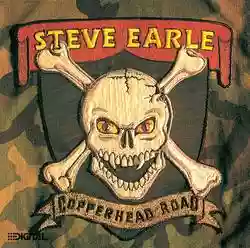
But Earle's talent, there is no doubt, is enormous, and therefore he can be forgiven for everything: this is captured in this timeless gem "Copperhead Road," released before heroin enslaved him, before he came in and out of a series of failed marriages, and before going to prison for attempted armed robbery (just to name a few of his antics).
The album was released in 1988: its strength lies in evoking great memories through various styles such as blues, country, and southern, all colored with fantastic strokes of Irish sounds. Introduced with bagpipes and a fantastic touch of mandolin, the title track manages to do justice to the album: it's indeed powerful, with a highly-suffering and virile voice full of energy, accompanied by a backdrop of electric guitars and honky-tonk piano. The powerful sound is no less in "Snake Oil," pure raw rock'n'roll, where the touch of piano and voice strongly recall those of Billy Powell and Ronnie Van Zant, keyboardist and singer of Lynyrd Skynyrd, respectively. A good mix of guitars takes the forefront in "Back To The Wall" but once again we can stop and note the vocal prowess of the frontman. 100% American is "The Devil's Right Hand," and the ingredients are all there: it's about guns, dusty old towns, and the wise advice of mom, the dear old lady that any respectable southern man cannot help but listen to with firm determination. Taking us to a completely different world is "Johnny Comes Lately": Ireland is evoked in every note of mandolin and each fife riff; the genius lies precisely in the contrast of the vocal lines, typical of old Irish folk songs, despite the lyrics having a backdrop of American politics (the Vietnam War is discussed).
Much more contemporary is the sound of "Even When I'm Blue" and "You Belong To Me," but the inevitable country influences are still notable. "Waiting On You" is a real turning point, a song so melodic that one would almost not expect it on an album like this, but it's no less appreciable for it, in fact, it offers a little respite. After the typical "Once You Love," which summarizes a bit of what's been heard on the album, it's time to make way for the moving finale "Nothing But A Child." Steve duets with country singer Lucinda Williams in a sweet and melancholic way, and the intertwining of acoustics, slide guitars, mandolins, and violin creates the right atmosphere. Truly astounding!
Subsequently, Earle released some very good albums like "Train A' Comin'," "I Feel Alright," and "El Corazón," always able to create a magical blend of genres, even venturing into grunge and bluegrass, but in my opinion, "Copperhead Road" will remain the great jewel of the entire discography.
Loading comments slowly
Summary by Bot
Steve Earle's 1988 album Copperhead Road is a powerful and genre-blending work that revitalized southern rock with influences of country, blues, and Irish folk. Known for his rebellious spirit and political convictions, Earle channels raw emotion through iconic tracks like the title song and The Devil's Right Hand. The album balances energetic rock with heartfelt ballads, featuring collaborations like the duet with Lucinda Williams. Copperhead Road remains a highlight in Earle’s discography and a definitive southern rock milestone.Tracklist Lyrics Videos
Steve Earle
American singer-songwriter and guitarist born in 1955 in Fort Monroe, Virginia. He emerged in the mid-1980s with Guitar Town and became known for gritty storytelling that blends country, rock, folk, and bluegrass, as well as outspoken political themes. His catalog spans decades, from Copperhead Road to Townes and beyond.03 Reviews
Other reviews
By Starblazer
The inviting scent of a masterpiece is already detectable from the first notes of the title track.
'The Devil’s Right Hand' alone would be enough to justify all twenty euros of expenditure.
