
 •
Rating:
•
Rating:
THE REVIEW
ZNORT.
"There's more violence today in the streets than in Ranxerox, that's for sure"
(Tanino Liberatore)
There are moments, experiences, and readings in a person's life that profoundly mark their subconscious. The first time I listened to Led Zeppelin or read Kafka, for example, I will never forget it.
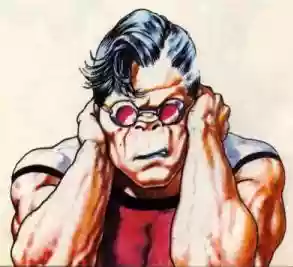
And I can say the same (with due distance) about the impact I had with Ranxerox, the futuristic tough-guy-cyborg-Frankenstein assembled with pieces of photocopiers and valves (hence the name that was changed after a lawsuit by the well-known company), by the genius Stefano Tamburini and the eclectic Tanino Liberatore (who took over the drawings from the uncertain Tamburini at the start of the '80s).
Born two years earlier in "Il Cannibale", it later moved to "Il Male" to finally land on the pages of "Frigidaire", consecrating it as a true Icon of the World Comics.
The emotional impact of this "synthetic asshole tough-guy" who didn’t care about any ethical or moral standards (being a robot) and lived day by day with an underage nymphomaniac (also heroin-dependent!) whom he shamelessly slept with, was quite a devastating shock for me.
For a 15-year-old from a good family accustomed to "healthy" and "aligned" readings, full of good guys winning and bad guys (rightly) losing.
Suddenly, the ethical correctness of various characters like Ken Parker, Zagor, Corto Maltese, etc., was swept away by the coarse brutality of this character devoid of any morality and willing to commit any atrocity just to survive the day.
I was then struck by the idea that even Evil had its reason for being and its sacred right to have a spokesperson of equal dignity.
A "heavy" comic, without limits, that carried with it an erotic, subversive, and destructive force, a child of the punk movement (born in the same period) but had, on its side and as a counterbalance, the gift of "cheeky lightness" of the tough-guy spirit, legitimate son of a futuristic (and highly improbable) Rome that toned it down and made its achievements tragically quotidian. Memorable, above all, the scene where, in the subway, an innocent little gypsy girl asks Ranxerox for charity, and he, without apparent reason and quite calmly, crushes her hand, then curious about the cries of pain and the blood gushing from the crushed fingers of the unfortunate girl.
An illegitimate child, marginalized, full of defects and malice, illogical and vulgar as a rebellious child, offensive and cursed, schizoid and genius. A combination of paradoxes and violence that, whether we like it or not, will give this character a charisma and charm that we rarely find TODAY, where everything in the country seems so "boringly flattened" and channeled towards tracks of cultural normalization that just thinking about it gives you chills.
This makes you wonder: what would Ranxerox do and how would he react today, in this garbage society full of candidate-showgirls and clown-politicians, where the boundaries between ethics, morals, violence, and entertainment seem to be irreversibly dismantled?
Loading comments slowly
Summary by Bot
Ranxerox, created by Stefano Tamburini and illustrated by Tanino Liberatore, is a brutal, morally ambiguous cyborg character who left a lasting impression on the reviewer. Born from the punk era, Ranxerox challenges traditional ethical norms by embodying raw violence and subversion. The comic's dark and unapologetic style contrasts sharply with mainstream heroes, making it a daring and unforgettable work. It remains a cultural icon significant for its provocative and rebellious spirit.
Stefano Tamburini Tanino Liberatore
Stefano Tamburini (writer) and Tanino Liberatore (artist) are the creators of Ranxerox, a punk-era, controversial Italian comic character first published in Il Cannibale, later appearing in Il Male and Frigidaire. Liberatore took over the drawings from Tamburini at the start of the 1980s.01 Reviews
