
 •
Rating:
•
Rating:
THE REVIEW
Set Yourself On Fire by Stars should even convince the most skeptical of what increasingly appears to me as a certainty, which is that Canada is today the Eldorado of singer-songwriter pop-rock.
I would be tempted, in talking about this "difficult third effort", to succumb to sentimentalism, to be guided, in describing the luminous path outlined by the thirteen tracks that make up the album, by the reference models of the Canadian band, groups dear to me from the recent past, like the Smiths, Prefab Sprout, Saint Etienne, Momus, but that wouldn't be fair. Doing so could give the wrong impression of facing clones, yet another group that, in recent times, has cleverly relied on 80s sounds that have come back into vogue, risking plagiarism on some occasions.
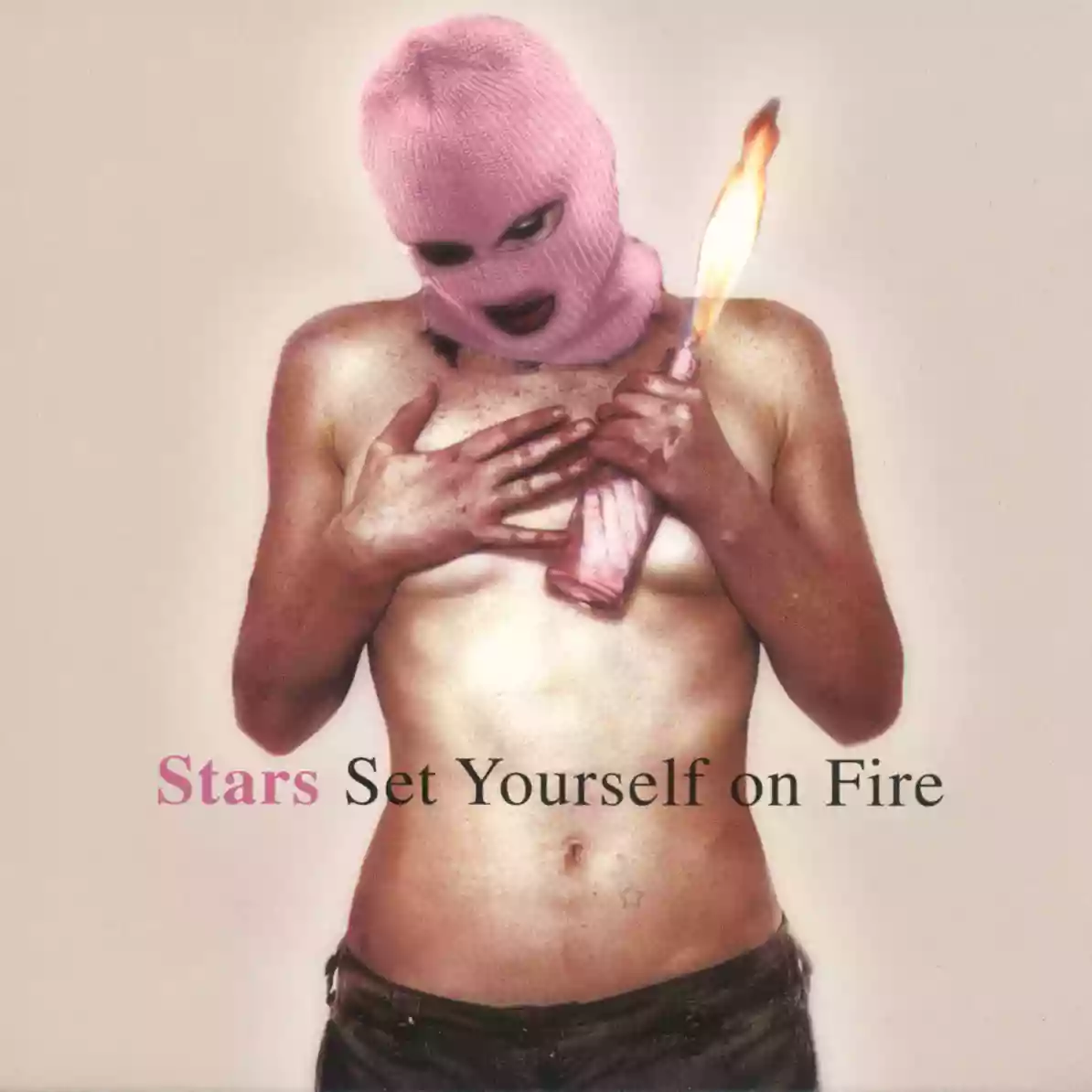
Let's be clear: the music of Stars is not where you would expect radical renewal, absolute originality, or a milestone. It is grafted onto a tradition that could be called "reformist" by nature or at most, to quote a track from the album, from "Soft revolution" (but, beware, the cover, censored in the USA, might shift the emphasis on the second term of the oxymoron), which lives on even minimal shifts, rarely seeing someone push the boundaries significantly within a decade. Therefore, models are important, perhaps more than in other genres; however, it's the way of relating to them, the wisdom and taste in hybridizing them, along with the genuineness and freshness of inspiration and the ability to write songs, that make the difference, that give that aura of light that makes them clearly distinguishable from other pop groups. The Stars from Montreal, in my opinion, possess all these qualities, they have this aura.
"Your Ex-Lover Is Dead" is one of the best opening tracks heard this year: slightly dark atmospheres, rich Marr-like guitars and the contribution of strings that remind a little of their compatriots and friends The Dears, and two magnificent voices duet to put an end to their love affair, those of Torquil Campbell and Amy Millan, a blonde who seems like a cross between Wendy Smith and Suzanne Vega. The title track evokes a livelier Magnetic Fields, but the long farewell is subtle, almost whispered. In "Reunion," Millan's voice and guitar riffs vaguely reminiscent of the Jesus & Mary Chain are the protagonists. In "The Big Fight," the pendulum swings towards pop, and for a good half unfolds as an effective pop duet, only to transform halfway into a kind of New Order-like instrumental electro-song: a small gem.
But it is their versatility, the ease and skill with which they handle various musical elements of the pop-rock tradition that strike and inspire admiration.
The inspired classic ballad "Sleep Tonight" gives way to the nervous and new-wave "The First Five Times"; the alternative rock, with included noise, of the intense and unsettling "He Lied About Death," one of the album's peaks, fades, giving way to sunny pop like Polyphonic Spree, appropriately enriched with rhythm and electricity.
These "Stars" may not be of the first magnitude, but for the musical firmament, they turn out to be indispensable, especially for some "constellations," better seen, of course, in the cold skies of Canada.
Loading comments slowly
Summary by Bot
Stars’ album Set Yourself On Fire firmly establishes Canada’s status as a pop-rock hotspot. The band blends 80s-inspired sounds with originality and genuine emotion. The vocal duet between Torquil Campbell and Amy Millan stands out alongside a variety of musical styles from dark atmospheres to upbeat pop. Though not radically innovative, the album is a luminous and essential addition to the pop-rock scene.Tracklist Lyrics Videos
Stars
Stars are a Canadian indie pop band formed in 2000, later based in Montreal. Known for the duetting vocals of Torquil Campbell and Amy Millan, they released the acclaimed Set Yourself on Fire (2004) on Arts & Crafts, followed by In Our Bedroom After the War (2007) and The Five Ghosts (2010).03 Reviews
