
 •
Rating:
•
Rating:
THE REVIEW
The side project Pattern-Seeking Animals, with its modern, melodic, and highly inspired prog, had almost made me forget about Spock’s Beard—it seemed that, when faced with such compositional brilliance, the return of the original band was almost redundant. I wondered if there was really any need for a Spock’s Beard comeback, a band that had practically already given everything. Yet nostalgia is always powerful; after all, we’re talking about one of the first progressive rock bands I truly loved—they’ve resonated with me for 18 years now, accompanying me through my pre- and post-high-school years. In the end, yes, there was a renewed need for Spock’s Beard.
We last left them in 2018 with “Noise Floor,” a wonderful album with a strong melodic approach, which, in a sense, was an early sign of what the later side project would become. Within it was the very seed of what Pattern-Seeking Animals would be. At the time, they were still without a drummer following Jimmy Keegan’s departure (who would later turn up in the new project), with the legendary Nick D’Virgilio agreeing to play on the album as a session musician, but without rejoining the band. Now, however, they’ve finally found a worthy replacement—Nick Potters is a monster, offering virtuosic and surprising drumming; the new record boasts truly breathtaking drum parts. One might say that Spock’s Beard have never settled for just any drummer—if you’re not a top-tier player, you just don’t make it into this band.
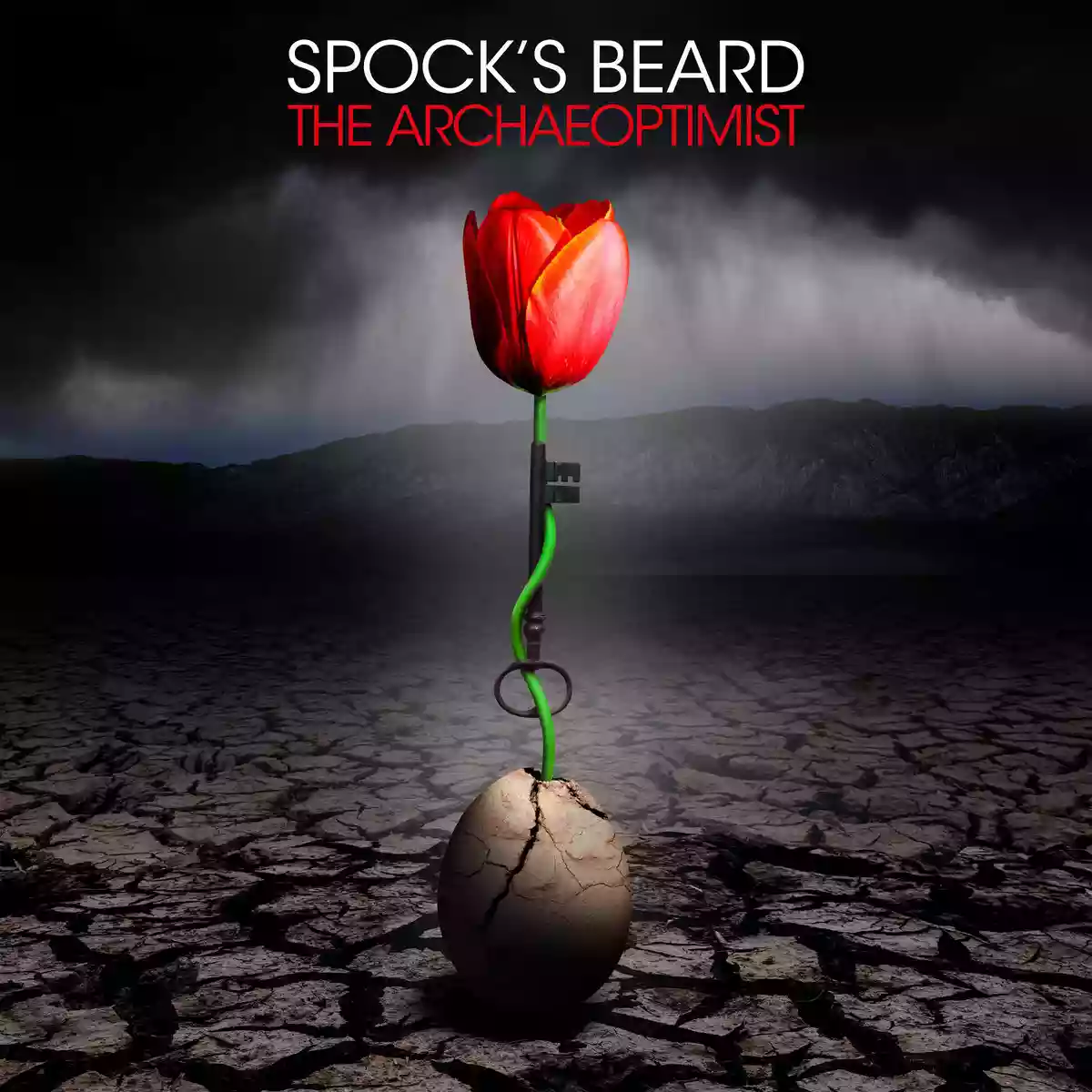
The return of Spock’s Beard, however, happens in the most classic way possible, as if they entered the studio fully conscious of the need to honor their roots. It’s as though they remembered they were one of the leading bands of the ‘90s and 2000s, playing a significant role in the progressive revival of that era. “The Archaeoptimist,” the band’s fourteenth album, is their most classic and traditionally prog work since “Snow.” And you can already guess this from its composition: 6 mostly long tracks, marked by a more or less evident instrumental and rhythmic dynamism, fully in the prog tradition. Not that this formula automatically means you’re facing a “classic prog” album—since it’s also been adopted by more modern groups, often even outside of prog (think post-rock bands)—but if they intended to give it a traditional tint, they did so in both form and substance.
All this could be seen as a prelude to something unnecessary or stale, but it’s important not to be guided by prejudice—even the most classic album can sound remarkably fresh and vibrant. And “The Archaeoptimist” sounds fantastic; it pulses with incredible vitality, the compositions flow exceptionally smoothly and confidently, all the ideas follow each other and fit together naturally, with no force. Each musician plays their part—we’ve already mentioned the multifaceted drumming, but the real winner here is definitely keyboardist Ryo Okumoto. The Japanese maestro is on fire—absolutely brilliant—his solos are the boldest, most exuberant, and audacious ever, whether they’re on organ, synthesizer, or piano. His virtuosity is the true star of the album, and without him, the record would likely be much less lively.
Special mention goes to the suite that gives the album its title. Because it’s a suite in the truest sense—not just a handful of random ideas thrown together in a drawn-out attempt to sound epic. Nowadays, so many suites feel unfinished and underdeveloped, but that’s not the case here. It features clearly distinguishable movements, each with its own mood, all fitting together naturally, with seamless transitions. I often say there are no longer great epics like there used to be—like “2112,” “Close to the Edge,” “A Change of Seasons”—and probably, even this one won’t have that level of grandeur, but it has a structure that’s more or less worthy of a suite.
If we had to identify one flaw in this album, it would likely be the melodic aspect. It’s not particularly well-developed; the melodies aren’t as strong as they used to be but are rather too “ordinary”—melodies that may become more apparent with repeated listens, but never truly heart-wrenching. To make matters worse, this is with a singer like Ted Leonard, and considering just how central the melodic aspect was on the previous record. However, this component makes a strong comeback in the closing track “Next Step”, which at times genuinely recalls the best of Genesis.
In conclusion... It may not be the most anticipated album of the century, perhaps it wasn’t even an essential release... but it remains a true prog-rock album, and listening to something so alive is always a pleasure!
Loading comments slowly
Summary by Bot
This review delves into Spock's Beard's album 'The Archaeoptimist,' offering an honest perspective. While the album presents noteworthy moments, it does not fully meet the high expectations set by the band's legacy. The overall impression is moderate, recognizing both strengths and shortcomings. The review is informative for fans and newcomers alike.Tracklist
Spock's Beard
Spock’s Beard is an American progressive rock band formed in 1992 by brothers Neal and Alan Morse. The group helped fuel the 1990s prog revival with albums like The Light, V and the concept double Snow. After Neal Morse departed in 2002, Nick D’Virgilio led the band, later passing the mic to Ted Leonard; Ryo Okumoto and Dave Meros have remained key members.18 Reviews
