
 •
Rating:
•
Rating: THE REVIEW
I have already introduced the New Zealanders Split Enz with a review that dealt with the Progressive phase of the group led by the eclectic Tim Finn.
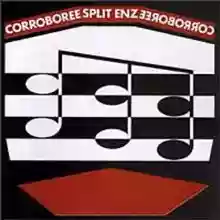
Today we will discuss the decisive turn that our (now no longer) heavily made-up heroes took on the cusp of the '80s. The record would be called "Waiata," but in Australia (perhaps the only country that seriously embraced this band of daredevils), it was released under the name "Corroboree," and even in the West, there remains some doubt as to which was the original edition.
"Waiata" and "Corroboree" are terms from their respective countries (New Zealand and Australia) to indicate the entirety of the sacred rites and dances to the Maori and Aboriginal peoples.
Once again, we do not start with the "first" of the New Wave albums by the Enz, which would actually be True Colors (incidentally very commendable). Instead, I chose "Waiata/Corroboree." Why? Because I consider it one of the most pure and sincere albums of the New Wave era. It fully encapsulates that dual romantic-gothic nature, which, combined with that typical plastic and echoing sound, makes this album with three chords on the cover a true masterpiece of its genre.
And then it contains "One Step Ahead," which in itself would raise any album's ratings to 4-5. And not only for the fact that, as reported by every appropriate source, anticipating the late Jackson, the keyboardist Reyner performs a short moonwalk in the video.
Paradoxically, after leaving Geoff Emerick (McCartney's technician, kicked in the behind by an increasingly alienated John Lennon) and the experimental-progressive phase, by the way, never renounced (the video of "History Never Repeats" conveys the concept quite well), but rather set aside (indeed, reprised at live performances), Finn and Co. wash their faces, still dirty with makeup, and wear the guise of the archetypal downtrodden hero of the '80s; not much different from the tragicomic clown of the '70s, in fact. The album is a succession of rhythmic escapes and bittersweet sounds; the tracks always alternate between a dark and melancholic melody and the classic fluttering and ethereal pieces in the style of Genesis (I understand that the Genesis New Wave period may not appeal to you, but c'est la Vie).
In itself, the first ten tracks are masterful in their ability to impose themselves as a small musical 'pedia of the New Wave and absolutely exploit what was good (perhaps not much, but c'est la vie) that was introduced at the time, especially in terms of production. In the face of the wide range of sounds, noises, machinery, and possible experiments, the ingenious lightbulb of the multifaceted New Zealanders lights up and brings to life a respectable album full of personality.
But so far we have only talked about ten tracks. In reality, there is also an eleventh one; we start listening to it: but what is it? It's called "Albert Of India" and it's the final legacy of an inspired Rayner (who, where Finn is an indomitable and creative spirit, stands in contrast as an elegant and refined pianist) that accompanies the listener to the end of the Waiata. It is an oriental-sounding piece (although from their perspective, India is to the west) that is universally very deep and serene; it thus strongly reconnects to the sweet prog that was definitively fading away in those years.
And this pleasure is also fulfilled in an album that, if you love New Wave or even just the '80s, you should not miss obtaining.
If you find something to complain about, c'est la vie.
Loading comments slowly
Summary by Bot
The review explores Split Enz's 'Waiata', a pivotal New Wave album from the early 1980s showcasing the band's unique blend of romantic-gothic themes and rhythmic sound. Praised for its personality and production, the album features standout tracks like 'One Step Ahead' and ends with the serene prog-inspired piece 'Albert Of India.' The review asserts 'Waiata' as an essential listen for fans of New Wave and 80s music.Tracklist Lyrics
Split Enz
Split Enz are a New Zealand rock group formed in the early 1970s, noted for their theatrical presentation and a transition from progressive/art-rock eccentricity to a concise New Wave sound in the late 1970s and early 1980s.02 Reviews
