
 •
Rating:
•
Rating:
THE REVIEW
Spirit might be the most paradigmatic band of the late '60s Californian scene, even more so than better-known names like Grateful Dead or Jefferson Airplane.
Whether due to their lifestyle (all members lived as an ideal extended family on the hills of Topanga) or to the music they produced, which reflected both the psychedelic urgencies typical of the era and the melodic side derived from a floral folk-pop approach.
They had a leader as talented as he was charismatic, that Randy California whose fame was always overshadowed by his friend and mentor Jimi Hendrix. An overwhelming friendship for anyone, which could have turned him into nothing more than an imitator; Randy, on the contrary, developed a very sober and non-egocentric way of playing, bending his technique to serve a group that was on par with him.
The fundamental characteristic of the four records recorded by them lies precisely in the sober arrangements and atmospheres, saturated with an ecstatic view of life, nourished both by chemical aids and by a sincere devotion to the hippie dream of changing the world. Randy could be considered a positive Arthur Lee.
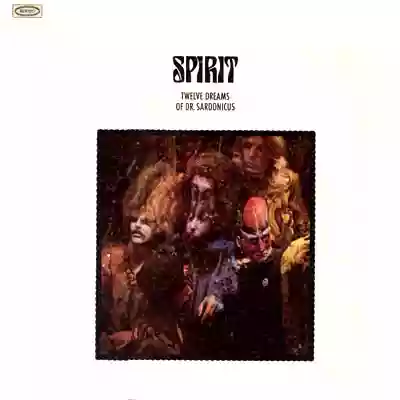
And maybe "12 Dreams Of Dr. Sardonicus" could be their "Forever Changes." The first album in which the band decided to rely on an external producer, Dave Briggs, "12 Dreams…" fulfills an artistic and human journey that began in '67, marked by a progressively clearer detachment from the somewhat sugary psychedelia of their beginnings, through an album acclaimed by many as "The Family That Plays Together" choral in title and music, until reaching the stylistic perfection of this one.
To many, "12 Dreams…" may remain hard to digest, excessively winking at melody in more than one instance, but overall it flows on the thin line between enlightened artistic inspiration and slightly cheeky pop mannerism, without completely falling into either. A musical miracle worthy of a tightrope walker. Pervaded by an environmentally conscious spirit ahead of its time, the album progresses as a whole, with tracks often merging into each other.
The opening "Prelude–Nothin' To Hide" blends within itself the various elements that compose the band's sonic alchemy: folk intro, piano setting the rhythm, sharp guitar riffs, typical '60s choirs, and a final acceleration with strings and brass. The continuation of the album is impeccable as well, between odes to psychedelic love ("Love Has Found A Way"), impudent saxes punctuated by bouncing organs ("Mr. Skin"), ethereal visions based on Moog ("Space Child"), and trips to the zoo with a hippie uncle ("Animal Zoo"). Definitely from another plane of existence comes that fragile little thing that is "Nature's Way", a naive environmental anthem with mesmerizing power, simple and clear as the water of a mountain stream.
We are not given to know the secret of this crystalline inspiration, lost along with Randy among the waves of the friendly Pacific Ocean. So long Randy, we miss you.
Loading comments slowly
Summary by Bot
The review praises Spirit as a defining band of the late 60s Californian psychedelic scene, highlighting Randy California's unique, group-focused musicianship. 'Twelve Dreams Of Dr. Sardonicus' is noted as their stylistic peak, balancing melody and artistic innovation. The album's themes blend psychedelic and environmental awareness, with seamless musical transitions and diverse instrumentation. Regarded as a musical miracle, it remains a heartfelt testament to the hippie dream and Randy's legacy.
Spirit
Spirit are an American rock band formed in Los Angeles in 1967 by Randy California (guitar), Ed Cassidy (drums), Jay Ferguson (vocals/keyboards), Mark Andes (bass), and John Locke (keyboards). Fusing psychedelic rock with jazz and folk elements, they released a celebrated run of albums including Spirit (1968), The Family That Plays Together (1968), Clear (1969), and The Twelve Dreams of Dr. Sardonicus (1970).03 Reviews
