
 •
Rating:
•
Rating:
THE REVIEW
«They are too ahead of their time: these guys will not go far».
This was the verdict of a rather unperceptive American journalist in 1969. The Halfnelson had just been born, with a core made up of two guys from Los Angeles who posed as brothers. Ron Mael, just in his twenties, looked like a rickety old man, was hunched and sported horrible Hitler-esque mustaches on which he would compose some ridiculous yet exhilarating pieces; Russell Mael was still a teenager, vigorous and curly-haired. The first stood in the background attached to his keyboards with a vaguely consumptive air, while the second sang and enchanted with his angelic voice. Around them, a band of madmen destined to change dramatically.
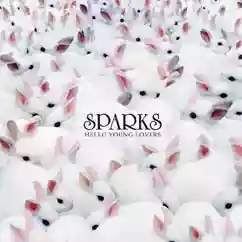
That journalist, it’s clear, was very wrong: the Halfnelson would soon change their name to Sparks and carve out a seemingly peripheral place in music history. And they would achieve quite a bit of success: "Hello Young Lovers," their latest (and twentieth) work, was released in the spring of 2006.
Who the Sparks have been would be a very long story to tell. In short: they were the apex of glam-rock in the mid-seventies, when "Kimono My House" climbed the British charts and "This Town Ain't Big Enough For Both Of Us" reached the second spot among singles, when they strummed anarchically and mockingly over lyrics ranging from the absurd to the caricatural, amidst psychedelic riffs and ramshackle innovation (the origins of Queen are partly here); they were one of the most influential early electronic bands (after Kraftwerk and a few others), launched by Giorgio Moroder in 1979 with an extraordinarily modern album ("Number One In Heaven") which would greatly inform acts like Pet Shop Boys, Erasure, and company, remaining unsurpassed; they were number one in France in the mid-eighties with a very bizarre track ("When I'm With You"); they were the contrived and teased triumph of the eighties' trash, through a couple of disco-dance albums of deadly ugliness, well below the level of Bimbomix compilations; they were at the center of mid-nineties eurodance, with a song that wreaked havoc in Germany ("When Do I Get To Sing 'My Way'?") and with a well-sold and received album in Europe ("Gratuitous Sax And Senseless Violins"); finally, they became a cult phenomenon, idolized by critics when in 2002 they flaunted a shocking album like "Lil' Beethoven" (pop and classical music together), when groups like Franz Ferdinand and Futureheads (as in the past Faith No More and Beck, just to give an idea of the variety) declared their love and owe to them (even Daniele Luttazzi joined the list...). And the two brothers, over time, remained intact: the first always old, as at twenty, with the same mustache; the second always a teenager, as at sixteen, with the same voice.
"Hello Young Lovers" aims to repeat the experience of the previous "Lil' Beethoven": string base, operetta climate, extenuating repetition of the same themes, total abandonment of the traditional song structure, lyrics (as always) funny and grotesque. Additionally, it adds a greater dose of guitars (played by Dean Menta) and effects that too often sound dated, out of time, or simply second-rate, playmobil-like. It's very difficult to say more: it’s a strange sound that only rarely yields results comparable with circulating music: "Perfume" is a good track, the most traditional, swinging on a pleasant swing-like piano jingle; "Dick Around" is the best thing on the album, a ride halfway between sung classical music and hard-rock, almost metal, with continuous and unsettling tempo changes, proving that these fifty-somethings, after more than 35 years of career, manage to pull out things no one ever dreamt of writing. The amusing "There’s no such thing as aliens", three minutes of vaudeville and burlesque violins worthy of the best Sparks: only strings, piano, and intertwining voices. The rest mixes frankly incomprehensible and boring moments ("Here Kitty", "Rock Rock Rock": again only strings and spoken-sung choruses) with others trying to reclaim something from the glam gold period and particularly recover a little-used battery ("Metaphor", "Waterproof"). "As I Sit Down To Play The Organ At The Notre Dame Cathedral" closes gloriously: seven minutes of choruses, distorted guitars, organ, and medieval-like decorations. Absurd.
The discourse, with the Sparks, is always the same: you either love them or hate them. The first feeling when listening to any of their albums (this one more than others) is immense embarrassment. So the advice is to listen to them in solitude. Then the shame passes: and you either love them or hate them. I, I confess, love them. The fact that this album left me somewhat cold, except for a few memorable passages, worried me a bit.
However, I still recommend, to get to know these little masters who’ve always remained in the shadows, starting from the best parts of this album and then going back: it will be understood that the Mael are wild geniuses who for decades, relentlessly revolving around music in its widest sense, always discover new and unexplored facets. With more or less luck, but with enviable courage.
Loading comments slowly
Summary by Bot
The review traces Sparks’ rich musical history and the duo’s unique style. 'Hello Young Lovers' continues their experimentation with operetta and rock fusion, offering some standout tracks amid puzzling moments. The album challenges listeners but reaffirms Sparks' status as innovative, enduring artists. Fans are encouraged to explore the album for its daring creativity.Tracklist Lyrics Videos
Sparks
Sparks are the Los Angeles–born duo of Ron and Russell Mael, renowned for theatrical vocals, witty lyrics and stylistic swerves from 1970s glam to synth‑pop and orchestral pop. They first recorded as Halfnelson, broke the UK charts in 1974, and have remained restlessly inventive ever since.06 Reviews
