
 •
Rating:
•
Rating:
THE REVIEW
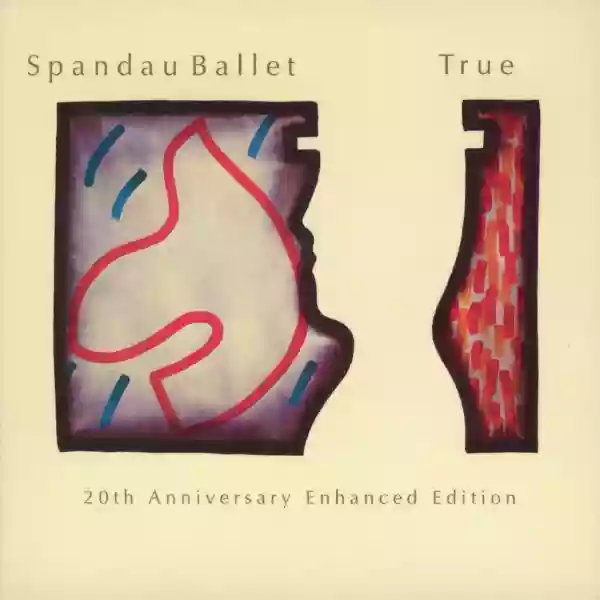
The time to cast the first stone has finally come! Those who have always hated and cursed them can now massacre and torture them here on DeBaser as well! For everyone else, it will be a good opportunity to discover a record that has its good moments and its downfalls, a record of "vulgar" pop music, very popular but not excellent for that reason. The group certainly cannot have the presumption of placing themselves among the "greats" of the 80s, and the unusual rivalry that journalists saw between Duran Duran and Spandau Ballet was, to me, just a big bullshit, since the former were something else entirely, much better equipped and capable than the latter. Yes, the Spandau can indeed secure a place among the most handsome pretty boys of the Thatcher era, that much is true. It doesn’t save them from the abyss, but at least it makes them look a bit less shitty. Is anything salvaged? As far as I'm concerned, their "True" deserves to live. What is "True"? It's 8 little pop songs lined up for a pleasant 40-minute listen, where you can hear several interesting little things. Let me preface this by saying the band was not at their first attempt, but had instead made a two-year apprenticeship during which they released two presumptuous and anything but exciting albums (except for their debut single, "To cut a long story short," which I've always liked). In 1983, (after forming in 1979), the group reached a significant turning point, coinciding with a change of producer and image. From young beautiful rebels, tight and macho, always with some part exposed, they transformed into five elegant and classy young men, with jackets, black shoes, and hair somewhat fixed. The result is also a change of sound, taking them farther from the new wave that accompanied their birth in favor of a refined and unpretentious pop. Gary Kemp, the guitarist, and the author of all the Spandau songs except one, as in the two previous albums, signs all the tracks. The record opens with "Pleasure", a conventional pop song like many heard in the 80s, characterized by light percussion that remains in the background (a feature of the entire album) and Tony Hadley's certainly important voice, much more confident after the first albums. The second track "Communication" was also the first single and is the song that marks a change of direction for the British band. Relying on a very catchy chorus and a video that was high quality for the time, the song managed to break through and consecrate the group even outside their homeland. The record continues with the mid-tempo "Code of love", which I consider one of the most interesting moments of the LP, with several "high" points and classy nuances. The production by Tony Swain and Steve Jolley, the two most "in" producers of the early 80s in such cases, greatly helped the 5 lads to create their own sound and make it their trademark, perfectly encapsulated in "Code of love". Next comes the danceable and catchy "Gold" (we all remember that crescendo intro) which reaches even greater heights than "Communication" when it comes to the hit parade and essentially lifts the album's mood that could become somewhat monotonous in the long run, though pleasant. Notably, Steve Norman's sax solos that from this album forward will become the band's hallmark are noticeable. Side B opens with "Lifeline", the third single and a very lively track, with a chorus that sticks in your head and those backing vocals that, yes, indeed, fit in well. Following that is "Heaven is a secret", a trip-up of the album that sums up into a formula similar to that of "Lifeline" but less explosive and less contagious. On a positive note, the arrangements nod to soul. The penultimate stop before the final bang is the fast-paced "Foundation", suspended between a rock that it fails to be and regurgitations of the new wave of times gone by. It’s a nice transition to the title track, the most well-known of the group and their emblem, their only masterpiece, still fashionable today. Hadley doesn’t miss a beat and reveals himself, perhaps for the first time, as a singer of great talent and class. The backing vocals and piano arpeggios in the background are more than useful in creating a very soulful but also very new wave and perfectly harmonized ballad atmosphere. The sax solo performed by Norman is certainly one of the most famous in international pop music and of the '80s in general, a time when sax could even transform an extremely silly song into a great song. This obviously does not apply to True, which is anything but silly, but that solo... that solo IS True. Period. End of the record, end of the little songs. Does so much lightheartedness hurt, in the end? I don't know. I know I enjoy listening to many different records, some are masterpieces, others just honest works. True is not a masterpiece. But it is a good record, perhaps the only Spandau album that goes beyond just sufficient and manages to capture attention not for some gaudiness but for some good music. That Spandau later threw themselves back into crap is another story. But sometimes it's worth stopping time, even if just for 40 minutes...
Loading comments slowly
Summary by Bot
The review paints Spandau Ballet's 'True' as a solid 80s pop album with both good moments and flaws. It highlights the band's stylistic shift and catchy singles like 'Gold' and 'Communication.' The title track remains a timeless, soulful masterpiece. While not a groundbreaking record, 'True' surpasses mere adequacy and offers enjoyable music worth revisiting.Tracklist Lyrics Videos
Spandau Ballet
Spandau Ballet are a British new wave/New Romantic band formed in London in 1979. The classic lineup features Tony Hadley, Gary Kemp, Martin Kemp, Steve Norman, and John Keeble. They rose to international fame in the early 1980s with hits like True, Gold, and Only When You Leave; the band originally split in 1990 and reunited for tours and releases from 2009 to 2019.04 Reviews
