
 •
Rating:
•
Rating:
THE REVIEW
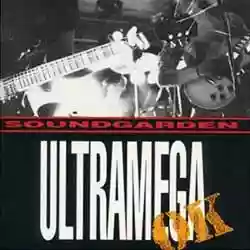
In 1988, the original Soundgarden (Hiro Yamamoto, Kim Thayil, Matt Cameron, and Chris Cornell) were four university students already with a single and two EPs under their belt. Their sound was still in its testing phase but nonetheless caught the attention of the legendary SST, who signed them.
The four young men were greatly influenced by Led Zeppelin and Black Sabbath, and this CD certainly doesn’t hide it. From the former, they emphasize the guitaristic verve and electric blues, and from the latter, the gloomy ability to create funeral march rhythms rich with pathos. Not only that. On more than one track, the young Cornell gives the impression of wanting to emulate the myth Ozzy (listen to "All Your Lies", "Beyond The Wheel", "Mood For Trouble" to believe it). It's certain that, willing or not, at times the imitation borders on a mere parody. The theory of "mockery" is further supported by the lyrical content. "665" and "667" are outright parodies, deliberately avoiding the sacred number of Beelzebub and steering clear of presenting hell as a terrifying place, opting instead for a more decaying and decadent image, almost ridiculous. The same "Beyond The Wheel" and "Circle Of Power" (with their frantic rhythm) should be reread from this perspective.
Desecrating the themes so dear to the heavy-metal school (Satan, death, the occult), considered puerile, perhaps outdated, using a musical style that draws heavily from heavy-metal: this is one of the main aims of the young Soundgarden. But not the only one. The band members showcase all their technique even in slow psychedelic blues like "Smokestack Lightning" and "Incessant Mace". Cornell proves to be extremely versatile, shifting from cathartic interpretations to senseless pseudo-demonic screams, from Robert Plant-style falsettos (sometimes unbearable or prolix) to pleasant ballads. There is a certain lack of restraint, justifiable by the artistic rawness of the singer. Who doesn’t fall into predictability is the bassist Hiro Yamamoto, who delivers excellent performances in every track (the peak being the visceral "Flower", my favorite). A great merit of the rhythm section is their ability to recreate with hard sounds obsessed atmospheres, never claustrophobic, in the faster tracks (an example is "Nazi Driver") and at the same time, the ability to bring originality to slower pieces (see the exhausting "Incessant Mace"). Kim Thayil's guitar is already the Soundgarden's "crazy guitar", capable of extemporaneous and creative incursions. The end result is an original sound that can be appreciated, which does not skimp on the experimentation front either (see "He Didn't").
An album and a band that demonstrate how wide and varied the range of sounds of the Grunge scene was.
Loading comments slowly
Summary by Bot
Ultramega OK is Soundgarden’s 1988 debut, showcasing a raw but original fusion of heavy metal and grunge influences. The band channels Led Zeppelin's bluesy guitar and Black Sabbath's dark rhythms while playfully parodying heavy metal tropes. Chris Cornell’s versatile vocals and the strong rhythm section highlight the album's wide musical range. The album stands out for its experimentation and fresh approach in the diverse grunge scene.
Soundgarden
American rock band formed in Seattle in 1984, central to the 1990s grunge scene; best-known for albums such as Superunknown and Badmotorfinger and for Chris Cornell's distinctive voice.31 Reviews
