
 •
Rating:
•
Rating:
THE REVIEW
1996. 2021. Just a few years have passed since that date, enough time to understand how much of that historical moment still needs to be understood and comprehended, how much of it still influences our world, and the things that "millennials" need to be educated about: the fisherman's hair (the Bucket Hat), bell-bottom pants, hip-hop, the street wave. Surely we could also find other and different points of contact beyond fashion, like the general socio-cultural crisis that was being experienced at the time, even though our specific case has enviable historical uniqueness. However, sticking to music, 1996 is not a simple year, just like all the years of the 90s. The 90s brought with them a tough task, and that was the comparison with the parent 80s and the grandparent 70s, which, in different ways, had made rock music glorious, repainting it in all its darker and more intriguing facets, as well as with brighter and more irreverent tones, managing to give a never-before-seen energy to the spirit of youthful transgression. Well, the 90s strongly tried to make a different qualitative leap compared to distortions, but they were certainly not the times of novelties; it was instead the time to become aware of how it would have been wasted breath to call them into question amidst a rapidly changing historical-cultural reality following a vector difficult to reverse. Like all artistic and cultural phenomena, music also lends itself to being a particularly truthful mirror of our society, explaining it much more clearly than a newspaper snippet could do, managing to capture its essence even simply with the chosen sounds, the right progression, the attitude; and everything is there, in that sheet music with bitter notes, where we find part of the meaning of our days, managing to slightly block time and immerse ourselves in the truth that binds the phenomena of reality.
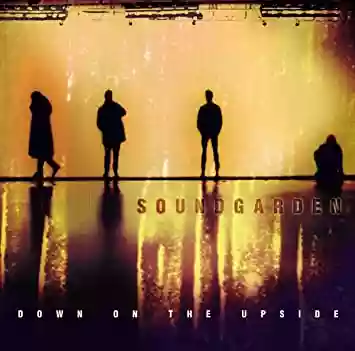
But what characterizes the 90s? Do they have distinguishing features, or is it simply a realignment of the past? Certainly, they are the years of plaid shirts but also of chokers and glittery mini tops, of Dawson's Creek, of Eiffel 65 and "Festivalbar," as well as of Apple, major technological revolutions, new Euro-centric policies, and the first environmental protocols; it is an experimental period of what the world as we know it today would become, in all its silicone. Thus, music is a reflection of all that, and the city of Seattle, Washington, is the lake reflecting the "upside down" of this tainted reality in formal advancement. Indeed, much was taken from the 70s; the rock is that distorted Woodstock style, after all, bringing too much novelty would have been countertrend to the sense of grunge: nihilism, depression, apathy, devaluation, a search for an inner "nirvana," a temporal and unrealistic regression to a primitive self, a child without blame other than not being able to rebel against parents too busy keeping up with social laundry. Soundgarden, born in 1984, were one of the maximum musical expressions of this movement and all the meanings it carries: a screamed but fundamentally mute rebellion of the young who, before them, saw only the inevitability of progress, of a world that had already taken a well-defined direction, and no revolution could change it, because, in effect, all revolutions had already been made. Thus the formula "chorus+noise+chorus" is the new song-form of the rock tracks of the time in a shabby, ramshackle, decadent key, adjectives that for ease have been grouped under one name: grunge. We will not dwell on what has been said, let's rather talk about the album in question: Down on the Upside, 16 tracks of pure alternative rock also known as grunge. The roaring, substantial, explicit guitars are the main musical element that ties the whole album and strongly characterizes the band's sound, which had already caused quite a few first-degree burns with Ultramega OK and Superunknown. Here, the decisive elements are two: Cornell's vocals and the strong heavy metal tendency the band takes. I have always listened to this album not from start to finish, because it would have been too hard to do so, because I knew it would have been a blow I would carry with me for days and weeks, I would have gotten myself stuck in it, and indeed now that I've done it to get a complete picture of the album to review, I'm feeling the hit. It was a backward journey along an undefined trajectory that, in the uncertainty of the final goal, for safety, needs to be retraced backward, considering the hypothesis of playing a hard rock already heard but dressing it in a nice, crumpled plaid shirt. The most splendid thing about the album is, in my opinion, Cornell's voice, dazzling and gritty, complete with that bold attitude that made the most arrogant faces of rock envious; despite its darkness, it manages to unwind gracefully and profoundly among the tracks, opening in Switch Opens, closing in Burden in My Hand, in No Attention; along with him, the splendid forms of rock borrowed from the untrendsetter Jimmy Page and the pagan forms used to add grit to desolate folk sounds, a long walk in the desert in search of water, of a stopover where to find some refreshment. Psychedelic are the lived experiences of Overfloater (great reference to Led Zeppelin's In My Time of Dying), pink Floyd-like the choices of sounds, voluptuous and dispersive the vocal harmonies that soften the air and make it rarefied. Everything seems like nothing; things are not what we see, there is the veil of apathy that distorts them and confuses us, the veil of fatigue from the exhausting journey towards a city lost in the map of the unconscious, in the identity of those years.
At the end of the long journey in the upside-down of Seattle's 90s society of which the album is a voice, I don't know if I found solace, I like many other nostalgic rockers, but I certainly have the right spite to reach, if not the end (because I don't reach it), at least the bottom of the desert, to understand it and see it with my eyes disturbed by the dust (Dusty), and see it in all that intensity that makes everyone in 2021, who boasts of making rock, envious.
Loading comments slowly
Summary by Bot
Down on the Upside, released in 1996, encapsulates the grunge spirit of the 90s with powerful guitars and Chris Cornell's distinctive vocals. The album reflects on the socio-cultural complexities of the era, blending heavy metal elements with alternative rock depth. It is both nostalgic and emotionally intense, capturing a nuanced portrait of youth rebellion and apathy. Listening to the album is described as a profound journey into the era's mindset and Soundgarden's artistic maturation.Tracklist Lyrics Videos
Soundgarden
American rock band formed in Seattle in 1984, central to the 1990s grunge scene; best-known for albums such as Superunknown and Badmotorfinger and for Chris Cornell's distinctive voice.31 Reviews
Other reviews
By 3poundsoflove
Down on the Upside turns out to be far more substantial than critics had to say.
If you have loved this band, or the future evolutions of the good Cornell, you will easily admit to yourself that this is an album to bring, hidden from the eyes of the narrow-minded, to the deserted island.
By 47
"The sounds: these sounds are beautiful. Rich, polished, soft, they are the best possible attire for a multiform rock."
"Maybe take it out of the drawer, give it a listen. Perhaps like me you'll discover it with few wrinkles stiffening its features, which are still fresh and young."
By StoneAgeWoof
"Down On The Upside reflects all of this, acting as the finale of both the most intense season of the decade and one of the bands that best represented it."
"An album that is qualitatively uneven but overall acceptable as the concluding chapter of their artistic journey and probably of the entire Seattle scene."
By FabbioAW
‘Down On The Upside’ offers many points for reflection and had the potential to be Soundgarden’s magnum opus.
It is an album capable simultaneously of exhausting and elevating the mind.
