
 •
Rating:
•
Rating:
THE REVIEW
Alongside the many noteworthy groups and artists that emerged in Minneapolis, a Midwest city in the USA, from Prince to the immense Replacements, Husker Du, and Jayhawks in a more rock scene (and surroundings), the 'Loud Fast Rules' were born in 1981 in a garage in the same city, a band formed by singer Dave Pirner, guitarist Dan Murphy, and Karl Mueller (R.I.P.) on bass, who soon adopted the brand name Soul Asylum, with which they made themselves known to the world over the following decade.
Despite the still raw debut of 'Say What You Will' (1984) and the great maturity reached only two years later with the release of 'Made to be Broken', 'While You Were Out' (along with the collection of outtakes, released only on cassette, named 'Time's Incinerator'), Soul Asylum struggled excessively to emerge from the underground band context, despite the undeniable quality of their musical proposal, overshadowed by the fame achieved by fellow citizens Husker Du and Replacements, in addition to the poor promotion by their record label of those years (the local Twin/Tone Records), which moreover considerably penalized the group also at the level of production and sound impact of the tracks.
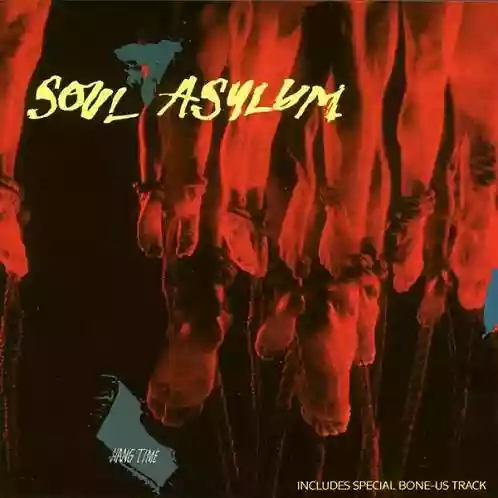
The first major turning point for the band fortunately came in 1988, thanks to the signing with the first major record label, A&M, under whose brand this 'Hang Time', the group's fourth release, was published during the same year.
Following the line of what was proposed in the previous two albums, the opener 'Down on up to Me' immediately scratches with its riffs in full hard rock style with bluesy interludes, indebted to the great masters of the Seventies, as in the subsequent and even more convincing and captivating 'Little Too Clean'; while in 'Sometime to Return' and 'Standing in the Doorway' we are faced with two rock pieces with a strong emotional impact, which also allow something to pop in the triumphant and catchy choruses. Despite the quality and charge of the initial tracks, even just the first chords of 'Cartoon' surprise once again for the brightness and energy they manage to release, in an anthem of disarming beauty, sung in chorus by the band; with a text, however, in dark and pessimistic tones, dedicated to the youth of their generation, devoid of ideals and defeated by society; it certainly deserves to stand alongside songs like 'Can't Go Back' (also composed by Dan Murphy), 'Never Really Been', and 'Runaway Train' (signed by Dave Pirner), among the most significant and memorable tracks left as a legacy by the group.
Halfway through the album, the sweet chords of 'Endless Farewell' break the rhythm, an ethereal, evocative ballad with a desperate progression, which succeeds in the intent to bring down the night even for a fleeting moment, lulled by Pirner's subdued voice, suspended between dream and reality, and capable of releasing notes full of melancholy and sadness, immediately swept away, however, by the liveliness of 'Beggars and Choosers' and the fresh easy-listening rock of 'Marionette'; but the band immediately gets back to serious business with the brief and aggressive southern interlude of 'Ode' (strongly indebted to bands such as Molly Hatchet, Blackfoot, and ZZ Top), the unleashed hard rock of 'Heavy Rotation', and the electrifying 'Jack of all Trades', once again in the name of the hard rock tinged with the blues of the beginnings, which still amazes for lightning fast accelerations, time changes, and perfect refrains. Finally, it is up to two funny folk nursery rhymes like 'Twiddly Dee' and 'Put the Bone in' to put an end to this wonderful album, while the desire to put it back on and play it from the beginning already starts to take over.
The over 40 minutes of 'Hang Time' reveal all the creativity and maturity reached by Soul Asylum, and can be considered the album of consecration, in which the intuitions of 'Made To Be Broken' come to fruition, combined with the more garage-rock attitude present in 'While You Were Out', despite the still approximate production, to the detriment of having moved to a major, continue to penalize the sound rendering of the songs.
With this album, the first part of the band's career will also end, in fact already from the next 'And the Horse They Rode in on' (1990), all the band's hardcore and garage influences will almost definitely be set aside, to turn towards a more classic rock sound, with greater concessions to pop and tracks with a more acoustic flavor but, despite it being an album of transition, it still contained within it some pieces worthy of standing alongside their most beautiful works (for example 'Spinnin', 'Veil of Tears', 'Easy Street', 'We 3', and 'All the King's Friend').
In 1992, it was the turn of 'Grave Dancers Union', a full-length in which the group finally achieved the success it had deserved even before, for what it produced in previous years, thanks to the presence of an important historically significant track like 'Runaway Train', which, accompanied by a video clip full of pain and social protest, delivered the group to worldwide fame; this despite at the level of sound very little remained of the band's beginnings, embracing sounds tending more towards folk and roots rock, while still maintaining a high quality in terms of songwriting and lyrics.
The real commercial turning point, only hinted at in 'Grave Dancers Union', instead arrived three years later, with 'Let Your Dim Light Shine', an album more constructed that distorted the band's sound in some episodes (as in the Bon Jovi-like 'Hopes Up', 'Shut Down', 'Crawl', 'Nothing to Write Home About'), but proposing, alongside tracks too much in search of the new hit like 'Runaway Train' ('Misery'), also some delicate and well-executed ballads that did not look out of place compared to those contained in 'Grave Dancers Union' ('String of Pearls', 'Eyes of a Child', 'I Did My Best'). After the relative failure of the album, Soul Asylum faced the inevitable decline, between the parallel project 'Golden Smog', in which Pirner did not participate, and the release of a new album that entirely went unnoticed (the soporific 'Candy from a Stranger, 1998) followed by the abandonment by the then record label, Columbia.
The band, without ever announcing their disbanding, faced 8 years of silence, interrupted in 2005 by the sad news of the death of historical bassist Karl Mueller, and the creation of a new album of unpublished works, 'The Silver Lining' (2006), the listening of which, however, cannot help but evoke a touch of nostalgia for the times that were, for a band that, both in the electric version of the Eighties and the more intimate one of 'Grave Dancers Union', although it collected much less than it deserved, played an important role on the American rock scene and beyond, marking a generation with songs that still remain today and will remain unforgettable, finding forever a special place in the 'soul' and heart of all the people who loved them.
Loading comments slowly
Summary by Bot
Soul Asylum's 1988 album Hang Time represents a significant breakthrough for the band, blending hard rock, bluesy influences, and emotional depth. The review highlights the Minneapolis origins, challenges in early years, and the album's creative maturity despite imperfect production. Key tracks like 'Cartoon' and 'Endless Farewell' showcase the band's range. Hang Time marks the end of their underground garage phase and foreshadows their later mainstream success.Tracklist Lyrics Videos
Soul Asylum
Soul Asylum is an American alternative rock band formed in Minneapolis in 1981 by Dave Pirner, Dan Murphy, and Karl Mueller. Rising from hardcore/garage roots, they earned mainstream success with 1992’s Grave Dancers Union and the single Runaway Train, while maintaining a reputation for energetic live shows and emotionally direct songwriting.05 Reviews
