
 •
Rating:
•
Rating:
THE REVIEW
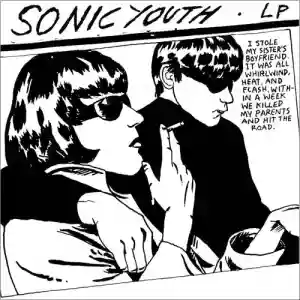
''Goo'' is the sixth studio album by Sonic Youth, the first album released under a contract with a major record label, specifically Geffen Records.
The band, which until then had released their material only through independent labels, decided to rely on a record label after the enormous success derived from ''Daydream Nation''. Consequently, their singles end up on MTV, the sound softens considerably; all the material is decidedly more accessible.
Now, after this brief introduction, it might seem that the album is destined to be a flop, especially for the band's most loyal fans.
But it's not, and it's easy to understand why: after all, we are still talking about Sonic Youth.
The journey of the New York band could easily be summarized as follows: a first phase born from the No Wave experience and experimentation, then reaching the perfect balance between experimentation and sound refinement in the second phase, a period that effectively led Sonic Youth to be considered the masters of Noise-Rock, totally revolutionizing the use of guitars. Finally, a more accessible third phase, characterized by Alternative Rock. This is precisely where ''Goo'' is: it is the inaugural album of this third and final phase.
Beyond the discussions we've already covered regarding the record label, I think the new sound is less satisfying for quite different reasons: it's obvious that we are no longer facing the Sonic Youth of Bad Moon Rising, but we are not yet too far from the Sonic Youth of Daydream Nation. What is missing here is originality, the search for new sounds.
And it would probably have been asking too much, given that the path leading to the creation of Daydream Nation was long and demanding (I must emphasize that no post-DN album is, in my opinion, on the same level as DN itself).
Consequently, the sound appears a bit bland, lacking interesting ideas. And even though Thurston Moore, after signing with the new label, stated that the band still had ''total control over their music'', it is clear that tracks like ''Kool Thing'' are the result of some type of change that had already occurred within the group.
However, overall the album still turns out to be of excellent quality: Sonic Youth in the studio are always the same sound perfectionists, the guitars retain their unique and inimitable sound. Great tracks like ''Tunic (Song For Karen)'', ''Disappearer'' or ''Titanium Expose'' greatly increase the overall value of the album, without causing one to miss the previous sound. Also oddly discarded was ''I Know There's an Answer'', a cover, in my opinion, a beautiful one by the Beach Boys (easily found on the Web for those more interested).
In summary, ''Goo'' in my opinion is not at all a mediocre album, but as often happens and as history teaches us, producing two masterpieces one after the other is not easy. This is why it seems quite daunting compared to the previous ''Daydream Nation''.
Despite the more accessible sound, Thurston Moore and Lee Ranaldo maintain the overall level of the album.
Great credit is due to the splendid cover created by Raymond Pettibon.
Loading comments slowly
Summary by Bot
Goo marks Sonic Youth's first major-label release with a softer, more accessible sound while maintaining their distinctive guitar style. Although lacking some originality compared to Daydream Nation, the album delivers excellent tracks like 'Kool Thing' and 'Tunic (Song For Karen).' The album strikes a balance between accessibility and authenticity, supported by great production and iconic cover art.Tracklist Lyrics Videos
Sonic Youth
American experimental rock band formed in New York City in 1981. Core members across their most influential period included Thurston Moore, Kim Gordon, Lee Ranaldo and Steve Shelley; Jim O'Rourke later collaborated and is mentioned as an official member in reviews.66 Reviews
Other reviews
By Antonino91
"Goo proves the ultimate balance between the explosive anger of early years and the noisy guitar outbursts."
"Good Sonic Youth does not lie!"
By Dan Erre
Thurston Moore shouting: 'I don’t wanna die, guys.'
Their noise, especially live, could also be pure abstractionism.
