 •
Rating:
•
Rating:
THE REVIEW
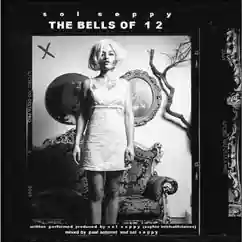
Sol Seppy is the pseudonym of Sophie Michalitsanos, a professional cellist, as well as a multi-instrumentalist and former collaborator with Sparklehorse.
After participating in a tour as a supporter for Radiohead, she finally secured a contract with Gronland label and has released this year, under the protection of her mentor Mark Linkous (from Sparklehorse, indeed) her debut “The Bells Of 1 2”. What strikes about the character, besides her undoubted attractiveness, is her arranging skill: each track is overwhelmed by a significant amount of sounds of all kinds, from the most acoustic and "real" to the more artificial ones, pure studio effects.
In this regard, Sophie is a surprising creature: she starts as a songwriter in the most traditional sense of the term, but it is very difficult to find a track on the record resembling a sparse ballad centered on voice and an instrument. Her voice (beautiful, warm, and sensual) always seems filtered, sweetened, without lacking intensity, and the arrangements transform song skeletons into hallucinations, feverish and whimsical. The result often suggests a cross between Portishead and Mazzy Star. The opening “1 2” sets the coordinates of the work: sweet intertwining keyboards (almost a more earthly version of Mum), a radiant chorus, where the voice is lost in a maze of dreamy vocals, to return (in a perfectly symmetrical way) to the keyboard sequence that brought it to light.
Her decadent romanticism is at the forefront in sad and melancholic piano ballads like “Human" or the desolate “Injoy”, whispered with a trace of voice to a distant love. Sometimes the tricks are a bit too evident: “Move” and “A To N” are practically a trip-hop ballad (the former) and a classical serenade (the latter), whose only peculiarity is being formally structureless: yet, the perfection of the arrangements and the heart-wrenching pathos of the singing (especially in the former) save these (less successful) attempts at innovation. In “Gold” the voice timidly and spectrally makes its way among the piano chimes until it is echoed by the brief lament of the cello. “Come running” recalls a pop version of Cat Power (even if the acoustic bridge verges on plagiarizing “Metal Heart”). The style is less focused on a track like “Love’s boy”, dangerously halfway between quirky pop and chamber music (due to the string arrangement), yet extraordinarily fascinating; it moves instead in much safer territories in the gloomy “Farewell your heart”, which effectively has the form of a regular guitar and voice ballad but is disturbed by a noir and aloof atmosphere, softened by the higher notes of the piano.
A classical piano loop introduces “Slow Fuzz”, which soon transforms into a smoky and nocturnal rock crescendo, six minutes of shivers. “Wonderland” is a vaguely Tori Amos-like ballad, where the singing, initially subdued, slowly gives in to another, lyrical crescendo. The final “Enter One” is an ambitious six-minute piano sonata, which, however, repeats, amplifying them, the insights already proposed in the rest of the album.
A slight (and forgivable) monotony does not prevent “The Bells of 1 2” from being a decidedly successful album: the brilliant cross between tender romanticism and a more overtly dreamy component makes it a high-class debut.
Loading comments slowly
Summary by Bot
Sol Seppy’s debut album The Bells Of 1 2 impresses with intricate arrangements blending acoustic and electronic sounds. Sophie Michalitsanos’s warm, filtered vocals create a dreamy, romantic atmosphere akin to Portishead and Mazzy Star. The album’s diverse tracks range from melancholic piano ballads to trip-hop influences. Despite some minor monotony, the record’s charm and emotional depth make it a strong and fascinating introduction.Tracklist Lyrics Videos
Sol Seppy
Sol Seppy is the stage name of Sophie Michalitsanos, a professional cellist and multi-instrumentalist. She collaborated with Sparklehorse and released her debut album The Bells Of 1 2 in 2006.01 Reviews
