
 •
Rating:
•
Rating:
THE REVIEW
If one thinks of the year 1990, they think of electricity, the return of guitars, the decline of synthesizers. If one approaches "Trees in Winter" with these notions, just because "Trees in Winter" is from that year, they will make a tremendous mistake.
Having permanently set aside the last remnants of industrial and wave that still contaminated the debut EP and the subsequent "Lex Talionis," Tony Wakeford enters the decade of grunge, indie, post-rock, techno, and trip-hop armed with nothing but guitar, flutes, and violins.
In 1990, Tony Wakeford is already, as they say, off on a tangent: his autistic one-way flight, bound for the End of the World, is already at dizzying altitudes. And "Trees in Winter," the consecration of his troubadour art, is nothing but the first link in a tunnel of concentric circles that will lead him unharmed to our days, regardless of the progress of the modern world.
Ian Read is still by his side, though not for long, because soon after the release of "Trees in Winter," he leaves, slamming the door to form his Fire + Ice, another glory of apocalyptic folk. However, Read’s beautiful voice is still there, and it is granted ample space. But it is obvious that Sol Invictus is Wakeford, and that far below we find Karl Blake (bass), Sarah Bradshaw (cello, flute, and vocals), Joolie Woods (violin), and James Mannox (hand percussion): excellent recruits through which the sparse music of Sol Invictus becomes a suggestive folk, although simple and rough, well orchestrated, that has its roots in the most awfully popular, dirty, filthy medieval folk, the kind that grows in the mud, in the stench of the plague, in the shadow of dead trees and stone crosses. Let us add Wakeford’s tragic vein, his passion, his pessimism, and we understand why this folk is called apocalyptic.
"Here we stand like trees in winter": the End of the World is staged.
And what an End of the World. The first five tracks are immortal classics of Sol Invictus and consequently of the entire genre: "English Murder," "Sawney Bean," "Gold is King" (opened by the ranting mumble of Ezra Pound), "Media" (classic of classics), "Looking for Europe" (last legacy of the past with Death in June) are anthems of infinite solitude and indomitable pride.
But let it never be said that the five remaining pieces are any less: "Here We Stand", "Michael" (plundered by Read: it will become part of Fire + Ice's repertoire), "Deceit", "Blood of Summer", the solemn "Trees in Winter". Because the most beautiful song of Sol Invictus and the ugliest one are not that different. Because the Spirit that animates them is always the same.
Sol Invictus is not Art: Sol Invictus is the Spirit that runs fearless and drags the notes against the wind and the frost, through dry leaves, rushing rivers, stormy skies, and where the notes disperse, the Spirit goes on undaunted. Wakeford and Read alternate at the microphone, but absolutely nothing changes. Many men and women will come and go behind Wakeford, but nothing will change a damn thing.
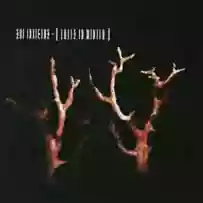
And what really scares you is the impression that the musicians are playing in the Void, that around them there is nothing but desolation: a Void adorned with rubble and bare trees extending their withered branches to the sky. A gray, leaden sky, dense with clouds, promising rain, perhaps the End of the World. And if the guitar will rot in the strings and the wood, that hand will continue to play in the rain, as wood and strings crumble in the hands and the violin slashes the sky and the percussion drive frantic healing dances of despair.
This is the true apocalyptic folk. What Douglas P. does is something else entirely, it is mental appropriation, the disintegration of the Self, while Wakeford's Self is harder and purer than the damn bronze of a Riace. I figured out what the secret of Wakeford is, it's the limits that are his strength: it's his coarse vocal cords intertwining and clog up in that lump in the throat, that damn lump in the throat that even if your throat bursts, you keep singing, cracking, bleeding until there's breath in your throat. And when the breath ends, you continue just the same, with the voice of the heart, with the passion that animates you, with the stubbornness that makes you pig-headed, blind, desperate. A fool singing of the End of the World. Even if you don't know how to play. Even if you are doomed to lose.
Anyone who wants to know something about apocalyptic folk is requested to stop by here.
Loading comments slowly
Summary by Bot
Trees In Winter, released in 1990 by Sol Invictus, marks a definitive step into apocalyptic folk by Tony Wakeford. Stripping away industrial influences, it embraces raw medieval folk sounds enriched by violin, flute, and cello. The album's themes of despair, solitude, and the End of the World create a haunting atmosphere. Spirit and passion run deeply in Wakeford's performance, making it a cornerstone of the genre. This album remains essential for fans seeking authentic, rugged folk music.Tracklist Lyrics Videos
Sol Invictus
Sol Invictus are an English apocalyptic folk/neofolk project led by Tony Wakeford. The reviews portray Wakeford’s work as thematically focused on apocalypse, spiritual and cultural decline, Europe, tradition, and a combative, fatalistic worldview, evolving from early industrial/electronic elements toward acoustic folk with recurring returns to epic, martial intensity.19 Reviews
