 •
Rating:
•
Rating:
THE REVIEW
Or when nothing can stop the music and the passion that drives it. The Small Faces were one of the most beloved yet also unfortunate bands in British musical history. Emerging in a thrilling 1965 with the explosive British Invasion of "Revolver" and "Aftermath", the quintessential mod band faced not only worthy rivals like the Who or the Kinks but also unreasonably austere and reactionary record companies with bloodsucking and ill-prepared managers. Thus developed a career forced to fold in on itself, with a talented group unable to break out of the delightfully R&B sounds of the early, already loved - but spectacularly unpaid - singles. They were forced into exhausting tours due to the higher-ups' conviction that the boys would soon go out of fashion: it's the theory of milking the cow while there’s milk.
In reality, the Small Faces (who took their name from mod slang, which dubbed the most fashionable boy, the "gggiusto", as a "face") could have created much more than a handful of brilliant beat-soul songs, already original but still essentially superficial. No one thought that behind these dandy Italian style-dressed and ambitious-looking fellows there was incredible genius, which only needed time, suitable spaces, consideration, and means to emerge. After leaving, like the Stones, Decca for the more avant-garde and modern Immediate Records of Andrew Loog Oldham, Steve Marriott and company thought they finally had their big break. The authorial mark Marriott/Lane (who were, for the record, respectively guitar/lead vocals and bass/backing vocals), already a guarantee of success and quality, soon became a certainty on the London circuits for the innovative musical research they had begun to develop. The advent of Sergeant Pepper, after all, had influenced the way music was conceived, shifting interest away from mere chart singles to projects (thereafter defined as "concept albums") that unfolded over the course of an entire LP, with an organic and thoughtful succession of tracks forming a unicum, open to more or less ambitious and complex interpretations. The significant fact is that our band, like most artists of the time, not only remained enthusiastic and amazed by the imminent revolution, but immediately got to work to make their voice heard, to win a place among these new emerging sounds. Thus perhaps was born the only concept of the time worthy of this appellation and worthy of being compared to the incomparable Beatles model.
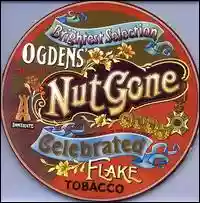
"Ogden's Nut Gone Flake" (1968) became a phenomenon even before it was heard, with its cover reminiscent of the famous tobacco tins (causing quite a few misunderstandings and problems in distribution and shipping), specifically of the Odgen tobacco, the most renowned in the home country. It's a statement of intent; this is an equally exquisite purely British product, and we should just light a match to start the magic. Finally, the sounds evolved into complex and evocative melodies, no longer inspired by the mod drug of choice, amphetamines, but by the then-popular lysergic acid. But as Hendrix or Lennon teach, LSD only serves as an amplifier of sensations, and only the "enlightened" artist can adapt its effects to their own (genius) intuitions. And here there is plenty of juicy substance to taste. The first radical change surely lies in the maturation of the psychedelic component of the songs, which distorts the raw blue-eyed soul into a wonderful acid-pop. We are dazed and fascinated by brief symphonic nuggets that are slowed down, turned down to non-existence, and then restarted, with hard, terribly powerful guitars, blaring bass, a drum full of effects and a whirlwind, without rhythmic stability. It's the joy of finally being able to spread our wings, to say freely what we are. Everything is expressed in a solid showcase of what this group loves. Marriott divides his time between teasing in an unmistakable cockney accent (see the joyful "Lazy Sunday,” an anthem to our more poetically lazy and indolent side) and authentic sonic bombs (like the unleashed "Rollin Over"), where hard rock and soul are amalgamated by a ringing yet delicate voice with craft, fun, and creativity. The melody is never lost sight of, in a cross between Pet Sounds, Solomon Burke and The Piper At The Gates Of Dawn. Ian McLagan provides celestial or unsettling backdrops with an economical but consistent use of piano, mellotron, hapsichord, achieving a resounding sonic capsule that fills the room with the volumes and distortions of string instruments and exalts the chameleon-like voice.
Strings, horns, flutes, and Wonderland tones lead us to the second part of the album, where the project reaches its peak: the story of "Happiness Stan" is born, a boy full of imagination and life, in search of a much-desired happiness. From here unfolds an epic folk-rock suite narrated by comic narrator Stanley Unwin, as Stan travels through English countryside on a rainbow, meeting fantastic and likable characters like the mythical "Mad John". The rock opera comes to completion, celebrating the Donovan-like power of imagination as much as the mysterious and refined beauty of one's country, one's origins, church bells ringing at sunsets while four boys chuckle together, riding on rusty and noisy bikes. Unfortunately for the boys, the flash of freedom and compositional peak would be brief, as they would be ditched again by Immediate Records a few months later, which, even before declaring bankruptcy, had refused to pay the group the agreed fees for the album, causing Marriott's furious abandonment. And to think that Ogden had remained at the top of the English hit parade for six weeks and was even presented and performed with great success at the live show of the cult TV program "Colour Me Pop"... Despite the internal and practically insoluble disagreements from the fate of the group, this rock gem would be praised for decades, continually gaining adherents and devotees, from the Who of "Tommy", to Paul Weller's neo-mod Jam, up to Blur's "Parklife". The genius lives on and remains immortal. The story of the Small Faces, however, would end soon, with the remaining members hiring Rod Stewart's voice and Ron Wood’s guitar as replacements for the leader, simply renaming themselves "Faces". The music would change, everything would be simplified and standardized, but at least a torrential and well-paid success would arrive, until Stewart soon became a world-level star. But this is another story.
Loading comments slowly
Summary by Bot
Ogden's Nut Gone Flake by Small Faces stands as a landmark 1968 psychedelic concept album blending soulful mod roots with innovative storytelling and sonic experimentation. The band overcame harsh industry pressures to craft a unique masterpiece featuring imaginative folk-rock narratives and playful yet powerful musical arrangements. Despite commercial challenges, the album gained lasting cult status and influenced future British rock acts. Its creative maturity marked a peak in the Small Faces' brief but impactful career.Tracklist Lyrics Videos
Small Faces
Small Faces are a British mod and psychedelic rock group formed in London in 1965 by Steve Marriott, Ronnie Lane, Kenney Jones, and later Ian McLagan. They scored UK hits with All or Nothing, Itchycoo Park, Tin Soldier, and the landmark album Ogdens' Nut Gone Flake before splitting in 1969; members then formed Faces with Rod Stewart and Ronnie Wood. The group reunited from 1975 to 1978.03 Reviews
Other reviews
By Boop7
A wonderful album that starts with an instrumental title track and presents us not only with a masterpiece but also the group’s historic song: 'Lazy Sunday'.
One of the four, dazed, sees the half-moon wondering where the other half is; this sparks the idea that will give rise and shape to the b-side of the album.
