
 •
Rating:
•
Rating:
THE REVIEW
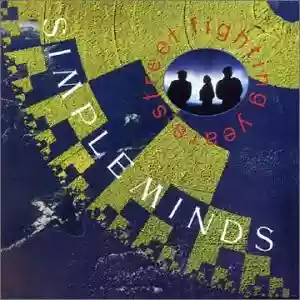
In 1989, Simple Minds re-entered the music scene with this album, which already in its title expressed all its "battle" intentions: "Street Fighting Years", meaning years of struggles, abuses, inequalities, and wars. Beyond the theme of the album, produced by none other than Trevor Horn, what strikes the most is the extraordinary communicative power possessed by all the songs, thanks to Jim Kerr's more subdued voice than ever and the epic sound of tracks like the title track and "Belfast Child".
It is incredible how Simple Minds managed in this album to distance themselves even more from the sound that characterized albums like "Life in a Day" and "New Gold Dream" or even "Once Upon a Time": it was very difficult in those years to make albums without being banal because we all know the crap the '80s gave us a bit.
Let's talk about the tracks: it begins with the splendid "Street Fighting Years", a true masterpiece suspended between post-rock and new wave, and continues with the delicate "Soul Crying Out". Wall of Love is a bit of an exception in the album, bringing back the stadium rock of "Don't You Forget About Me", while the splendid "This is Your Land", featuring Lou Reed, is undoubtedly one of the strengths of the album. It moves forward with the pressing rhythm of "Take a Step Back" and the "aggression" of "Kick It In". "Let It All Come Down" leaves you speechless and "Mandela Day" has that extra edge that many albums lack. Dedicated to Nelson Mandela, it's one of the best-known pieces by Simple Minds with arrangements that bring back serenity and optimism. It seems like an anthem not of a man's redemption, but that of an entire people (the South African one specifically).
"Belfast Child" (which is a traditional Irish ballad) is a real gem, and "Biko" is the track that sparks the most debate. It may seem strange, but the piece doesn't lose that pathos and sense of vindication inherent in Peter Gabriel's original version. On the contrary, it gains even more strength thanks to the extraordinary chemistry between Kerr's voice and the wall of sound erected by Katché and John Giblin. "When Spirits Rise" is instead a pleasant instrumental that evokes traditional Irish sounds.
Also noteworthy is the participation of Stewart Copeland, ex-Police.
In short, although "Street Fighting Years" is not the best-selling and most known album by Simple Minds, it is certainly my favorite and probably the most complete, marking the return to civil commitment of the Scottish band too often compared to U2. Great songs and great courage.
Loading comments slowly
Summary by Bot
Simple Minds' 1989 album 'Street Fighting Years' showcases a mature sound with powerful social and political themes. Produced by Trevor Horn, it features epic tracks like 'Belfast Child' and 'Mandela Day.' The album marks a bold departure from their earlier works and solidifies their commitment to meaningful music.Tracklist Lyrics Videos
Other reviews
By rosharris
"'Street Fighting Years' is a masterpiece!"
"The atmosphere that this album exudes is refined, sophisticated, intoxicating, all surrounded by Kerr’s voice, which is fantastic."
By claudio carpentieri
'The sound manages to remain visceral and never betray by flowing into predictability, generating at the same time feelings of protest and sharing.'
'It’s the winning sequence of the three initial piano chords of "Mandela Day" that underline the importance of a message which, far from political ambitions, succeeds in being perceived even by those who see music only as a fleeting moment of distraction.'
