
 •
Rating:
•
Rating: THE REVIEW
Listening to a lot of music inevitably leads to making mistakes, sometimes inconsequential, many other times less considered. Carried away by mass inattentiveness and crudeness, I came to think not only that Sigur Rós belonged to the so-called Post-Rock movement, but even that they had become just another band. I must believe that the revelation hit me while watching "Heima."
Part one: where I recount my journey with Sigur Rós, their works, and everything up to last night.
I liked Sigur Rós almost immediately, although the initial impact is always a bit disorienting. Certainly, the most difficult thing to digest are the lyrics, strictly in Icelandic, which made my approach to the wonderful Ágætis Byrjun a bit challenging (despite it being, as the translated title says, a good start). Subsequently, everything proceeded without worrisome obstacles until the famous untitled album "( )" changed my life. In the sense that from there, music truly changed its face, that everything had a beginning and an end in the first and last moments of this masterpiece. My way of looking at life took the form of a parenthesis: in the middle, I realized I couldn't see anything, even if there was something there. Therefore, I thought of working on the edges and being happy simply for what it was and for what I could do. And it was almost always like that. As for the rest, "Von" didn't excite me, "Takk.." a little more (certainly incomplete), and very little for the recent "Með Suð í Eyrum Við Spilum Endalaust," whose name I will never be able to pronounce and will never need (since I will call it "that album," with a bit of disdain).
What made me happy was the interlude of "Hvarf/Heim," whose second part offered me a live acoustic performance of pure emotion, a summation of Sigur Rós's poetry that leaves you breathless. Now I live happily with my albums of the group, knowing that their purest and most inimitable essence was consumed between 1999 and 2002, a triennium that handed them over to history.
Part two: where I narrate the advent of "Heima."
My curiosity for this docu-film grew over time until yesterday when I finally decided, and with anxiety, I awaited the evening to shut myself in my room and devote myself solely to it. I started without any information, plunging into the midst of this enlightening experience.
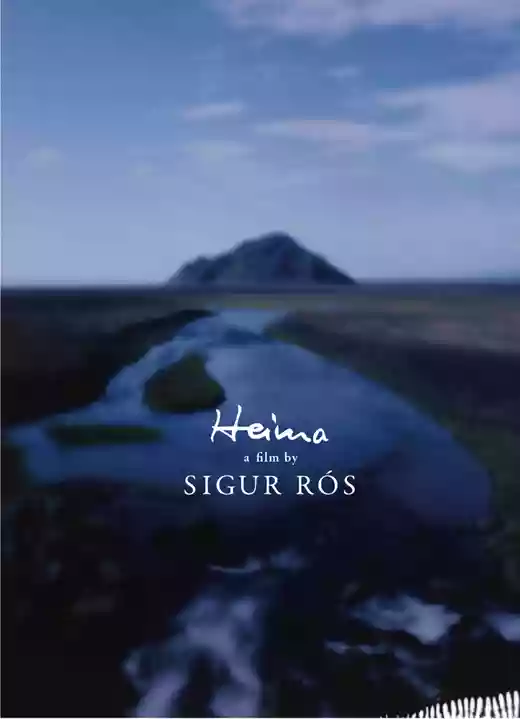
"Heima" means "at home," and indeed we find our favorites right at home. In Iceland, for an entire hour and forty minutes. Through crystal-clear images, Sigur Rós tell us about their free tour in 2006 across Icelandic territory. Having returned from successful concerts around the world, they give a gift only to their compatriots, offering them intimate, sparse, and decidedly more sincere concerts than those on the stage. A moment dedicated only to them, in the nothingness that delineates Iceland. Episodes out of the "civil" world, like their music.
The footage focuses much more on the people listening to them than on the band at work: women, men, children (many), elderly. All are invited to seize this moment of liberation and pride for the group, children of their wonderful land. The external shots, slightly moved by the wind, are moving in themselves. There, they really know what peace, quiet is. There, they know what it means to live.
Every moment of this film is dedicated by Sigur Rós to their beloved homeland. The music, if it were not for our opinion, would be just a soundtrack like any other. We are the ones who cannot do without it, as we have recognized in it fleeting, self-contained music that has no equal anywhere in this world.
Therefore, we are left with no choice but to start this journey with an empty mind, letting ourselves be lulled by the band's (deliberately) most delicate and touching tracks, those that have characterized them as a fundamental reality of our times. Birgisson's voice becomes the narrator of the places our eyes can admire, astonished. Panoramas that leave infinite spaces ahead of them, buildings abandoned forever, vast plains carved by the northern cold. The elements that made me understand that music like Sigur Rós's could only be born here, far from everything and everyone.
Part three: where conclusions are reached - perhaps a bit rushed - of this unforgettable journey.
Sigur Rós have achieved magic beyond magic: their songs, behind a silent visual biography, reach the sublime, making us forget for a scant couple of hours all the psychedelic prisms, the screaming Crimson Kings, and the gray-pink lands. Sigur Rós don't play Post-Rock, they play the way Sigur Rós play, which is like no one else plays.
Starting with Glósóli, moving to Olsen Olsen, Vaka, Starálfur, and closing with the hallucinogenic Popplagið, my pupils dilate, filled with pleasure. I go to bed reassured, accompanied by the last haunting notes of the closing credits (Untitled #3), aware that the images from just before have made me feel less alone. Finally, I too feel at home.
Starálfur (excerpt from Heima, unmissable)
Loading comments slowly
Summary by Bot
The review narrates a personal rediscovery of Sigur Rós through their documentary Heima, highlighting their unique sound beyond post-rock labels. It praises the sincere Icelandic tour captured in the film, emphasizing the emotional connection between music, landscape, and community. The reviewer feels transformed and at home after experiencing the intimate performances and visuals.Tracklist Lyrics Videos
02 Church (00:40)
03 Samskeyti (05:19)
04 Tour Diary (00:00)
08 Kvæðamannafélagið Iðunn (00:00)
10 Gítardjamm (05:29)
11 Von (08:27)
13 Popplagið (15:44)
14 Gítardjamm (00:00)
16 Dauðalagið (13:08)
17 Vaka (Álafoss) (05:21)
18 Titles / Intro (00:00)
19 Á Húsafelli (00:00)
25 Vaka (Snæfell) (05:50)
28 Þorrablót (00:00)
29 Vaka (00:00)
30 Museum (00:00)
31 Memories of Melodies (00:00)
32 Von (00:00)
33 Surtshellir (03:32)
34 Samskeyti / Credits (00:00)
35 Credits (00:00)
36 Hoppípolla / Með Blóðnasir (07:12)
37 Á Ferð Til Breiðafjarðar Vorið 1922 (06:00)
39 Á ferð til Breiðafjarðar vorið 1922 (00:00)
Sigur Rós
Icelandic band formed in 1994, noted for expansive, cinematic soundscapes, Jónsi's falsetto and bowed-guitar textures, and a mix of ambient and post-rock aesthetics.45 Reviews
Other reviews
By giampaz
Sigur Rós surprise and captivate even with images.
The acoustic performance of "Von" at Gamla Borg is even moving, with the director focusing attention on the faces of the diverse audience.
