
 •
Rating:
•
Rating:
THE REVIEW
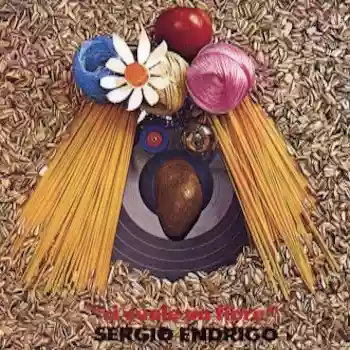
How many of you grew up singing "Per fare un tavolo ci vuole il legno, per fare il legno ci vuole l'albero.."? This sweet little song is the first track of the self-titled album, released by Sergio Endrigo in 1974. It is a wonderful album, where a sense of carefree joy prevails, yet without being banal or of poor quality. The festive music very effectively masks the meaning of the lyrics, which are mostly of protest – a protest against a school that oppresses the imagination of children ("Il bambino di gesso"), a protest of a frantic and fast world, lived superficially ("Un signore di Scandicci"), a criticism of a school that favors quantity over quality, the desire for a world made of peace and freedom.
As mentioned before, the music is festive and joyful, with very simple tunes, but with rich and well-crafted arrangements. It's an album that certainly lends itself to a childish listening, but which an adult can also appreciate, especially in the monologues that precede the tracks, written by "people who were passing by and wanted to have their say," as can be seen from the post-production notes printed on the album cover. Perhaps it is precisely for this reason that Endrigo's career, starting from this album, underwent a slow decline; labeled as a "zecchino d'oro" singer, he was gradually sidelined and forgotten. Forgotten even by his own record company, which took a whole 26 years to master this little masterpiece in digital edition, the quality of which is fortunately very good.
Perhaps it is time to reevaluate this great artist, to reevaluate this album first of all, and to strip it of the label of being a "children's album." It is true, our children will grow up just fine listening to "Ci vuole un fiore," they will understand very important concepts, which only a poet like Endrigo could rework just for them. But adults will also understand something... one shouldn't stop at appearances, at worst you can return to being a child even if only for thirty minutes.
"They told me that in spring the fields are green, but I've only seen them on television, and they are all gray..."
jj people who were passing by and wanted to have their say
Loading comments slowly
Summary by Bot
Sergio Endrigo’s 1974 album 'Ci vuole un fiore' combines festive, joyful music with thoughtful protest lyrics addressing societal issues like oppressive schooling and superficial living. Though often dismissed as a children’s album, its rich arrangements and meaningful content appeal to adults as well. Endrigo’s work deserves reevaluation beyond its 'children’s music' label, highlighting his poetic approach and lasting artistic value. The album’s recent digital mastering brings attention back to this overlooked masterpiece.Tracklist Videos
Sergio Endrigo
Italian singer-songwriter born in Pola in 1933. He emerged in the early 1960s with "Io che amo solo te", won Sanremo 1968 with "Canzone per te", placed second in 1969 with "Lontano dagli occhi" and third in 1970 with "L'arca di Noè". He collaborated with Sergio Bardotti, Luis Bacalov, Vinícius de Moraes, Toquinho and poets such as Giuseppe Ungaretti and Gianni Rodari, and is also beloved for children’s songs like "Ci vuole un fiore" and "La casa". Awarded the Luigi Tenco Prize in 2001; he died in 2005.08 Reviews
