
 •
Rating:
•
Rating:
THE REVIEW
"Carneade, who was he?" asked dear old Don Abbondio, and centuries later, the situation hasn't changed much, despite the progress of technology and the almost unlimited possibility of informing and deepening one's knowledge in any field.
In this specific case, talking about Futurepop here in the Beautiful Country is a bit like trying to grow orchids in Siberia; I can already imagine someone thinking that such a term is nothing more than the title of Justin Timberlake's or Lady Gaga's new album, and I am puzzled about how this kind of music, with many excellent qualities and commercially not at all unsellable, can be considered as "niche" even in its countries of origin (Germany and the Scandinavian area). Futurepop originated in the '90s on the foundations of industrial and EBM, with which it has practically the same evolutionary relationship that in the early '70s linked hard rock and blues rock to the glam phenomenon: futurepop is certainly much more accessible and catchy compared to the genres from which it derives, with epic atmospheres, powerful and catchy melodies, no particular roughness, full respect for song form. Yet no futurepop band has ever managed to truly break into the mainstream, for multiple reasons: for many, rock is seen as an Alpha, dominant genre, regardless of the quality of the offering, while FP, which presents themes and structures much more refined compared to the generic mainstream rock average, with much more depth, style, and substance I would add, does not renounce its electronic soul, consequently giving up all the outdated and cloying rhetoric and bombast that sees music based on guitar, bass, and drums as something strong, sincere, genuine, stuff for tough guys, real men, and blah blah blah. Secondly, futurepop lacked a charismatic entity to lead the entire movement, such as Rammstein for Neue Deutsche Härte or Nirvana for grunge, and a press able to promote the genre (if it had been a typically English phenomenon it would have been much easier to find journalistic support to exploit). As if that wasn't enough, no futurepop artist has ever done anything that could attract the attention of tabloid magazines, thus denying themselves the unpleasant but nonetheless useful attention of busybodies and gossipers; with these premises, mainstream breakthrough remains a mirage.
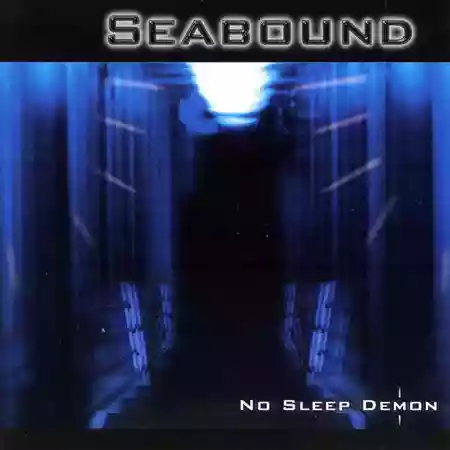
One of the most representative, beautiful, and particular Futurepop albums is undoubtedly "No Sleep Demon," the 2001 debut of the German duo Seabound, consisting of singer Frank Spinath and keyboardist Martin Vorbrodt. Compared to the technological themes and the substantial coldness of the Swedish Covenant, often considered the "godfathers" of the genre, or the more instinctive and visceral approach of their compatriots Rotersand, Seabound travels on calmer and introspective routes, both musically and thematically. Their sound is far from paranoid industrial beats and dystopian visions, the most evident inspiration comes from "enlightened" synth pop, taken back in its essence and stripped of unnecessary frills, and even though there are danceable episodes, the album has a very relaxed and reflective mood, at times almost relaxing, thanks also to Frank Spinath's calm and reassuring voice. The epic and martial stride of "Smoke" is quite reminiscent of "Uprising" by Muse, it goes without saying that it would be much more correct to state the exact opposite, but here the sounds are purely electronic, without cunning contaminations and grandeur pretensions, the tones are lower, the songwriting much more incisive and deep, the voice controlled and almost conversational, characteristics that repeat throughout the album, a product with a very strong and unified identity, not a mash-up of assorted "quotations." The basic idea developed by Frank and Martin is well clear and defined: re-elaborate synth pop and new wave sounds in a chiaroscuro that unfolds entirely between gray areas: sometimes dark but never truly gothic and oppressive atmospheres alternate with more danceable moments and soft and ethereal atmospheres, always with a looming and well-perceived unease. Hypnotic and majestic dances like "Exorcise" and "Hooked" plus the concluding mid-tempo "Day Of The Century", strongly influenced by certain avant-garde electronics and disco from the late '70s, share the scene with darker episodes of clear new wave derivation, "Travelling" and "Dunnocks", the chaotic industrial disorientation of "Coward", the labyrinthine and cerebral melancholy of "Rome On Fire." The heavy and lingering atmosphere of "Point Break" dissolves into the mantra-like beat and filtered voices of "Torn" forming a continuum of spiritual, almost ascetic atmospheres, present in a more purely contemplative form in "Avalost", an excellent instrumental mood piece.
With its excellent songs and its unique charm, shadowy, elegant, and introspective, moreover excellently structured and devoid of fillers, "No Sleep Demon" deserves a broadly positive evaluation, it is an excellent album that with a bit of professionalism and cunning manages to achieve a perfect synthesis between pop and electronics, where it is the pursuit of quality and refinement that gives life to excellent melodic ideas and fascinating atmospheres, not "cultured" influences forcibly incorporated into a well-packaged and easily sellable context to the masses. It can truly be the right album to approach this unfairly underrated musical trend, which deserves at least curiosity and maybe a little more detailed investigation.
Loading comments slowly
Summary by Bot
Seabound’s 'No Sleep Demon' is a standout Futurepop album offering a unique blend of introspective synth pop and electronic sounds. The German duo’s debut contrasts with harsher genre origins, presenting calming, reflective moods and well-crafted melodies. Despite Futurepop’s niche status, this album shines as an accessible and elegant entry. With a cohesive identity and balanced atmospheres, it’s highly recommended for exploring the genre.
Seabound
Seabound is a German futurepop duo consisting of singer Frank Spinath and keyboardist Martin Vorbrodt, noted for the 2001 debut album No Sleep Demon.01 Reviews
