
 •
Rating:
•
Rating:
THE REVIEW
That voice mixed with dust and lyrical rage, pathos and pride in reacting to the traps of a marginal life; that voice that whispers and articulates like an angel between infernal fires and which seems, instead, a 'celestial' joke—lost as it is in the poetic declamations of Morrison, in late '60s roots memories of John Fogerty, and in the boozy baritone of Mr. Waits....
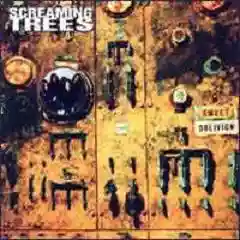
Finding all these sensations in one voice seems absurd, indeed a joke, yet that was my great emotion when I first heard Mark Lanegan. And it was one of his celebrated solo albums (Scraps at Midnight-'98) that made me delve into the folds of a soul no longer torn as in the past, not fully calmed and still immersed in darkness. Thus, I, who had been absorbed mostly by Nirvana, Pearl Jam, and Soundgarden during the early '90s Seattle scene (incidentally, my favorites), came to discover the so-called 'screaming trees', who were among the longer-tenured representatives of that scene. In fact, a five-year span separates the debut 'Clairvoyance' EP from 1986 from this 'Sweet Oblivion', released on the wave of a decent notoriety obtained thanks to 'Nearly Lost You' featured on the soundtrack of Cameron Crowe's film 'Singles'.
Lanegan's charismatic figure and songwriting talent immediately emerged within the Ellensburg (Washington) group, composed of brothers Van and Gary Lee Conner, respectively bass and guitars, and in this album, Barrett Martin on drums. The return to a classic rock almost devoid of past sonic abrasions is immediately declared by the initial incipit of 'Shadow of the Season', which anticipates the garage-sixties melody of the already mentioned 'Nearly Lost You'; and then arriving at one of the finest compositions of all the Screamings: 'Dollar Bill', a gritty rock ballad supported by the virile singing of the leader (like a modern Creedence crossed by the electric discharges of those years). Other notable tracks include the impetuous blues of 'More or Less', the rock'n'roll frenzy of 'Butterfly', the mournful melodies of 'For Celebrations Past' and 'Winter Song', and the epic and bitter 'No One Knows', where Gary Lee Conner's guitar helps to shape the simultaneously melancholic and tough, yet never resigned tone of the lyrics.
The rock ride of 'Julie Paradise' marks the finale of this 'sweet oblivion', ultimately a less aggressive and psychedelic work than previous 'Buzz Factory' and 'Uncle Anesthesia' which, however, contributed to introducing them to the larger public by virtue of a more communicative and melodic approach; perhaps less urgent and spontaneous but, over the years, capable of reaffirming the definite non-secondary role of Screaming Trees in the musical panorama of the time.
Then, with that voice, Mark Lanegan went his own way, recovering singer-songwriter tradition and filtering it through his sensibility.... but that is another story.
Loading comments slowly
Summary by Bot
The review praises Mark Lanegan's unique voice that blends poetic, dark, and soulful elements. It highlights Sweet Oblivion as a significant album within the Seattle grunge scene, noting its classic rock influences and melodic approach. Key tracks such as Nearly Lost You and Dollar Bill are emphasized. The album is seen as a moment of maturity for Screaming Trees, marking their important place in 90s alternative rock.
Screaming Trees
Screaming Trees were an American rock band from Ellensburg, Washington, formed by Mark Lanegan, Gary Lee Conner, Van Conner and Mark Pickerel. Blending grunge with neo‑psychedelia and garage rock, they released a string of acclaimed albums, peaking in visibility with Sweet Oblivion and the single Nearly Lost You. The group disbanded in 2000.08 Reviews
