
 •
Rating:
•
Rating:
THE REVIEW
The debate over what constitutes the true Big Four of classic heavy metal has been open for years. Many exclude Black Sabbath and Motörhead since they’re not strictly metal, while Judas Priest and Maiden are there by right; some even root for Angel Witch and Accept, and strangely few for Dio. Personally, I support Strana Officina, though I realize they don’t quite reach Harris’s band’s level.
But there is one band that, if you browse webzines and forums frequented by the most seasoned, die-hard, and often gray-haired metalheads, you’ll find mentioned very often and not rarely considered a pillar of the eighties almost on par with Iron Maiden—well, that’s Saxon.
Probably the band that best embodied the NWOBHM in the strictest sense; Iron Maiden had a prog touch and from the beginning showed more class, Priest came from the seventies, while Saxon were pure New Wave of British Heavy Metal (let’s remember that the “first wave”—which in a way may have never really existed as it was more hard rock than metal—was the era of Sabbath, Scorpions, Led Zeppelin, and company). Dirty, bluesy, blatantly British: that’s Saxon. And this is the album of theirs I’m most attached to.
“Princess of the Night” is a manifesto: hard sound, fists to the sky, an enchanting riff, a chorus sung with grace, and a nocturnal atmosphere. “Never Surrender” follows similar stylistic cues and is almost as spot-on, with lyrics highlighting the social roots on which 1980s British metal stood—namely, rough neighborhoods, hardship, and a hunger for redemption. “Out of Control” holds no surprises: the way this album lands punch after similar punch without ever tiring you will surprise you. The same goes for “Rought and Ready” or “Play it Loud,” which, with abrasive riffs, BPMs never too high, and a consistently strong Biff on vocals, turn out to be more than enjoyable tracks. But it’s with “And the Bands Played On” that our lads pull out the ace: an extremely compelling track, among the most representative of that era; the lyrics are true metal poetry—reading them is a must. “Midnight Rider” is driving, and “Fire in the Sky” raises the tempo up to the grand and legendary closing title track, which is a genuine classic. The only flaw of this album is its rowdy repetitiveness and predictability, but it really doesn’t matter.
In short, this is an album that marked an era—and maybe, in a way, closed it. An album that, in some respects, is the last “seventies-style” heavy metal that the eighties, the glorious eighties, could deliver. Heavy metal done this way would soon become just a memory, because for our long-haired heroes, the eighties were still a treasure chest waiting to be opened. A heavy sound—very heavy for those days—and brazen lyrics that can still spark the spirit of a young person today. The best metal album? Not even close: maybe not even Saxon’s best. But there’s no room for rankings here, because Saxon are a band of indestructible metalheads who even time has had to accept. My hope is that new generations of metal fans—however possible in a cultural context utterly changed—never lose this compass. Saxon, the band that played two gigs in one day.
As a final quote I could use the entire lyrics of the title track or of “And the Bands Played On”—two real anthems—but maybe even the opener has a line we can recall, referring to the war machine that were the eighties and wishing that such energy never fades: “She used to be an ironhorse, twenty years ago [...] ninety tones of thunder, lighting up the sky.” Rating: 88/100.
Loading comments slowly
Summary by Bot
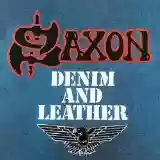
A solid review of Saxon's legendary 'Denim and Leather,' highlighting its place in heavy metal history. The review emphasizes the album's lasting appeal, energetic tracks, and the band's contribution to the genre. With a 4 out of 5 rating, the album is praised for its influence and strong execution. Recommended for both long-time fans and newcomers to Saxon's work.Tracklist Videos
01 Princess of the Night (04:03)
02 Never Surrender (03:14)
03 Out of Control (04:08)
04 Rough and Ready (04:52)
05 Play It Loud (04:12)
06 And the Bands Played On (02:49)
07 Midnight Rider (05:45)
08 Fire in the Sky (03:39)
10 We Came Here to Rock (04:22)
11 747 (Strangers in the Night) (live) (05:05)
12 Wheels of Steel (07:20)
Saxon
Saxon are a British heavy metal band formed in 1977 in South Yorkshire and a leading force of the New Wave of British Heavy Metal. Fronted by Biff Byford, they broke through with Wheels of Steel (1980) and followed with era-defining releases like Strong Arm of the Law and Denim & Leather, continuing to record and tour for decades.18 Reviews
