
 •
Rating:
•
Rating:
THE REVIEW
The Saviour Machine of brothers Eric and Jeff Clayton are a truly unique phenomenon in the world of classic heavy metal, if it is permissible to place them in it.
Dedicated to a kind of dark and gothic metal, they stand out essentially for their deep Christian faith. And this is not just a simple biographical detail related to the private life of the band members, but the raison d'être of the project itself.
The lyrics of this debut work "Saviour Machine I" (as obviously those of the works that will follow) are indeed inspired by the Old and New Testaments (the album itself is a mystic-religious concept), while from a musical point of view, the creation of the Clayton brothers becomes the instrument to spread and preach the Word of the Christian God in a corrupt world in full crisis and moral decay: "A vehicle to reach the heart of man, a force of immense efficacy and power, a peremptory invitation to salvation!" if you want to use Eric Clayton's words, someone who reads the newspaper with the Bible always at hand and interprets current events as part of a broader divine plan.
But rest assured, detractors of White Metal (a vague denomination that unites a variety of bands, often stylistically distant, that define themselves as Christian), there will be no boy-scout music to expect. The music of Saviour Machine is indeed as dark and belligerent as you can expect from an epic/power band, and on a superficial listening, the level of Christianity might not seem higher than that of any Glenn Benton.
The Saviour Machine almost appear blasphemous: their music is oppressive and tragic in every single note, moreover weighed down by a ballast of macabre rituality that makes everything even more disturbing. It is the mad theatricality of singer Eric Clayton that leads us astray.
Clayton, in fact, is the antithesis of the typical epic/power singer with super high-pitched vocals, and instead, he appears to us as some sort of demonic David Bowie in the throes of ecstatic visions: a baritone voice with virtually reduced vocal range, an obsessive groan measuring its versatility in order of increasing epicity. In short: pathos, pathos, pathos.
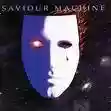
And around the charismatic singer (please, look at the photos: bald head, white makeup, jewelry, and a guru-like robe) is arranged an imposing cathedral of sounds that draws equally from classic heavy, eighties dark-wave, and classical/operatic music.
A practical example: take the opener "Carnival of Souls" and tell me if it was possible to better combine Karl Orff, epic metal, David Bowie, and U2. An explosion of guitars and compelling choirs, an arpeggio in delay in the typical style of The Edge, and the dark railing of Clayton that projects us into a dimension of bloody Holy War. The album continues on the same coordinates: pompous orchestrations, a respectable rock/heavy apparatus (albeit far from the technicalities of the genre), and Clayton's engaging interpretation, always inspired, devoted, and over the top, between furious invectives, threats of revenge, heartfelt prayers, and endless laments.
And if reading these lines you seem to be facing a farce, believe me, it is difficult to find something more heartfelt and passionate than the Saviour Machine project, an entity without compromises, which constantly pays in terms of sales and popularity for its artistic integrity. The complexity of their concepts remains impenetrable to most, and their learned lyrical and musical architectures intertwine continuously in a physical as well as metaphorical transposition of the inner struggles of a spirit in search of purity and redemption.
It must be said that if the whole appears incredibly suggestive and undoubtedly original, the listening is not, however, the most fluid. Indeed, if the tracks shine with varied and inspired songwriting, at the same time they end up suffering from excessive redundancy, and just think of the tail of the power-ballad "Son of the Rain", where the chorus is repeated at least a million times, or the ten minutes of "Killer", an obsessive sound mantra with an oriental gait destined to collapse in cacophonic scenarios where Carmina Burana, noises, and voices overlap without mercy for our ears.
Moreover, the presence of some somewhat anonymous episodes does not help the consumption of this over seventy-minute block, which is obviously recommended only to the brave of spirit.
Nonetheless, there are some great pieces to cheer us up, like "Legion", the classic par excellence of the Saviour Machine, and the two final ballads, the thrilling "A World Alone", with a chorus so epic it would make Manowar, Blind Guardian, and Vasco Rossi put together blush, and "Jesus Christ", with its irresistible anthem, also dragged on to exhaustion.
For the rest, these are mere plays compared to what the band will have in store for us in the future: "Saviour Machine I" is despite everything the most accessible album of the American band, and therefore the most suitable for a first approach. Maybe, however, it's not the best, certainly not the most monumental and complex: let us remember in fact the work perhaps the most imposing ever conceived in the metal universe (and not only): "Legend", the musical transposition of the Apocalypse, a work conceived as a trilogy (initially intended to be released in 1997, 1998, and 1999 respectively and celebrated with a mega-live in Jerusalem on December 31, 1999), then extended to four volumes (the third volume, released late compared to the schedule, ended up becoming a double, of which we are still waiting for the second part), and finally (due to Clayton's health reasons and the band's uncertain future) left incomplete to this day.
It seems that lately, Clayton has brought back Saviour Machine to complete the ambitious project of his life. The release of the fated "Legend III:II" was therefore announced for July 7, 2007 (777)...does anyone know anything about it?
Loading comments slowly
Summary by Bot
Saviour Machine I is a unique and deeply Christian-themed dark gothic/epic metal album by brothers Eric and Jeff Clayton. Characterized by theatrical vocal delivery and a mix of classic heavy metal with dark-wave and operatic influences, the album stands out for its powerful, heartfelt passion and mystic-religious concepts. While it can be challenging and somewhat repetitive at times, it remains the most accessible entry point into the ambitious and complex world of Saviour Machine's music. Fans of epic conceptual metal will find much to explore here.Tracklist Lyrics Videos
Saviour Machine
American gothic/epic metal project led by brothers Eric and Jeff Clayton. Noted for theatrical baritone vocals, Christian-themed concept lyrics and ambitious long-form works (notably the Legend project).02 Reviews
